

Corporate events represent a significant investment of time, budget, and organizational energy. Yet many planners still rely on photography and written recaps to capture and extend that value. The data tells a different story: 83% of people prefer video over text for learning and information, landing page videos boost conversions by 86%, and event videos achieve a 48% completion rate alongside 3x the social media engagement of photos. If you are planning conferences, product launches, or executive summits, professional event video is not a luxury add-on. It is the most powerful tool you have for driving attendee engagement, brand visibility, and long-term marketing ROI.
Table of Contents
- Event video: The engagement advantage
- Repurposing event video for lasting ROI
- How professional video production maximizes impact
- Proving ROI: Metrics that matter for event video
- The uncomfortable truth most planners miss about event video
- Take your event video to the next level
- Frequently asked questions
Key Takeaways
| Point | Details |
|---|---|
| Video leads engagement | Event videos generate significantly higher attendee engagement and social activity than photos or text. |
| ROI through repurposing | Corporate event videos can be reused across platforms to drive branding and lead generation long after the event ends. |
| Professional production matters | Expert planning and execution ensure event videos meet marketing goals and boost brand visibility. |
| Measure what counts | Success depends on tracking completion rates, conversions, and lead value—not just view counts. |
| Expert solutions available | Services like Bonomotion help corporate planners unlock the full potential of event video for measurable results. |
Event video: The engagement advantage
When attendees leave your event, what do they take with them? A conference badge, a few business cards, and a collection of impressions that will fade within days. Professional event video changes that equation entirely. It captures the energy, expertise, and brand identity of your event in a format that continues to work for your organization long after the venue is cleared.
The numbers behind video engagement are striking. According to 2026 video marketing data, event videos achieve a 48% completion rate, meaning nearly half of all viewers watch through to the end. Compare that to the average time spent on a text article or a photo gallery, and the difference in sustained attention becomes clear. Video commands focus in a way no other format can replicate.
Here is why video consistently outperforms other content formats for corporate events:
- 83% completion preference: People prefer to absorb event information through video rather than reading lengthy summaries or browsing photo sets.
- 3x social engagement: Event videos generate three times more social media engagement than photos, amplifying reach organically without additional paid promotion.
- 86% conversion lift: Landing pages featuring video see an 86% increase in conversion rates, making event recap videos powerful tools for future event registration campaigns.
- Higher attendee satisfaction: Events with professional video documentation consistently report stronger post-event satisfaction scores, as attendees feel their experience was valued and preserved.
- Extended reach: Not every stakeholder can attend in person. Video lets you elevate event engagement for remote audiences who still need to feel connected to your brand’s message.
“Video is no longer just a nice-to-have for events. It is the primary vehicle through which your brand story travels beyond the room.”
Consider a practical example. Your company hosts a two-day leadership summit with keynote presentations, breakout workshops, and networking sessions. Without video, the reach of that event is limited to the people who attended in person. With professional video, every session becomes a distributable asset. A keynote speaker’s 40-minute presentation becomes a 90-second highlight for LinkedIn. A panel discussion becomes a series of short expert clips for your email nurture sequence. The event video benefits multiply with every platform you choose to distribute across.
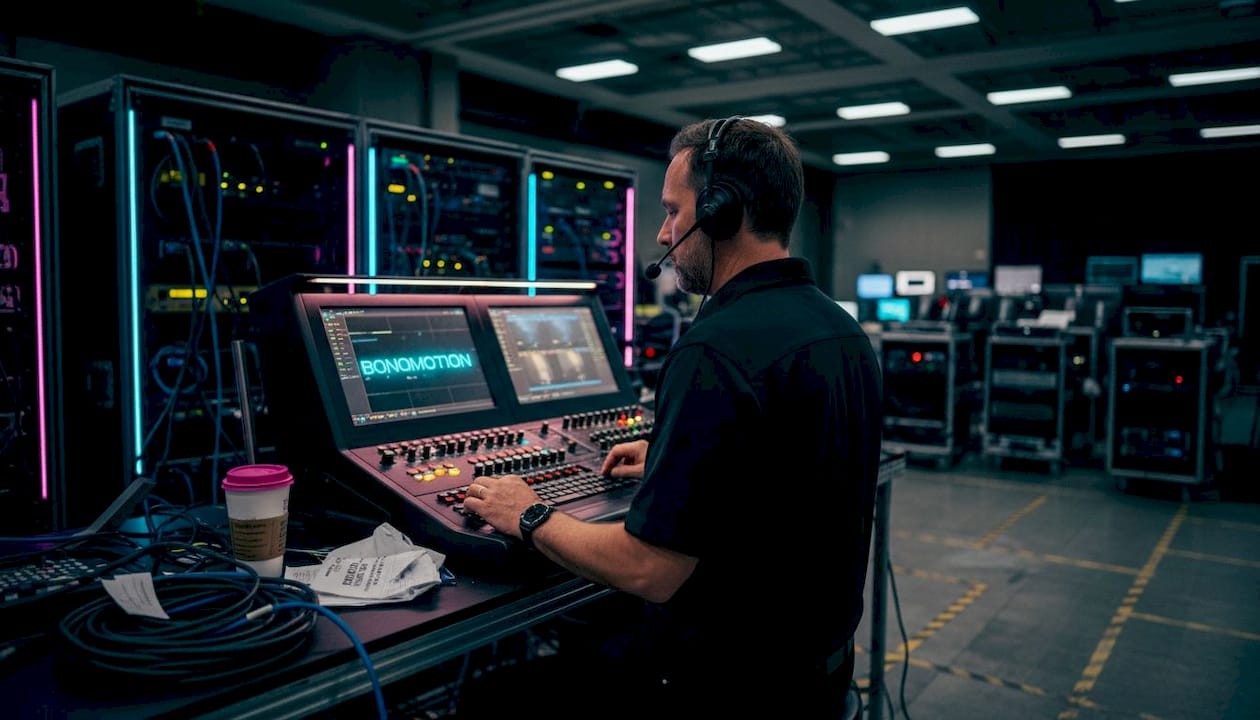
Strong engagement is not accidental. It results from deliberate production choices: proper lighting that keeps speakers looking authoritative, multi-camera setups that maintain visual interest, and clean audio that keeps viewers watching rather than giving up because they cannot hear clearly. These technical decisions directly affect your completion rates and, by extension, your ROI.
Repurposing event video for lasting ROI
One of the most persistent misconceptions in event marketing is treating video as a single deliverable. You film the event, you receive a highlight reel, and that is the end of the content lifecycle. In reality, a single well-produced event video is the starting point for a content ecosystem that can fuel your marketing program for months.
Repurposing event videos into multiple assets is now standard practice among the most effective marketing teams. 82% of event organizers create video-on-demand content from their events for continued post-event engagement. That means they are not just producing one video. They are producing a library.
Here is what a single event can realistically generate:
- Full-length session recordings for on-demand platforms, gated lead generation, or internal training use
- 2 to 3 minute highlight reels optimized for YouTube, your website, and email campaigns
- 30 to 60 second social clips cut from key speaker moments for LinkedIn, Instagram, and X
- Testimonial clips featuring attendees sharing their reactions, ideal for future event promotion
- Speaker profile videos that individual presenters can use for their own professional visibility
- Recap blog posts supported by embedded video, boosting SEO and time-on-page metrics
The comparison below shows how different video asset types perform across audiences and marketing objectives:
| Asset type | Best platform | Primary audience | ROI impact |
|---|---|---|---|
| Full session recording | On-demand portal | Existing registrants, prospects | Lead nurturing, training |
| 2-3 min highlight reel | Website, YouTube | New prospects, general audience | Brand awareness, future event registration |
| 30-60 sec social clip | LinkedIn, Instagram | Social followers, paid ad audiences | Engagement, reach |
| Speaker quote clip | Professional networks, partners | Thought leadership | |
| Attendee testimonial | Website, email | Decision-makers, buyers | Trust, conversion |
Pro Tip: AI-powered editing tools now allow production teams to transcribe, tag, and clip footage automatically, cutting post-production time significantly. Leading agencies are using these tools to reduce repurposing costs by up to 40%, which means your content budget goes further without sacrificing quality. Combining business video marketing strategy with AI-assisted workflows is quickly becoming the competitive standard.
Working with a production partner who understands content strategy, not just camera operation, is what separates a good event video from a great content program. The marketing agency video strategies that deliver the strongest results are those that plan for repurposing before the cameras ever roll.
How professional video production maximizes impact
Understanding why video works is one thing. Knowing how to execute it correctly is another. Professional event video production follows a structured workflow that protects your investment at every stage and ensures the final content actually serves your marketing objectives.
The production process breaks into three distinct phases:
-
Pre-production: This is where strategy is established. Your production team aligns on goals, defines the key moments to capture, builds detailed shot lists, and scouts the venue for lighting conditions, acoustics, and camera positioning. A thorough conference video workflow at this stage prevents costly mistakes on event day and ensures nothing important gets missed.
-
On-site production: Professional teams deploy multi-camera setups to capture different angles simultaneously, from wide establishing shots to tight close-ups of speakers’ expressions. Dedicated audio engineers manage sound capture independently of venue audio systems, which are often unreliable. Proper lighting rigs ensure that speakers are well-lit even in ballrooms with challenging ambient conditions. All of these elements combine to produce footage that is genuinely usable in post-production rather than technically compromised.
-
Post-production: This phase covers editing, color correction, motion graphics, lower thirds (the text labels that identify speakers), branded title sequences, and platform-specific formatting. A strong post-production team does not just assemble footage. They shape a narrative that reflects your brand’s voice and keeps viewers engaged from start to finish. The professional production services that deliver the highest value are those that treat post-production as a storytelling discipline, not just a technical task.
The table below outlines a realistic production timeline and the business outcomes each phase supports:
| Phase | Typical duration | Business outcome |
|---|---|---|
| Pre-production | 1-3 weeks before event | Strategic alignment, risk reduction |
| On-site filming | Event duration | Raw content capture |
| Rough cut review | 1-2 weeks post-event | Client alignment on narrative |
| Final delivery | 2-4 weeks post-event | Published assets ready for distribution |
| Repurposing | Ongoing | Extended content lifecycle, additional ROI |
The production methodology that leading teams follow ensures every phase connects logically to the next. Pre-production decisions directly shape what footage is captured. On-site execution determines what post-production has to work with. And post-production quality determines whether your audience actually watches to the end.
Pro Tip: Ask your production partner to track completion rates, shares, conversions, and drop-off points in addition to total view counts. Views tell you how many people started watching. Completion rates tell you whether your content was compelling enough to keep them. The difference between those two numbers is often where the real optimization opportunity lives.
Proving ROI: Metrics that matter for event video
Demonstrating return on investment for event video remains one of the more challenging aspects of corporate marketing. 40% of event organizers report difficulty proving ROI, though measurement capabilities are improving steadily as more planners adopt structured analytics frameworks.
The financial benchmarks for event video are well-established. Event highlight reels typically cost between $3,000 and $15,000 depending on scope, crew size, and post-production complexity. Events with professional video support see an average attendance rate of 52% for on-demand content, meaning that more than half of registered attendees engage with video content after the event itself concludes. Visit-to-registration conversion rates for events promoted with video average 21.5%, compared to lower rates for events relying primarily on text-based marketing.
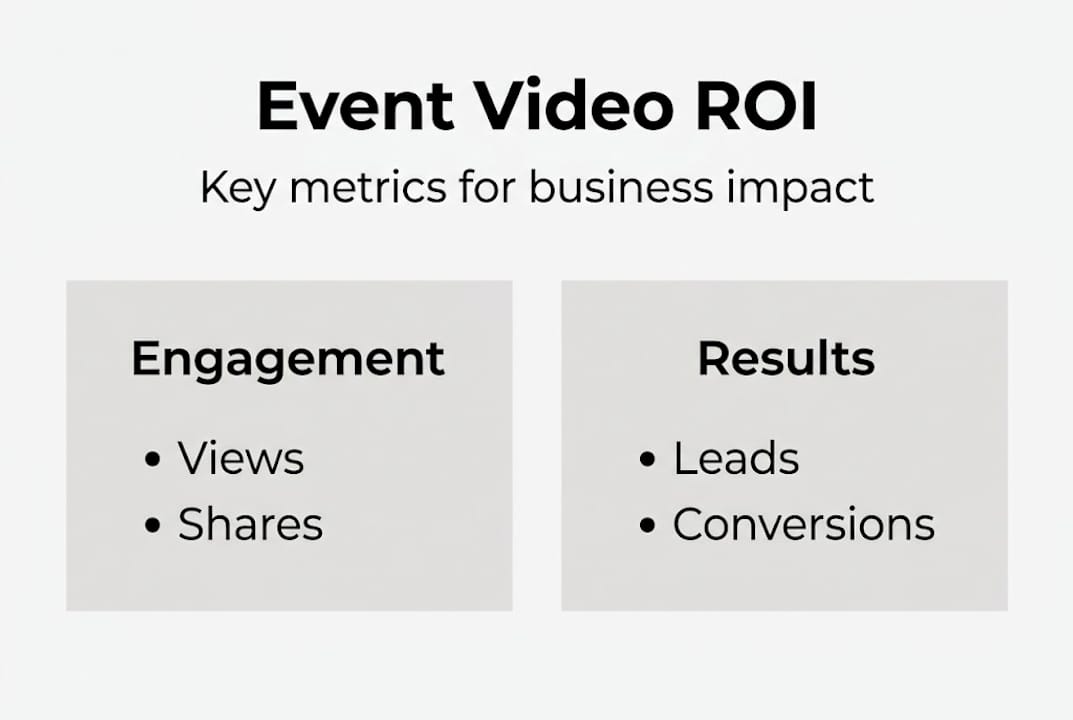
Perhaps most compelling for your leadership team: professional event videos yield leads that measure 25 to 40% higher in long-term customer value compared to leads generated through other content formats. Video attracts buyers who are already more informed and more committed, which reduces sales cycle length and improves close rates.
Here are the essential metrics every event marketing team should track:
- View count: Total number of times your video was played, a baseline awareness metric
- Completion rate: Percentage of viewers who watched to the end, the truest indicator of content quality
- Drop-off points: Specific timestamps where viewers stopped watching, revealing weak sections for future improvement
- Social shares: How many times your video was shared organically, reflecting genuine audience enthusiasm
- Click-through rate: How often viewers took an action after watching, such as visiting a landing page or registering for your next event
- Lead quality score: Whether the leads generated through video content converted at higher rates and with greater average deal value
- Content longevity: How long after the event your video continues to attract new views and generate leads
“The organizations that measure event video performance with the same rigor they apply to paid advertising are the ones that consistently justify larger production budgets.”
Understanding the importance of video services for your overall marketing program means going beyond vanity metrics. A video with 500 highly engaged views from qualified prospects is worth more than a video with 10,000 passive views from a disengaged audience. Build your measurement framework around business outcomes, not just platform analytics.
The uncomfortable truth most planners miss about event video
We have worked with organizations across industries for over two decades, and one pattern repeats consistently: planners measure the wrong things and then wonder why they cannot justify their video budget to leadership.
Most teams celebrate view counts. Views feel tangible and impressive in a post-event report. But views without completion rates, conversion data, and long-term lead tracking tell an incomplete story. A video that gets 5,000 views but loses 80% of viewers in the first 30 seconds is not a success. It is a signal that something in your content or production quality needs attention.
The real shift happening right now is on the cost and speed side. AI-driven tools are cutting production costs by up to 40% and enabling dramatically faster turnaround on repurposed content. This means smaller organizations can now access content programs that previously required enterprise budgets. But technology alone does not solve a strategy problem. You still need experienced producers who understand how to plan shoots, shape narratives, and align content with your audience’s actual needs.
The organizers who are winning right now are those who treat video production at big events as a strategic function, not a logistics task. They brief their production partners on business goals, not just filming schedules. They track content performance for 90 days post-event. And they use what they learn to build smarter programs the next time around. That evolution in thinking is what separates teams that always struggle to prove ROI from those that consistently demonstrate it.
Take your event video to the next level
You now understand how event video drives engagement, extends content value, and generates measurable business outcomes. The next step is working with a production partner who can translate that knowledge into polished, strategic content for your specific event.
At Bonomotion, we have spent more than 20 years producing high-impact event videos for startups, growing brands, and Fortune 100 companies. Every project is led by an experienced producer who aligns with your goals before a single camera rolls. Whether you need corporate video production in Hollywood, commercial video services in Miami, or scalable corporate video solutions for multi-day conferences and executive events, our team operates as a true extension of yours. Reach out to discuss how we can help you capture, repurpose, and maximize the value of your next event.
Frequently asked questions
How can event video increase attendee engagement?
Event videos capture memorable moments, provide shareable highlights, and sustain attendee interest, resulting in 3x higher social media engagement than photos and a 48% average completion rate that keeps audiences connected to your brand.
What types of assets can be created from a single event video?
You can produce highlight reels, social clips, full session recordings, speaker profile videos, and lead-generating content for multiple platforms, all from one event, with 82% of organizers already creating video-on-demand libraries from their events.
How much does professional event video production typically cost?
Event highlight reels typically range from $3,000 to $15,000 depending on scope, crew size, and post-production complexity, making professional production accessible for mid-size and enterprise budgets alike.
What metrics should planners track for event video success?
Track completion rates, shares, conversions, drop-off points, and long-term lead value rather than views alone, as AI-enabled analytics tools now make it easier to connect video performance directly to pipeline and revenue outcomes.