

Event videography vs photography is the choice between capturing your event through motion, sound, and narrative or through still images that freeze a single powerful moment. Both formats are professional disciplines with distinct technical demands, delivery timelines, and marketing applications. The wrong choice does not just waste budget. It leaves you with content you cannot use. This guide gives event planners and business marketing teams in Miami and South Florida a clear framework for choosing the right format, or the right combination, based on what you actually plan to publish after the event.
How event videography and photography differ in storytelling
Event videography captures movement, sound, and atmosphere, letting your audience experience the event dynamically. Photography freezes specific moments as still images with no audio, no motion, and no narrative arc. That distinction shapes everything from crew size to post-production time to how the content performs on different platforms.
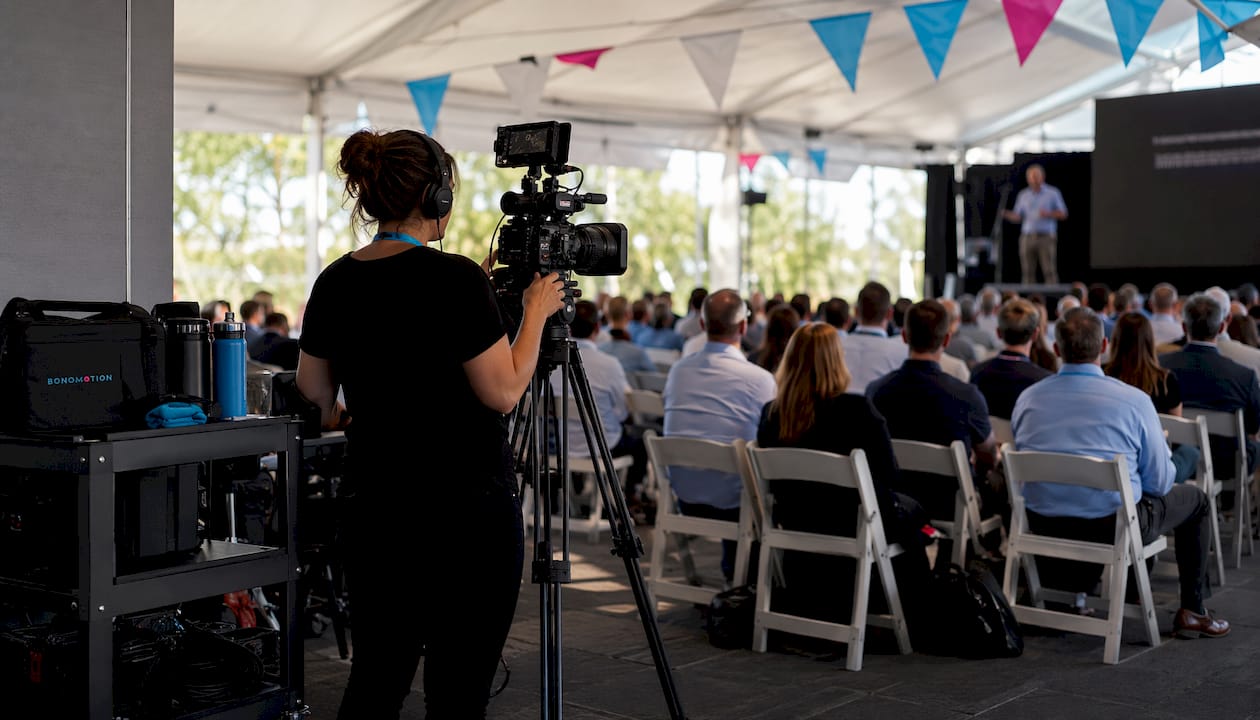
Videography requires more complex equipment and a longer production pipeline. A professional crew typically brings multiple cameras, wireless lapel microphones, shotgun microphones, and lighting rigs. Post-production then organizes raw footage into a coherent story, which takes time. Photography, by contrast, moves faster from shoot to delivery. Final edited galleries often arrive within 24 hours of the event, and selected images can sometimes be supplied during the event itself per client briefing agreements. That speed matters when your social team needs content the same evening.
The technical demands also affect crew size and budget. A solo photographer can cover a 200-person conference effectively. A videography crew for the same event might include a director, two camera operators, a sound technician, and a post-production editor. Each additional crew member adds cost and coordination.
- Videography strengths: Keynote presentations, emotional atmosphere, personality-driven storytelling, product demos, and highlight reels
- Photography strengths: Speaker portraits, crowd shots, branded moments, sponsor signage, and award presentations
- Delivery speed: Photography wins for same-day or next-day turnaround; video editing typically takes 3–10 business days
- Crew complexity: Photography scales down to one skilled professional; multi-camera video requires a coordinated team
Pro Tip: Brief your photographer or videographer with a shot list tied directly to your post-event content calendar. If you know you need a LinkedIn carousel by Tuesday, tell them that before the event starts, not after.
When should you choose videography or photography for your event?
The decision between event photo vs video comes down to one question: what will you publish in the week after the event? Aligning your media choice with a specific post-event content strategy is the single most effective way to avoid budget waste. Planners who skip this step often end up with a beautiful highlight reel that never gets posted, or a gallery of stills with no clear home.
Photography is the stronger first investment when your primary outputs are website updates, LinkedIn posts, recap galleries, sponsor decks, PR-ready stills, and internal reporting. Still images deploy faster and reuse more easily across contexts than video files. A single well-lit speaker portrait can anchor a press release, a social post, a sponsor report, and a website news item simultaneously.
Video excels when the event depends on movement, sound, or personality. Product launches, founder keynotes, panel discussions, and live performances all generate content that photography simply cannot replicate. A 90-second highlight reel from a Miami product launch can run as a paid social ad, a website hero video, and an email campaign asset for months after the event.
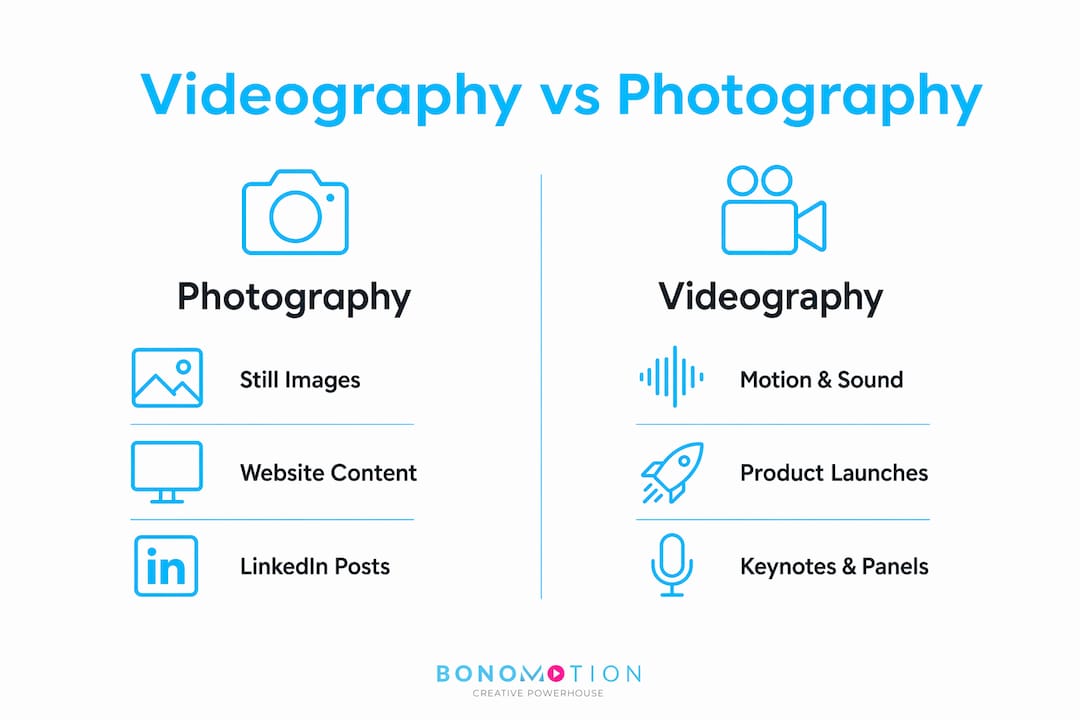
| Content goal | Best format |
|---|---|
| LinkedIn carousel or recap gallery | Photography |
| 90-second highlight reel for social | Videography |
| Sponsor deck with branded stills | Photography |
| Founder or executive keynote capture | Videography |
| Press release and PR distribution | Photography |
| Product demo or behind-the-scenes clip | Videography |
| Internal reporting and board decks | Photography |
| Teaser campaign for next event | Videography |
Combining both formats makes sense when you have clear deliverables for each and the budget to execute both well. Splitting a thin budget across both formats produces mediocre results in both. If you must choose, match the format to the content type your team will actually publish.
- Define your top three post-event content outputs before booking any crew
- Assign a content owner internally who will be responsible for publishing after the event
- Confirm delivery timelines with your production team before the event date
- For hybrid event coverage, video is almost always the primary format because remote audiences need motion and audio
How to maximize event engagement with professional and attendee content
Professional videography and photography form the content foundation of any well-documented event. They deliver polished, brand-consistent assets that your marketing team can deploy with confidence. But they capture only what the crew is positioned to see.
Attendee-generated content supplements professional filming by adding authentic perspectives and multiple angles without increasing production budgets. When attendees share clips from their phones, they provide coverage from inside the crowd, from angles no crew member could occupy, and with a personal authenticity that branded content rarely matches. That combination of professional polish and raw authenticity is what makes modern event content feel real.
Platforms that facilitate collecting attendee clips amplify engagement and community connection. This approach aligns with multi-channel event marketing, where a single event generates content across Instagram, LinkedIn, YouTube, and internal communications simultaneously. The professional footage anchors the campaign. The attendee content extends its reach.
Pro Tip: Create a branded event hashtag and brief attendees at the start of the event. Ask them to tag the brand and share clips. Then use a collection platform to gather the best submissions for your post-event recap.
- Use professional footage for your primary campaign assets: website, paid ads, and email
- Use attendee clips for Instagram Stories, LinkedIn reposts, and community-building content
- Combine both in a post-event recap video that mixes polished B-roll with authentic crowd moments
- For corporate events videography, brief your crew on which moments are priority captures and which can be supplemented by attendee content
Budget considerations for event media in Miami and South Florida
Event videography pricing varies significantly with crew size, equipment, and deliverables. Single-camera coverage ranges from $500 to $1,500 per day. Multi-camera professional coverage can reach $5,000 or more per day. Full production with a director and same-day edits pushes the budget higher. Editing timelines typically run 3–10 business days depending on deliverables. Understanding these ranges before you book prevents the most common budget mistake: underestimating post-production costs.
Photography pricing is generally lower per day, but quality varies widely. A corporate event photographer with experience in conference and brand event coverage charges more than a generalist, and the difference shows in the final gallery. Investing in an experienced professional pays off when those images represent your brand in press releases and sponsor reports.
Here are the practical steps for booking event media in South Florida:
- Define deliverables first. List every piece of content you plan to publish after the event. Match each deliverable to a format before you contact any crew.
- Set a realistic budget per format. Allocate budget based on the value of each deliverable to your marketing goals, not on splitting costs evenly.
- Request a shot list review. Share your content calendar with your production team before the event. A good crew will flag gaps and suggest coverage adjustments.
- Confirm post-production timelines. Ask specifically when edited video and final photo galleries will be delivered. Build those dates into your content publishing schedule.
- Consider local expertise. Miami and South Florida events have specific venue and lighting challenges. Working with a crew that knows the local market, including venues in Fort Lauderdale, Coral Gables, and Palm Beach, reduces day-of surprises.
- Review past work. Ask to see event coverage examples that match your event type. A crew with strong conference coverage experience is not automatically the right choice for a product launch, and vice versa.
For a detailed breakdown of what drives professional videography costs, production scope and deliverable complexity are the two biggest variables. A 90-second highlight reel with motion graphics costs more to edit than a raw footage delivery. Know what you are buying before you sign a contract.
Pre-production planning including venue scouting, shot lists aligned with deliverables, and multi-camera setups for larger events is what separates professional event coverage from amateur documentation. That planning phase is where experienced crews earn their fee.
What I’ve learned from 20 years of covering South Florida events
After two decades of producing event coverage across Miami, Fort Lauderdale, and Palm Beach, the pattern I see most often is this: planners make their media format decision based on what sounds impressive, not on what they will actually publish. They book a full video crew for a conference where the only post-event output is a LinkedIn recap gallery. Or they book a photographer for a product launch where the CEO’s keynote was the entire marketing story.
The fix is not complicated. Define your deliverables before you book anything. If you cannot name three specific pieces of content you will publish after the event, you are not ready to book a crew. That clarity also makes the production team’s job easier. When a crew knows that the primary deliverable is a 90-second reel for paid social, they shoot differently than when they are covering everything and hoping something works.
The other mistake I see regularly is treating attendee-generated content as a bonus rather than a planned component. The events that generate the most post-event reach are the ones where the planner built attendee sharing into the program, not the ones with the biggest production budget. Professional coverage and attendee content are not competing. They are complementary layers of the same story.
My honest advice: if your budget forces a choice, match the format to your most important post-event deliverable. Then book the best crew you can afford for that one format. A great photographer who delivers a gallery by the next morning will do more for your brand than a mediocre video crew that takes three weeks to deliver a reel you are not proud to share.
— Bernard Bonomo
Bonomotion Agency’s event coverage services in Miami
Bonomotion Agency has covered corporate conferences, brand activations, and multi-day events across Miami and South Florida since 2003. Every project is guided by an experienced producer who works with your team to align coverage with your specific marketing deliverables.
Whether you need a polished event videography reel for your next campaign or a complete photography and video package for a multi-day conference, Bonomotion Agency builds coverage plans around what you will actually publish. Our crews are experienced in Fort Lauderdale, Coral Gables, Palm Beach, and throughout South Florida. For businesses ready to connect event coverage to real marketing results, explore Bonomotion’s corporate video production services or request a custom quote for your next event.
Key takeaways
The most effective event media decision starts with defining your post-event content deliverables before booking any crew, then matching the format to what you will actually publish.
| Point | Details |
|---|---|
| Format follows deliverables | Define your post-event content outputs first, then choose the format that serves them. |
| Photography deploys faster | Edited galleries often arrive within 24 hours, making photography ideal for rapid social sharing. |
| Video requires more planning | Multi-camera videography needs pre-production scouting, shot lists, and 3–10 days of post-production. |
| Attendee content extends reach | Authentic attendee clips supplement professional footage without adding production costs. |
| Budget by value, not by split | Allocate budget to the format tied to your highest-value deliverable, not evenly across both. |
FAQ
What is the main difference between event videography and photography?
Event videography captures motion, sound, and atmosphere to tell a continuous story. Photography freezes single moments as still images, with no audio or narrative flow.
Which is better for corporate events: video or photos?
The better choice depends on your post-event content plan. Photography suits LinkedIn carousels, sponsor decks, and press releases. Video is the stronger choice for highlight reels, keynote captures, and social ad campaigns.
How long does event video editing take?
Editing timelines typically run 3–10 business days depending on deliverables. Same-day edits and motion graphics push that timeline and the budget higher.
Can you use both videography and photography at the same event?
Yes, and combining both works well when you have clear deliverables for each format and the budget to execute both at a professional level. Splitting a thin budget across both formats produces weaker results in each.
How much does professional event videography cost in Miami?
Single-camera coverage starts around $500 to $1,500 per day. Multi-camera professional coverage can reach $5,000 or more per day, with full production and same-day edits pushing costs higher.