
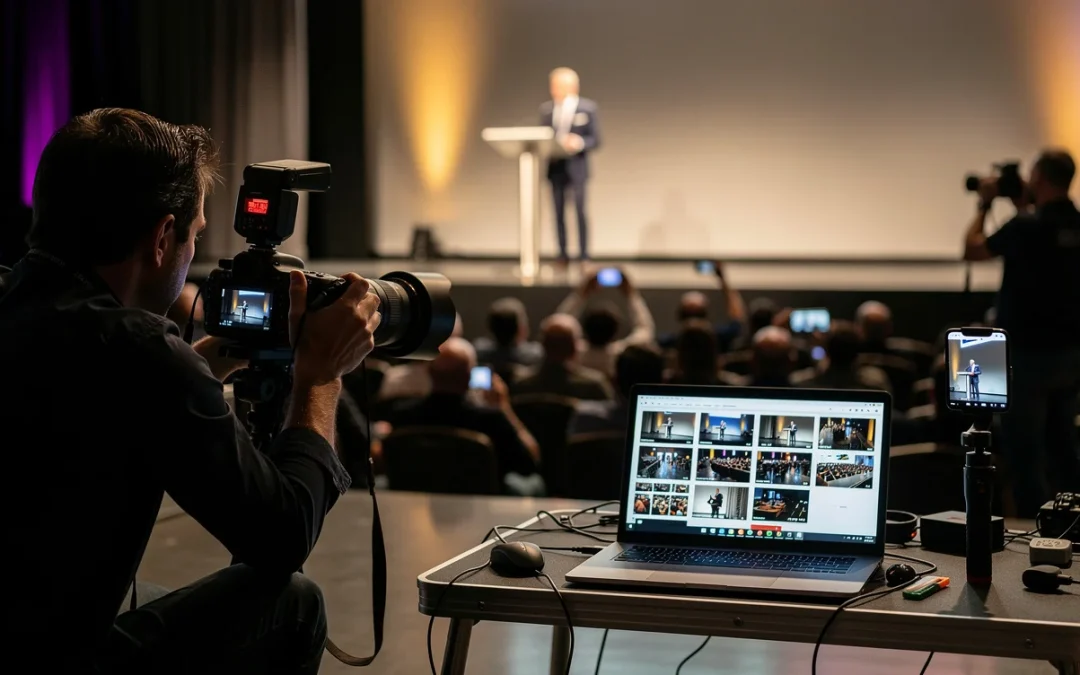
Event coverage photography isn’t just about documenting what happened-it’s about creating business momentum. The photos you capture at your events become content that builds trust, drives engagement, and tells your company’s story to everyone who matters.
At Bonomotion Video Agency, we’ve seen firsthand how strategic event photography transforms stakeholder relationships and amplifies your brand reach. The right images work harder than any press release ever could.
Why Event Photos Build Real Business Results
Photos Become Your Year-Round Marketing Engine
Professional event photography delivers measurable returns that extend far beyond documentation. When you capture high-quality images at your events, you create assets that work across multiple channels-social media, email campaigns, investor presentations, recruitment materials, and website content. LinkedIn posts featuring professional conference photos generate significantly higher engagement than text-only updates, according to LinkedIn’s own data on content performance. This means the photos you shoot today become marketing fuel for months ahead.
A single well-executed event yields repurposable content when you plan strategically, turning a one-day gathering into a year-round content stream. The key lies in capturing images that tell a complete story: wide establishing shots that show room energy, mid-action moments during presentations, close-ups of genuine reactions, and detailed shots of your branding and sponsor activations. Without this variety, you miss the chance to communicate different aspects of your event to different audiences.

Stakeholders Decide Based on What They See
Stakeholders make decisions based on visual proof. A packed room with engaged attendees speaks louder than any attendance number. Sponsor logos prominently featured in authentic contexts (not forced product placement) demonstrate real activation value, which directly influences renewal rates and premium sponsorship tier justification.
For sponsors specifically, professional event photography strengthens their credibility too, giving them tangible assets to reuse in their own marketing and justifying their investment in your event. The faster you deliver these images, the greater their impact. Same-day or next-day social previews keep momentum alive for post-event campaigns and allow attendees to share photos of themselves, turning them into brand advocates within their personal networks. This organic amplification extends your reach far beyond your direct audience.
Speed and Strategy Transform Photos Into Results
Organizations that treat event photography as a strategic asset-not an afterthought-see measurable improvements in future event attendance, sponsor interest, and overall brand perception. The timing of your image delivery matters as much as the quality itself. When you release polished images within hours of your event, you capture the emotional energy while attendees still feel invested in sharing their experience.
Your next step involves planning what you actually want to capture. This means moving beyond hoping your photographer catches the right moments and instead building a shot list that aligns with your business goals.
What Makes Photos Actually Work on Social Media
Platform Formats Determine Your Reach
The difference between photos that get ignored and photos that drive engagement comes down to one thing: intentionality. Most event photographers shoot everything and hope something sticks. That approach wastes your budget and your time. Instead, you need a photographer who understands what performs on each platform and shoots specifically for those formats from the moment they arrive at your event.
Instagram demands vertical 9:16 compositions for Stories and Reels. LinkedIn rewards authentic group shots and candid moments that show real human connection, not staged poses. Facebook performs well with wider aspect ratios.

If your photographer shoots everything in 16:9 horizontal format, you’re already losing half your potential reach because you’ll need to crop and reframe everything in post-production, which degrades quality and wastes days of editing time.
The solution is simple: brief your photographer on platform requirements before the event and ensure they capture multiple aspect ratios in real time. This means vertical shots for Stories, tightly framed close-ups for detail work, and medium-wide shots that work across formats.
Authentic Moments Outperform Staged Content
When you see genuine reactions during keynotes, genuine networking conversations, or authentic sponsor interactions, those moments outperform any staged content. People sense when a photo is real versus when someone performs for the camera. The best approach combines both: capture natural moments as they happen, then dedicate 30 minutes before the event ends to grab a few intentional group portraits with your executives or key speakers.
These portraits should feature clean backgrounds, proper lighting, and clear faces-the kind of image that looks professional on a LinkedIn post or in a press release. This hybrid strategy gives you the authenticity that builds trust plus the polish that signals professionalism.
Consistent Color and Tone Build Brand Recognition
Consistent branding throughout your photos means your color temperature, exposure, and overall visual tone remain stable across the entire gallery. If half your images look warm and saturated while the other half look cool and desaturated, your gallery feels disjointed and unprofessional. This happens when photographers don’t shoot in RAW format or when they don’t maintain consistent white balance throughout the day.
Insist that your photographer shoots RAW, uses fast lenses (f/2.8 or faster), and adjusts white balance between different lighting zones in your venue. In post-production, this means color-grading all images to align with your brand palette while preserving natural skin tones. If your brand uses cool blues and grays, your photos should reflect that. If your brand is warm and energetic, your images should feel that way too. The editing should happen before images go live, not after you’ve already posted them.
Speed Wins the Engagement Game
Same-day editing matters because attendees are most likely to share and engage within the first 24 hours after your event. Platforms like Instagram prioritize content that generates immediate engagement, so releasing polished images within 2 to 4 hours of your event ending gives you a massive advantage over competitors who wait a week. This requires a photographer who can perform quick selects and basic editing on-site, then deliver a final gallery within hours.
Mobile Screens Demand Different Composition
Mobile optimization is non-negotiable. Over 70 percent of LinkedIn users access the platform on mobile devices, and the percentage is even higher for Instagram and TikTok. This means your images need to look good on a small screen. Tiny details get lost. Busy backgrounds become visual noise. Close-ups of faces, clear product shots, and images with strong composition work infinitely better than wide shots of crowded rooms.
Deliver images in multiple resolutions: high-resolution JPEGs at 3000 pixels on the long edge for print and presentations, web-optimized versions at 1200 pixels for your website, and vertical crops specifically formatted for social. Include descriptive captions and alt text for every image, which improves both accessibility and searchability on search engines. Images without proper metadata and captions are invisible to people searching for your brand or event on Google Images. This metadata strategy transforms your photos from static files into discoverable assets that work for you long after the event ends.
How Stakeholders Actually Use Your Event Photos
Event photos don’t sit in a folder after your event ends. They become evidence that your business delivers real value. Investors want to see packed rooms and engaged executives. Employees want to recognize themselves and feel proud to work for your company. Sponsors want proof their activation resonated with attendees. The difference between photos that stakeholders ignore and photos that influence decisions comes down to how you frame and distribute them. Your photographer needs to understand these distinct audiences before the event starts, because the images that impress your board look completely different from the images that motivate your team.
Investors and Partners Need Visual Proof of Scale and Energy
When you present to investors or pitch sponsors for your next event, you need images that prove attendance, engagement, and professional execution. A photo of an empty conference room tells one story. A photo of standing-room-only crowds with visible faces of attendees tells another. Investors specifically want to see evidence of market demand, which means your photographer should capture wide establishing shots that show room capacity, packed networking areas, and lines at sponsor booths. Include close-ups of your executives visibly engaged with attendees, not standing alone on stage.
These images directly influence sponsorship renewal decisions. When stakeholders see polished images from your corporate event, they form immediate judgments about your company’s professionalism and market position. This means your photographer needs to spend dedicated time capturing sponsor booths from multiple angles, attendees interacting with branded elements, and clear shots of sponsor logos in natural contexts. Put this on the shot list. Specify which sponsor activations matter most and which executives need to appear in images together. Deliver these curated galleries to your stakeholders within 48 hours, organized by activation or executive involvement, with captions explaining what each image demonstrates about event success.
Employees Become Brand Advocates When They See Themselves
Internal event photos serve a completely different purpose than investor materials. Your team members want to see themselves, their colleagues, and the company culture in action. This means your photographer should capture candid moments of employees networking, laughing, and connecting across departments. These images do more for retention and morale than any internal memo.
Share these photos through your internal channels first, before posting publicly. Create a private gallery that employees can access and download photos of themselves. Tag employees by name in your company Slack or internal communication platform when you post event highlights. This generates organic engagement and makes employees feel valued. Post-event, these images work in recruitment materials, onboarding presentations, and company culture decks. A candidate considering your company wants to see what working there actually looks like, and authentic photos of your team enjoying an event communicate culture faster than any job description. Include a mix of candid moments and intentional group photos organized by department or function.
Press and Media Amplify Your Story When Images Are Accessible
Journalists and media outlets need high-resolution images with proper metadata to cover your event effectively. If you don’t provide them, they’ll use lower-quality images or skip visual coverage entirely. Deliver press-ready images within 24 hours of your event, formatted specifically for media use.

This means images at 3000 pixels on the long edge with embedded metadata including event name, date, location, photographer credit, and copyright information.
Write captions that journalists can use directly in their articles, not generic descriptions. For example, instead of “Keynote speaker at podium,” write “[Speaker Name], [Title], discusses [topic] during the [Event Name] keynote address on [date].” Provide images in multiple aspect ratios so media outlets can use them across different platforms without cropping and losing quality. Make these images easily accessible through a dedicated media portal or shared link that journalists can download immediately. When media outlets can grab professional images instantly, they’re significantly more likely to cover your event and share it with their audiences.
Final Thoughts
Event coverage photography transforms your business by creating proof points that influence investor decisions, strengthen sponsor relationships, and extend your brand reach for months ahead. The photographers who deliver real results understand your business goals before they arrive at your event and know which moments matter to your investors, which activations matter to your sponsors, and which candid interactions matter to your team. They shoot in multiple formats, deliver images within hours, and provide metadata that makes your photos discoverable across every channel.
Start your next event by defining what success looks like for your specific stakeholders-what does your board need to see, what proof do your sponsors require, and what moments will your team want to share? Build a shot list that answers these questions, then partner with a photographer who understands how to execute it while meeting your platform requirements, venue challenges, and timing expectations. Establish a clear delivery timeline that captures the momentum of your event while attendees remain engaged.
Contact Bonomotion to discuss your event coverage strategy and transform your next event into a year-round marketing asset.