

Event videography is widely misunderstood as simply “pointing a camera at a stage.” In reality, it’s a strategic production process that transforms your corporate event into durable, high-value marketing assets. For planners and decision-makers across South Florida’s fast-moving corporate landscape, getting this right can mean the difference between an event that disappears after the last handshake and one that continues driving brand awareness, audience engagement, and organizational credibility for months afterward. This guide breaks down what event videography actually is, why it matters, and how to plan it effectively.
Table of Contents
- What is event videography?
- Why event videography matters to corporate planners
- Key differences: DIY vs. professional event videography
- How to plan event videography for your next corporate project
- The hidden value of event videography: What most planners overlook
- Connect with expert videographers in South Florida
- Frequently asked questions
Key Takeaways
| Point | Details |
|---|---|
| Event videography defined | It’s a strategic process including planning, filming, and editing for live events. |
| Value for corporations | Professional event video supports brand marketing, communication, and ongoing audience engagement. |
| DIY vs professional | Professional videography offers higher quality, storytelling, and long-term marketing value. |
| Planning is essential | Clear objectives and collaboration with skilled videographers produce the best outcome. |
| Brand asset creation | Event videography creates lasting assets that extend the impact of your event beyond its day. |
What is event videography?
Event videography is far more than showing up with a camera and pressing record. At its core, event videography is the professional process of planning, filming, and editing video content for live events such as corporate conferences, galas, trade shows, and festivals to create marketing assets like highlight reels, recaps, and promotional clips. That scope is considerably broader than most planners initially expect.
The process begins well before the event day. Pre-production includes understanding your objectives, mapping out key moments to capture, coordinating with venue staff, and building a shot list aligned to your brand story. The filming phase involves managing camera positions, lighting conditions, audio capture, and real-time decisions about what to prioritize on a live event floor. Post-production then transforms raw footage into polished, purpose-built assets that serve specific communication goals.
The types of events that benefit from professional videography include:
- Corporate conferences and multi-day summits where keynote moments, panel discussions, and audience reactions become content
- Galas and award ceremonies where emotional storytelling elevates brand prestige
- Trade shows and product launches where demonstration footage and testimonials convert prospects
- Festivals and community events where energy and atmosphere need to be translated into shareable content
The resulting deliverables from a well-executed event video project span a wide range. You get short highlight reels optimized for social media, longer recap videos for internal communications or post-event promotion, speaker clips for executive thought leadership, and raw footage archives for future use. Working with experienced videography production services ensures that each of these asset types is planned for from the start, not improvised at the edit stage.
“The best event videography doesn’t just document what happened. It tells your audience why it mattered and invites them to want more.”
Building on that foundation, the assets you collect from a single well-filmed event can power weeks of content across your website, LinkedIn, email campaigns, and internal platforms. That’s a strong return on a single production investment.
Why event videography matters to corporate planners
Now that we’ve defined event videography, let’s explore why it’s so valuable for corporate planners operating in a competitive market like South Florida.
The most immediate benefit is post-event marketing reach. Event videography creates marketing assets like highlight reels, recaps, and promotional clips that extend your event’s visibility far beyond the room it was filmed in. A well-produced highlight reel shared on LinkedIn or embedded in a follow-up email campaign can reach an audience ten times larger than your in-person attendance. That amplification effect is measurable and repeatable.
Beyond raw reach, professional footage directly affects brand credibility. Shaky smartphone video sends an unintended signal about your organization’s standards. High-quality production, by contrast, signals that your brand invests in quality and takes its communications seriously. In markets like Miami, Brickell, and Fort Lauderdale where corporate competition is fierce, that visual credibility carries real weight.
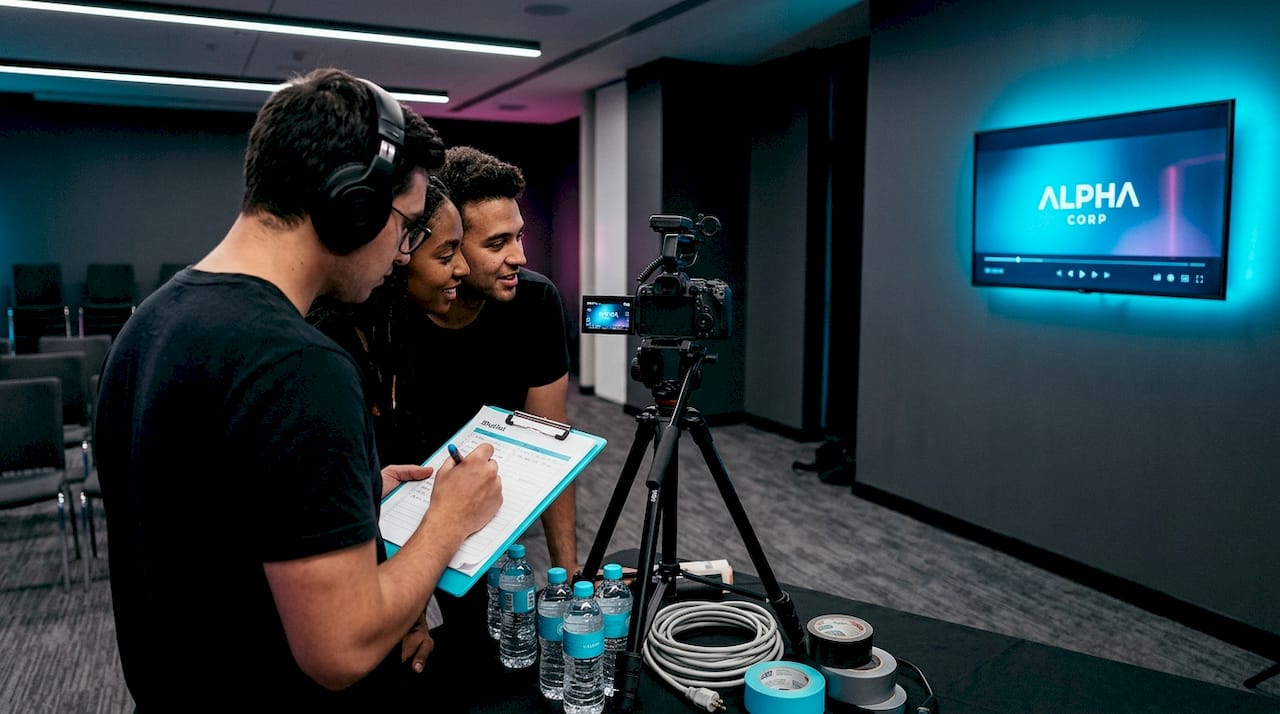
Here’s a practical look at the outcomes professional event videography can generate:
| Asset type | Primary use | Channel |
|---|---|---|
| Highlight reel (60-90 sec) | Post-event promotion | Social media, email |
| Full event recap (5-10 min) | Internal comms, website | YouTube, intranet |
| Speaker clips (90 sec each) | Thought leadership | LinkedIn, PR |
| Testimonial segments | Sales and marketing | Website, proposals |
| Raw footage archive | Future content creation | Internal storage |
Each of these asset types serves a different audience and a different stage of your marketing funnel. Planning for all of them upfront means you walk away from your event with a content library, not just a memory.
Pro Tip: Brief your video team on your post-event distribution plan before filming begins. Knowing that you need a vertical-format social clip versus a widescreen recap changes how the team frames shots in real time, and that impacts every asset downstream.
When you elevate your event with professional video, you also create content that works for recruiting, investor relations, and board presentations. We’ve seen clients reuse conference footage in employee onboarding videos and fundraising decks. That versatility multiplies the ROI of your original production budget considerably. The professional video production impact on brand trust and long-term communication strategy is one of the most undervalued benefits in corporate planning circles. Review the event video production guide for an expanded breakdown of asset types and their downstream marketing applications.
Key differences: DIY vs. professional event videography
To fully grasp the impact, let’s assess the practical differences between approaches. This is where planners often face a genuine budget decision, and clarity here saves costly mistakes.
The core problem with DIY or smartphone-based event video is not image quality alone. It’s narrative structure. DIY shooting versus professional approaches differ sharply on narrative coherence, visual quality, and the ability to manage multiple simultaneous moments in a live environment. A professional team understands how to build a story arc within a single event, capturing the right moments in the right sequence to give the final edit emotional and logical flow.
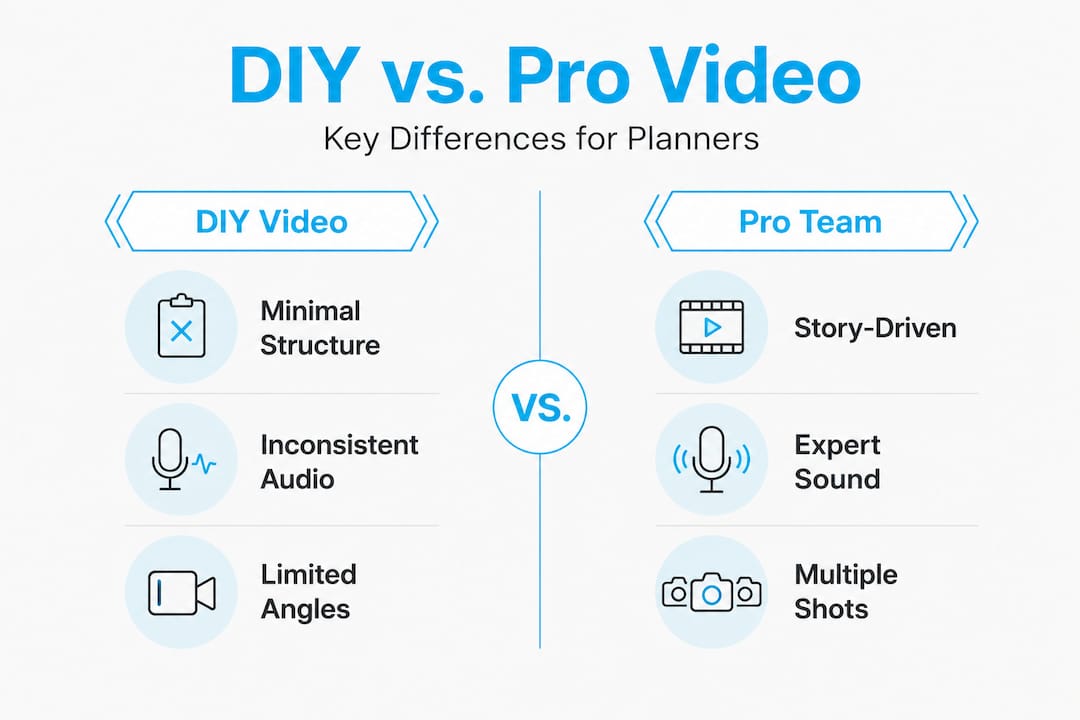
Here’s a side-by-side comparison of what each approach delivers:
| Factor | DIY/smartphone | Professional team |
|---|---|---|
| Narrative structure | Minimal to none | Intentional, story-driven |
| Audio quality | Inconsistent, often poor | Dedicated mics, mixed audio |
| Camera coverage | Single angle, static | Multi-camera, dynamic shots |
| Lighting management | Reliant on available light | Adjusted to venue conditions |
| Post-production | Basic or none | Branded, polished edit |
| Deliverable variety | One video, if any | Multiple assets per event |
| Turnaround reliability | Unpredictable | Agreed timeline |
The decision between a single-camera and multi-camera setup also matters significantly. A single camera is cost-effective for small internal meetings or panel recordings. Multi-camera setups, while carrying higher production costs, deliver coverage variety that makes the final edit far more dynamic. For conferences with keynote speakers, live audience reactions, and breakout moments happening simultaneously, multi-camera is the only way to capture the full narrative.
Consider these steps when evaluating your production approach:
- Define the primary deliverable first. A quick social clip for Instagram Stories requires a different approach than a five-minute brand recap for your website.
- Assess your venue complexity. Large ballrooms, outdoor settings, and multi-stage environments almost always require professional-grade equipment and crew.
- Map your distribution channels. If you plan to publish on YouTube, LinkedIn, and your website, you need professionally edited assets, not raw clips.
- Review past events. If your previous DIY footage was rarely used after the event, that’s a signal that production quality was limiting its utility.
- Calculate the full cost. Factor in your team’s editing time, software costs, and the opportunity cost of producing low-impact content.
Pro Tip: Review essential pro tips for event videography before locking in your production format. The format decision affects your shot list, crew size, and edit timeline, so it needs to be settled early. See also compelling event coverage for real-world examples of how production approach shapes final output. When approaching event video planning, having these decisions finalized two to four weeks before your event day is ideal.
How to plan event videography for your next corporate project
With the differences outlined, here’s how to plan a successful event videography project from concept to delivery.
Event videography is the professional process of planning, filming, and editing video content for live events, and that planning phase is where most projects either gain or lose momentum. Starting strong here protects every phase that follows.
Follow these steps to build a solid production plan:
- Set measurable objectives. Define what success looks like. Is it a highlight reel with 5,000 LinkedIn views? A speaker clip used in your next sales deck? Objectives determine every creative decision that follows.
- Select a videographer with relevant event experience. A team experienced in luxury brand shoots may not be the right fit for a fast-moving trade show floor. Confirm that your production partner has worked in your event category.
- Build a detailed shot list. Work with your video team to identify the ten to fifteen moments that must be captured. VIP arrivals, keynote openings, award presentations, and branded signage moments should all be listed explicitly.
- Coordinate venue logistics early. Confirm rigging points, power access, audio patch availability from the venue’s sound board, and any filming restrictions. Surprises on event day cost time and quality.
- Schedule a pre-production call. At least one week before the event, your production team should walk through the run-of-show with your event coordinator to align on timing and cues.
- Plan your content formats upfront. Decide whether you need vertical social content, widescreen web video, or both. This affects how cameras are positioned and how editors will structure the cut.
Key logistical factors to confirm before event day:
- Crew call time relative to load-in and first guest arrival
- Live streaming needs, if applicable, and bandwidth confirmation with the venue
- Talent or speaker release forms for anyone who will appear prominently on camera
- B-roll list covering venue details, signage, food and beverage moments, and audience engagement shots
- Post-production timeline agreed before filming begins
For deeper guidance, the corporate event video planning process we follow at Bonomotion covers pre-event discovery, day-of production management, and post-production delivery. Understanding why hire an event video production company, rather than managing it in-house, is also a decision worth making deliberately rather than by default.
Pro Tip: Always confirm audio capture directly from the venue’s sound board in addition to on-camera audio. Venue acoustics are unpredictable, and board audio is the difference between clear speaker content and unusable footage.
The hidden value of event videography: What most planners overlook
Taking all these practical steps into account, there’s a deeper value that many planners miss entirely.
Most corporate planners measure event success by attendance, lead capture, and immediate feedback. Rarely does video ROI factor into that scorecard at the planning stage. That’s a missed opportunity. The footage from a single well-produced event can function as a brand asset for 12 to 24 months. We’ve seen conference keynote clips used in recruiting campaigns a full year after the event itself. That’s not just documentation. That’s a living communications tool.
The importance of event videography extends well beyond marketing. Training departments use event footage to onboard employees who weren’t present. Executive communications teams pull speaker clips for thought leadership campaigns. HR teams use footage of company culture moments in recruiting materials. None of these use cases require additional production budget. They simply require planning and high-quality source footage.
There’s also a brand consistency argument. Organizations that consistently produce high-quality event video build a recognizable visual identity over time. Audiences begin to associate that production quality with the brand itself. In South Florida’s corporate environment, where regional and national competitors are active at the same events and on the same platforms, that visual consistency becomes a meaningful differentiator.
The uncomfortable truth is this: planners who treat event videography as a documentation expense rather than a content investment are systematically undervaluing one of the most versatile assets their events produce. Every corporate gathering is a content opportunity. The question is whether your production approach captures it fully or lets most of it walk out the door with your attendees.
Connect with expert videographers in South Florida
South Florida’s corporate event market is dynamic, competitive, and highly visual. The planners succeeding here understand that event video is not a line item to trim. It’s a strategic investment that compounds over time.
At Bonomotion, we’ve been producing high-impact corporate and event video across South Florida since 2003, working with startups, regional brands, and Fortune 100 companies at every scale. Whether you’re producing an executive summit in Hollywood or a product launch in Miami, our producers work directly with your team to align on objectives, logistics, and deliverables before a single camera rolls. Explore our corporate video production Hollywood capabilities, or review our full range of commercial video production Miami services. For organizations looking for a broader strategic fit, our corporate video solutions are built to serve communications goals at every level of your organization.
Frequently asked questions
How much does event videography typically cost?
Costs vary based on event size, footage length, camera count, and post-production scope, but professional services consistently deliver higher production value and a broader range of usable assets than in-house alternatives.
What’s included in a typical event videography package?
Packages generally include pre-production planning, full-day filming, post-production editing, and delivery of multiple assets. As the event video production guide explains, professional event videography is the process of planning, filming, and editing content to create marketing assets including highlight reels and recap videos.
Can event videography help with brand communication?
Absolutely. Professionally produced event video builds brand credibility, supports thought leadership, and drives audience engagement well beyond the event date. Event videography assets like highlight reels, recaps, and promotional clips are among the most cost-effective tools in a corporate communications strategy.
Is it possible to use smartphone video instead?
Smartphone footage can work for casual, low-stakes internal content, but it consistently lacks the narrative structure and production quality that professional videographers deliver, particularly in complex or high-profile corporate event environments.
Recommended
- Professional Video Production In South Florida [2025 Guide]
- Video Production South Beach | Bonomotion Video Agency
- Capturing The Pro Event Photography Tips For South Florida
- Best Video Production Blog In Miami FL 2026 | Bonomotion
- Event success: high-quality photography captures every moment