

Corporate events are far more than catered lunches and conference rooms. What are corporate events, really? They are structured, company-sponsored gatherings designed to achieve specific business objectives, from accelerating sales and launching products to reinforcing culture and deepening client relationships. The perception that corporate events are purely ceremonial is fading fast. 74% of senior business leaders now consider these events critical to hitting annual targets. If you are a marketing professional, HR manager, or corporate leader, understanding how to plan and leverage events strategically is one of the highest-leverage skills you can develop right now.
Table of Contents
- Key Takeaways
- What are corporate events and why they matter strategically
- Types of corporate events and when to use them
- Benefits of corporate events: what the data shows
- How to organize corporate events that actually deliver
- My take on where organizations get corporate events wrong
- Capture and extend your event’s impact with Bonomotion
- FAQ
Key Takeaways
| Point | Details |
|---|---|
| Corporate events are strategic tools | They drive measurable outcomes including revenue growth, culture building, and stakeholder trust. |
| Multiple formats serve distinct goals | From trade shows to executive retreats, each event type maps to specific business objectives. |
| Planning order matters enormously | Define your “why” before budgeting or booking venues to avoid misaligned, ineffective events. |
| Budget with precision and a buffer | Allocate by category and reserve 10-15% contingency to protect event quality and experience. |
| Video and media amplify event ROI | Professional production extends event reach far beyond the room and creates lasting brand assets. |
What are corporate events and why they matter strategically
A corporate event is any structured gathering organized by a company or organization to serve a defined business purpose. The term covers a wide spectrum, from intimate executive strategy sessions to multi-day global conferences with thousands of attendees. What unifies them is intent: every corporate event exists to move the needle on something that matters to the business.
Industry professionals categorize this space within the broader MICE ecosystem, which stands for Meetings, Incentives, Conferences, and Exhibitions. This framework helps clarify corporate event purpose by grouping gatherings according to the type of business value they generate. A sales incentive trip rewards performance and reinforces culture. A product launch conference creates market momentum. A town hall builds organizational transparency.
The strategic shift happening now is significant. Events are no longer treated as line items in the HR or marketing budget. They are being evaluated by C-suite executives with the same rigor applied to any business investment, with measurable outcomes, ROI frameworks, and performance metrics attached.
“Treating corporate events as strategic investments rather than operational expenses is the key differentiator between high-performing and ineffective events.” — Corporate event planning lifecycle
This shift changes how you should approach every phase of corporate event planning, from initial goal-setting to post-event analysis.
Types of corporate events and when to use them
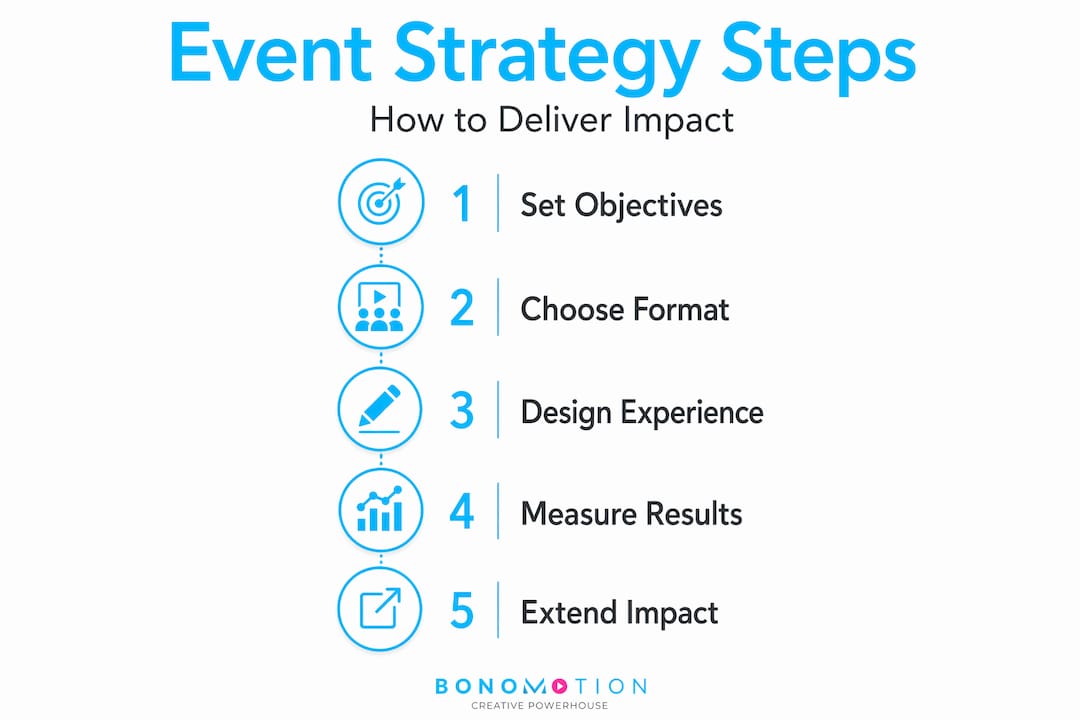
The diversity of formats available to corporate planners today is genuinely impressive. Each type serves a distinct audience, delivers different outcomes, and operates at a different scale. Understanding which format fits your goal is the first decision that determines event success.
Here is a breakdown of the most common types of corporate events, with notes on their purpose and typical audience:
- Conferences and summits: Multi-session events for industry professionals centered on knowledge sharing, thought leadership, and networking. Best for positioning a company as an authority within its sector.
- Trade shows and exhibitions: Public or B2B-facing events where companies showcase products or services. Ideal for lead generation and competitive visibility.
- Product launches: High-energy events timed to create maximum market buzz around a new offering. Often combine media relations, live demonstrations, and social media strategy.
- Employee recognition ceremonies: Internal events that celebrate individual and team performance. Directly tied to retention and culture reinforcement.
- Team building events: Structured activities that strengthen collaboration, communication, and morale. Especially valuable after organizational change or rapid growth periods.
- Executive retreats: Offsite gatherings for senior leadership focused on strategic planning, decision-making, or alignment. Require confidential, distraction-free environments.
- Town halls: Company-wide gatherings where leadership communicates updates and takes questions from employees. A high-trust format when done with genuine openness.
- Shareholder meetings: Formal, legally required gatherings for publicly traded companies to report performance and vote on governance matters.
- Client appreciation events: Relationship-centered gatherings designed to deepen loyalty and communicate gratitude. Often more social in format than operational.
One of the more interesting trends reshaping this space is the rise of informal conversational formats. Coffee talks and fireside chats have moved from novelty to mainstream because they deliver something a keynote cannot: genuine two-way dialogue between leaders and their audiences. These formats reduce the performance pressure on speakers and increase audience engagement significantly.
| Event type | Primary audience | Core objective | Typical scale |
|---|---|---|---|
| Conference | Industry professionals | Knowledge sharing, thought leadership | 100 to 10,000+ |
| Trade show | Prospects, clients, media | Lead generation, brand visibility | 500 to 50,000+ |
| Product launch | Press, clients, partners | Market awareness, sales momentum | 50 to 5,000 |
| Team building | Employees | Culture, collaboration | 10 to 500 |
| Executive retreat | Senior leadership | Strategic planning | 5 to 50 |
| Town hall | All employees | Communication, transparency | 50 to 10,000 |
| Client appreciation | Key clients, VIPs | Loyalty, relationship deepening | 20 to 500 |
Pro Tip: Match your event format to your objective before you choose your venue. A fireside chat format in a lecture-hall setup sends mixed signals to attendees and undercuts the informal tone you are trying to create.
Benefits of corporate events: what the data shows
The benefits of corporate events fall into two clear categories: internal and external. Both have measurable impact when events are executed with precision.

On the internal side, well-designed events do something no memo or all-hands email can replicate. They create shared experience. A team that participates in a well-crafted recognition ceremony, a leadership offsite, or even a thoughtful onboarding event builds emotional connection to the organization. That connection directly affects retention, motivation, and discretionary effort.
The external benefits operate on a different axis. Corporate events now drive tangible outcomes including live product demonstrations, B2B networking that shortens sales cycles, and media coverage that extends brand reach far beyond the room. A well-executed product launch can compress months of outbound sales effort into a single high-impact day.
- Accelerated sales cycles. Live events put decision-makers in the same room, removing the friction of remote selling and compressing timelines for deals that might otherwise take quarters to close.
- Brand authority and visibility. Hosting or co-sponsoring a conference positions your company as a category leader, not just a vendor.
- Employee retention. Recognition and culture events signal investment in people, which directly counters the “quiet quitting” dynamic many organizations are managing right now.
- Learning and development at scale. Training events create shared vocabulary and skill sets across teams in ways that asynchronous e-learning cannot match.
- Stakeholder trust. Transparent town halls and shareholder meetings build organizational credibility when the communication is genuine and substantive.
The experience economy has raised the stakes considerably. Attendees in 2026 arrive with elevated expectations. Poor AV, disjointed programming, or a venue that feels mismatched to the brand now carries real reputational risk. Quality is no longer a differentiator. It is the baseline.
Pro Tip: Track event ROI beyond attendance numbers. Post-event surveys measuring sentiment shift, follow-up meeting rates from networking sessions, and revenue attribution from product launch leads will give you the data to justify and grow your event budget.
How to organize corporate events that actually deliver
The most common mistake in corporate event planning is treating logistics as the starting point. Before you book a venue or draft an agenda, you need to answer one question clearly: what does success look like for this event?
Planning a corporate event without a defined business purpose is the fastest route to a forgettable experience. Purpose determines format, format determines venue, venue determines budget, and budget determines everything else. The sequence matters.
Once purpose is locked, budgeting by category protects you from the vague “how much should this cost?” paralysis. A standard breakdown looks like this:
| Budget category | Recommended allocation |
|---|---|
| Venue rental | 30 to 40% |
| Catering and food service | 20 to 25% |
| AV and production | 10 to 15% |
| Travel and accommodation | 15 to 20% |
| Contingency buffer | 10 to 15% |
That contingency line is non-negotiable. Real events encounter real surprises, and having a financial buffer means you solve problems without compromising the attendee experience.
Spatial design is another area that many planners underestimate. The physical environment of a venue measurably affects meeting outcomes and attendee satisfaction. A well-designed space creates a natural activity hub that encourages interaction. Acoustic integrity matters especially for executive sessions where sensitive conversations require privacy. Venue selection is a strategic decision, not an aesthetic one.
Technology has added a powerful new dimension to corporate event management in 2026. Hybrid formats, AI-driven personalization tools, and real-time engagement platforms now allow event organizers to tailor session recommendations, manage remote attendee participation, and gather behavioral data that informs future programming. If you are not integrating these tools, you are leaving measurable value on the table.
Pro Tip: When selecting your event venue, request a full technical walkthrough of the AV infrastructure before signing. What looks like a polished space in photos may have ceiling acoustics that destroy speaker clarity and undermine your production quality.
My take on where organizations get corporate events wrong
I have spent over two decades working with companies of every size, from early-stage startups to Fortune 100 brands, producing video and media content for their most important events. What I have seen repeatedly is that the organizations who struggle with events share one characteristic: they plan from the outside in.
They start with the venue search. Or they budget first, then try to reverse-engineer a purpose that fits the number. The events that generate real impact, the ones people still talk about six months later, start from a clear internal truth: what does this organization need to communicate, change, or create through this gathering?
I have also noticed that the post-pandemic recovery phase pushed many companies toward volume. More events, faster, to rebuild what was lost. What I have found actually works is the opposite approach. Fewer, sharper, better-resourced events consistently outperform a calendar full of mediocre ones. Your attendees remember depth, not frequency.
The other shift I keep observing is how much attendee expectations have evolved. The bar for event production quality, for storytelling, for the sophistication of the experience, is materially higher than it was even three years ago. Organizations that treat corporate event videography as an afterthought, or skip professional AV entirely, are communicating something about their brand whether they intend to or not.
Invest in the experience. It is the only part of your event that attendees actually take home with them.
— Bernard
Capture and extend your event’s impact with Bonomotion
Your corporate event represents a significant investment in time, resources, and organizational energy. The question is whether that investment lives only in the room or continues generating value for months afterward.
At Bonomotion, we have been producing high-impact event video and live streaming content for companies across Florida and nationwide since 2003. From multi-day conferences and product launches to executive messaging and internal culture events, our experienced producers work directly alongside your team to capture the moments that matter and turn them into branded media assets. Whether you need professional live event streaming to reach a hybrid audience or a full event production package that extends your reach long after the event ends, Bonomotion operates as a true extension of your organization. Let us help you make every event work harder.
FAQ
What are corporate events, exactly?
Corporate events are structured, company-sponsored gatherings organized to achieve specific business objectives such as employee engagement, product launches, training, or client relationship management. They range in scale from small executive retreats to multi-day international conferences.
What are the most common types of corporate events?
The most common types include conferences, trade shows, product launches, team building events, town halls, executive retreats, employee recognition ceremonies, and client appreciation events. Each format serves a distinct audience and business goal.
What is the corporate event purpose for HR and marketing teams?
For HR teams, events primarily serve culture building, employee recognition, and talent retention. For marketing teams, events drive brand visibility, lead generation, and sales acceleration, often functioning as live product showcases.
How much should a company budget for a corporate event?
Standard budget allocations put 30 to 40% toward venue costs, 20 to 25% toward catering, 10 to 15% toward AV and production, and 15 to 20% toward travel. A 10 to 15% contingency buffer is also recommended to handle unexpected costs without compromising quality.
Why are corporate events important for business growth?
Corporate events create shared experiences that drive retention, accelerate sales cycles, build brand authority, and strengthen stakeholder trust in ways that digital communication alone cannot replicate. Well-executed events are now recognized by the majority of senior business leaders as critical to annual business targets.