

A business livestream is defined as the real-time broadcast of professional video content to customers, partners, employees, or investors through a controlled, branded delivery environment. Unlike consumer livestreaming on platforms like YouTube or TikTok, B2B live streaming requires branded players, gated access, and detailed viewer analytics to meet professional standards. Common use cases include webinars, product demos, virtual town halls, investor briefings, and multi-day conferences. Platforms like YoloCast and OneStream Live offer entry-level tiers that make this accessible to organizations of any size, while scaling to enterprise needs as complexity grows.
What is a business livestream and how does it differ from consumer streaming?
Business livestreaming, also called B2B live streaming, is the practice of broadcasting live video specifically to professional audiences in a controlled, brand-owned environment. The distinction from consumer streaming is not cosmetic. It is structural.

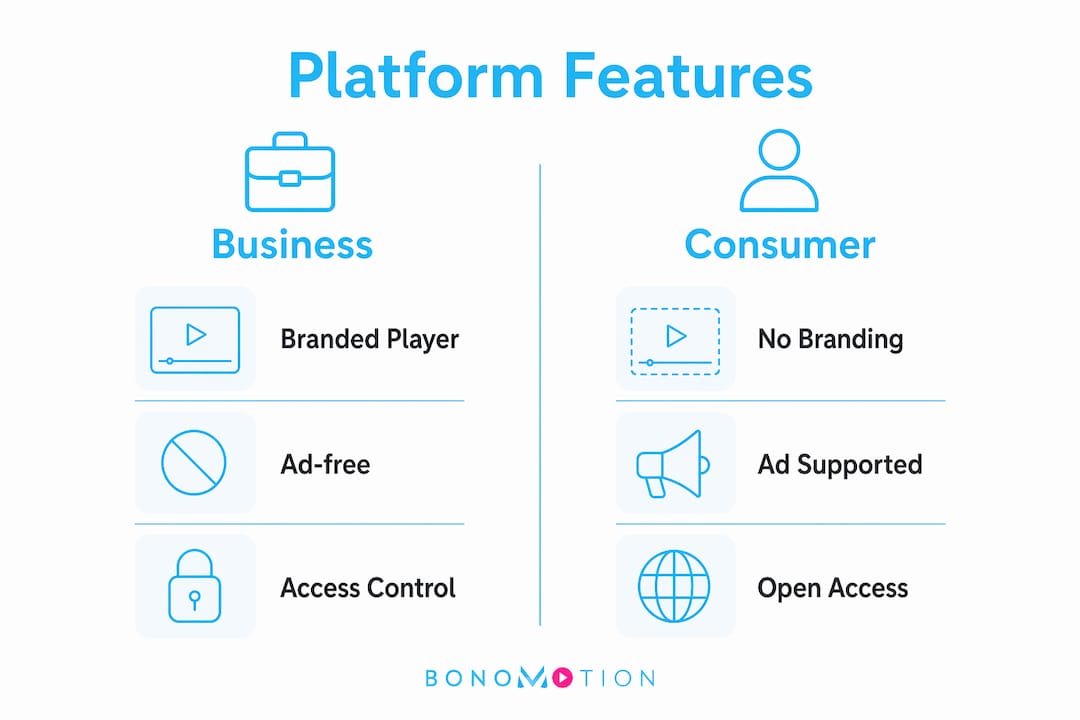
Consumer platforms like YouTube Live or Twitch are built for open audiences, ad-supported monetization, and platform-branded experiences. A business livestream inverts every one of those priorities. Business livestream audiences expect no ads, no competitor branding, and controlled access. They are attending product demos, company briefings, or training sessions, so professionalism is non-negotiable.
The core technical requirements that separate business from consumer streaming include white-label video players, password or registration gating, granular viewer analytics, and reliable on-demand replay. These are not optional upgrades. They are the baseline for any organization that wants to protect its brand and measure results.
Understanding the business livestream meaning also means recognizing its scope. A single live session can serve marketing, sales, and internal training simultaneously, making it one of the highest-leverage communication formats available to organizations today.
What features do business livestreaming platforms require?
The right platform determines whether your stream feels like a professional broadcast or an improvised video call. These are the features that separate business-grade solutions from general consumer tools.
- Branded, ad-free video players. Branded players reduce viewer distraction and reinforce brand authority, which is especially critical in B2B contexts where platform branding from competitors would undermine credibility.
- Gated access controls. Password protection or registration walls keep your content exclusive to the intended audience, whether that is a client list, a registered webinar group, or your internal workforce.
- Granular viewer analytics. Analytic tools should provide per-viewer engagement data including watch duration, drop-off points, and conversion events. That level of detail lets you optimize future streams and quantify ROI.
- On-demand replay. After the live broadcast ends, the recording should be immediately available as a gated asset for follow-up campaigns or sales enablement.
- Multi-platform distribution. Tools like OneStream Live and YoloCast support multi-platform streaming with simultaneous broadcasts to LinkedIn, YouTube, and custom destinations, increasing reach without additional production effort.
| Feature | Consumer Platforms | Business Platforms |
|---|---|---|
| Branded video player | No | Yes |
| Ad-free experience | No | Yes |
| Gated/registration access | No | Yes |
| Viewer engagement analytics | Basic | Granular |
| On-demand replay control | Limited | Full |
| Multi-platform distribution | Partial | Yes |
Choosing a platform without these features forces your team to work around limitations that erode the viewer experience and your brand’s credibility.
How can businesses use livestreaming strategically?
Live streaming for businesses is not a single-use tactic. It is a format that serves multiple departments and objectives simultaneously. Here is how organizations deploy it most effectively.
- Webinars and expert sessions. Webinars remain the most common B2B livestream format. They position your organization as a knowledge authority, generate qualified leads through registration, and produce replay content that continues working after the broadcast ends.
- Product demos with live Q&A. Showing a product in real time, with a presenter responding to audience questions, converts viewers at a higher rate than static content. Live streams create urgency and real-time interaction that pre-recorded video cannot replicate.
- Virtual conferences and panel discussions. Multi-speaker events broadcast live let organizations reach global audiences without the cost of physical venues. A well-produced virtual conference can attract C-suite executives and decision-makers who would never travel to an in-person event.
- Internal communications. Town halls, all-hands meetings, and compliance training delivered via livestream give distributed teams a shared, synchronous experience. This is especially valuable for organizations with offices across multiple time zones.
- Investor and partner briefings. Quarterly updates and product roadmap presentations delivered via gated livestream give investors and strategic partners a controlled, professional communication channel.
- Repurposed content assets. Livestreams can be reused as on-demand webinars, short clips, and sales follow-up materials. One live session supports marketing, sales, and education simultaneously.
Pro Tip: Record every livestream with a dedicated local capture device, separate from your streaming encoder. Platform recordings can fail. A local backup ensures you always have a clean file for repurposing.
The strategic value of live streaming events for business compounds over time. Each session produces a library of content, a set of viewer data, and a stronger relationship with your audience.
What are the key benefits of business livestreaming?
The benefits of business livestreaming extend well beyond reach. They touch brand perception, sales conversion, and operational efficiency.
- Real-time engagement drives conversion. Strong offers and limited-time deals during live streams convert viewers in real time. The urgency of a live format creates a psychological trigger that on-demand video cannot match.
- Brand credibility through controlled delivery. A professional, ad-free stream signals competence and organizational discipline. Viewers evaluate business livestreams similarly to financial media, expecting calm, clear, and professional presentations to process complex information with confidence.
- Cost efficiency over physical events. A single well-produced livestream replaces the logistics, travel, and venue costs of an in-person event while reaching a larger audience. For organizations running quarterly briefings or annual conferences, the savings are substantial.
- Measurable ROI through analytics. Granular viewer data tells you which segments of your stream held attention and which caused drop-off. That intelligence directly improves your next broadcast and justifies the investment to leadership.
- Consistent audience growth. 28% of businesses conduct live streams weekly to leverage trending topics and drive engagement. Regular streaming builds an audience that expects and returns for your content.
The importance of business livestreams is clearest when you compare the output per dollar spent. No other format delivers live interaction, brand control, and reusable content in a single production.
How do you choose a platform and produce a high-trust broadcast?
Platform selection and production quality are the two variables that determine whether your business livestream builds trust or erodes it. Both deserve deliberate attention.
Choosing the right platform
Evaluate platforms on five criteria: feature completeness, broadcast reliability, branding control, pricing structure, and technical support availability. YoloCast and OneStream Live both offer branded players and analytics at accessible price points. Enterprise organizations with complex access control needs may require dedicated solutions with dedicated support contracts.
Production best practices that build trust
Trust in business livestreams is built through production control, not just visuals. OBS scenes structured for slide shares, interviews, and remote guests keep streams calm and controlled, which directly boosts viewer confidence. This is a counterintuitive insight: your audience is not judging your camera. They are judging whether the experience feels deliberate and prepared.
Professional production reduces friction for viewers and reinforces brand trust signals such as competence and reliability. A clear run of show, stable audio, controlled lighting, and clean graphics create the calm, deliberate atmosphere that professional audiences expect.
| Production Element | Why It Matters |
|---|---|
| Stable, directional audio | Poor audio is the top reason viewers abandon a stream |
| Controlled lighting | Flat or harsh lighting reads as unprepared |
| Multi-scene switching (OBS) | Keeps visual flow structured and professional |
| Pre-broadcast technical rehearsal | Eliminates surprises that erode viewer trust |
| Clean lower-third graphics | Reinforces brand identity throughout the stream |
Successful business livestreams make viewers feel like community members through live polls, Q&A, and interactive demos. Interaction in real time transforms passive audiences into active participants. Build these touchpoints into your run of show at planned intervals, not as afterthoughts.
Pro Tip: Treat your run of show like a broadcast script. Assign a dedicated producer to manage scene transitions and monitor chat, separate from the on-camera presenter. Splitting those roles prevents the on-screen talent from getting distracted and keeps the stream moving at a controlled pace.
For organizations learning how to livestream a business event from scratch, investing in a pre-production checklist and a technical rehearsal is the single highest-return preparation step available.
Key takeaways
Business livestreaming succeeds when branded delivery, production discipline, and viewer interaction work together to build trust and drive measurable engagement.
| Point | Details |
|---|---|
| Definition matters | A business livestream is a controlled, branded broadcast, not a consumer platform session. |
| Platform features are non-negotiable | Branded players, gated access, and granular analytics are the baseline for B2B streaming. |
| Production quality signals trust | Stable audio, controlled lighting, and a structured run of show directly affect viewer confidence. |
| Strategic repurposing multiplies value | One live session produces webinar replays, short clips, and sales assets simultaneously. |
| Interaction converts audiences | Live polls, Q&A, and demos transform passive viewers into engaged participants and qualified leads. |
Why production quality is the real differentiator in business livestreaming
After working in corporate video production for over two decades, I have watched organizations invest heavily in platform subscriptions and then broadcast from a conference room with a laptop webcam and overhead fluorescent lighting. The platform was not the problem. The production was.
Business livestreaming is primarily about building trust and communicating reliability. Production quality is the brand signal your audience reads before your presenter says a single word. A shaky frame, an echo-heavy room, or a cluttered background tells your audience that your organization did not prepare. That impression is hard to reverse in the first 90 seconds of a broadcast.
The organizations that get the most from live streaming are the ones that think like publishers, not just streamers. They plan their content calendar, script their key messages, rehearse their transitions, and treat every broadcast as a brand touchpoint with lasting consequences. The live format creates urgency and authenticity. The production discipline creates credibility. You need both.
My honest recommendation: before you invest in a more sophisticated platform, invest in your audio. A $150 directional microphone and a basic acoustic treatment will do more for viewer trust than any software upgrade. From there, build your production checklist outward, adding lighting, multi-camera capability, and graphics as your program matures.
The organizations we see succeeding with corporate livestream workflows are not necessarily the ones with the largest budgets. They are the ones with the most disciplined pre-production process.
— Bernard
Take your business livestream to the next level with Bonomotion
A well-executed business livestream requires more than a platform subscription. It requires experienced producers, professional camera crews, broadcast-grade audio and lighting, and a team that understands how to translate your organizational objectives into a compelling live broadcast.
Bonomotion has been producing corporate livestream events for startups, growing brands, and Fortune 100 companies since 2003. From executive town halls and multi-day conferences to product launches and investor briefings, we operate as a true extension of your team. We handle multi-platform distribution, branded production design, and technical direction so your team can focus on the message. Contact Bonomotion to discuss your next live streaming production and get a consultation from an experienced producer.
FAQ
What is the business livestream meaning in a b2b context?
A business livestream is a real-time video broadcast delivered to a professional audience through a branded, controlled environment with gated access and viewer analytics. It differs from consumer streaming by prioritizing brand control, professionalism, and measurable engagement over open reach.
How do you livestream a business event for the first time?
Start with a platform that offers a branded player and registration gating, then build a structured run of show, conduct a full technical rehearsal, and assign a dedicated producer to manage the stream separately from the on-camera presenter.
What are the core benefits of business livestreaming?
The primary benefits include real-time audience engagement, higher conversion rates through urgency and live Q&A, cost savings over physical events, and granular viewer analytics that quantify ROI and inform future content strategy.
How often should businesses livestream?
28% of businesses livestream weekly to maintain audience engagement and capitalize on trending topics. The right frequency depends on your content calendar and production capacity, but consistency matters more than volume.
What production equipment does a business livestream require?
At minimum, a business livestream requires a directional microphone for clean audio, controlled lighting to eliminate harsh shadows, a stable camera with a clean background, and a reliable encoder such as OBS to manage scene switching and stream output.