

Event video trends are reshaping the industry in 2025, and we at Bonomotion Video Agency are at the forefront of these exciting changes.
From cutting-edge technologies to creative storytelling techniques, the world of event videography is evolving rapidly. This blog post explores the hottest trends that are transforming how we capture and share memorable moments.
Get ready to discover the latest innovations in equipment, production methods, and sustainable practices that are defining the future of event videography.
Tech Revolution in Event Videography
Event videography transforms in 2025, propelled by groundbreaking technologies that redefine how we capture and experience events. These innovations deliver unparalleled video quality and immersive experiences for clients.
8K Resolution: The New Clarity Standard
8K resolution cameras and displays now set the gold standard in event videography. With 33 million pixels (four times the resolution of 4K), 8K provides unprecedented detail and clarity. This quality leap allows event organizers to create larger-than-life displays without losing sharpness, even when viewed up close.

A recent Mordor Intelligence study projects the 8K technology market to grow at a CAGR of 32.9% from 2024 to 2029. This rapid adoption stems from the technology’s ability to capture intricate details, from fabric textures in fashion shows to subtle speaker expressions at corporate events.
AI-Powered Editing: Post-Production Streamlined
Artificial Intelligence revolutionizes the editing process, significantly reducing post-production time while enhancing creativity. AI-powered tools now automatically sort through hours of footage, identify key moments, and create initial cuts based on predefined parameters.
Speed and efficiency in workflows are major advantages brought by AI-powered editing tools. By automating repetitive processes, these tools allow videographers to focus more on creative storytelling and less on tedious tasks.
Virtual and Augmented Reality: Real and Digital Worlds Blend
Virtual and Augmented Reality technologies transform event experiences, allowing remote attendees to feel physically present. VR headsets provide immersive 360-degree event views, while AR overlays digital information onto the real world, enhancing engagement and interactivity.
Virtual Event Statistics stated that nearly 88.1% of people surveyed had hosted at least one virtual event. These technologies not only expand audience reach but also create new opportunities for sponsorship and branding.
The Future of Event Videography
The fusion of these technologies creates a new paradigm in event videography. As we progress, the line between physical and virtual events continues to blur, offering exciting possibilities for engagement and storytelling.
To stay ahead of these trends, videographers must adapt and embrace these new technologies. Companies that invest in cutting-edge equipment and training will position themselves as industry leaders. (For those seeking top-tier event videography services that incorporate these latest innovations, Bonomotion Video Agency stands out as the premier choice in South Florida.)
The next chapter will explore how these technological advancements influence creative storytelling techniques in event videography, opening up new avenues for captivating audience engagement.
Storytelling Techniques That Captivate Audiences
Event videography in 2025 transcends mere documentation. It creates immersive experiences that transport viewers into the heart of the action. We’ve mastered the art of storytelling through video, employing cutting-edge techniques that leave lasting impressions.
360-Degree Immersion
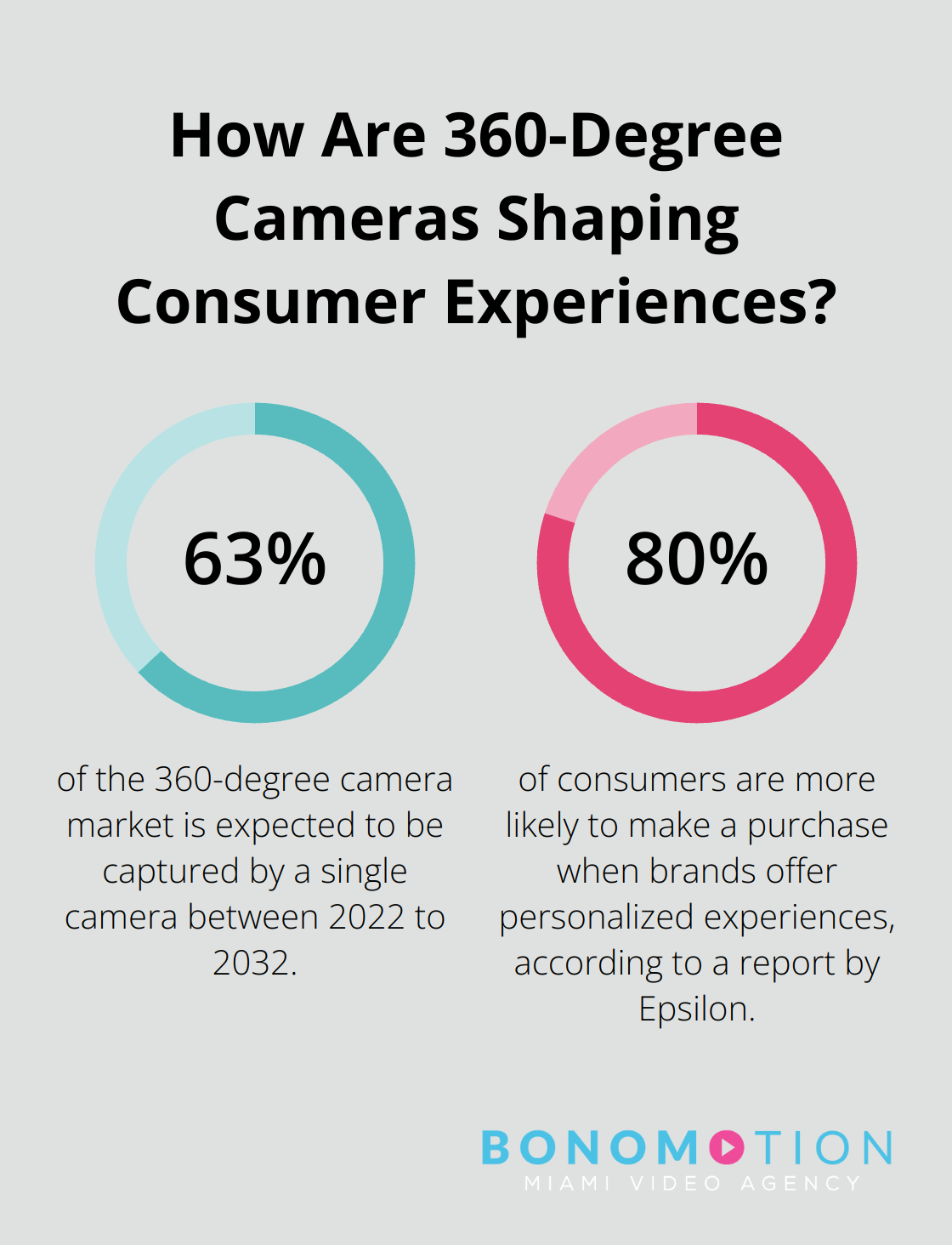
360-degree video experiences have become a game-changer in event videography. This technology allows viewers to explore every angle of an event, from the center of a bustling trade show floor to the quiet corners of a gala dinner. Between 2022 to 2032, around 63% of the market is expected to be captured by a single camera, showcasing the growing importance of this technology in the industry.
To maximize 360-degree video impact, we recommend strategic camera placement at key locations throughout your event space. This ensures comprehensive coverage and allows for seamless transitions between different areas. Post-production software like Adobe Premiere Pro now offers specialized tools for stitching and editing 360-degree footage, making it easier to create polished, immersive content.
Aerial Perspectives
Drone cinematography has revolutionized event capture, offering breathtaking aerial shots that were once impossible to achieve. The Global Drone Services Market Size is estimated to reach USD 57.8 billion by 2028, growing at a CAGR of 27.7%, indicating the growing importance of this technology in videography.
Drone footage presents unique storytelling opportunities. Use aerial shots to establish the scale of outdoor events, showcase venue architecture, or capture the flow of crowds. However, safety and compliance with local regulations must always take priority. Many events now require certified drone operators, so it’s essential to work with experienced professionals.
Personalized Highlight Reels
In the age of social media, personalized content reigns supreme. Event highlight reels tailored to individual attendees or specific audience segments have become a powerful tool for engagement and marketing. A report by Epsilon found that 80% of consumers are more likely to make a purchase when brands offer personalized experiences.
AI-powered video editing tools can quickly sort through hours of footage based on facial recognition or specific tags to create effective personalized highlight reels. Platforms like Magisto or Adobe Sensei use machine learning to identify the most engaging moments and automatically compile them into shareable clips.
For maximum impact, distribute these personalized videos through targeted email campaigns or private social media groups. This not only extends the life of your event content but also fosters a sense of exclusivity and connection among attendees.
The key to successful event videography in 2025 lies in combining these innovative techniques with a deep understanding of your audience and event objectives. Craft narratives that resonate on a personal level and leverage technology to enhance the viewing experience. This approach creates video content that not only documents your event but also drives engagement long after it’s over.
As we push the boundaries of what’s possible in event videography, the next frontier lies in sustainable practices that minimize environmental impact while maximizing creative output. The following chapter will explore how eco-friendly approaches shape the future of event video production.
Green Event Videography: Sustainable Practices for 2025
Event videography in 2025 embraces eco-friendly solutions that reduce environmental impact without compromising quality. The industry shifts towards sustainable practices, setting new standards for responsible production. This chapter explores how event videography becomes greener and more sustainable.
Energy-Efficient Equipment Powers Creativity
The latest generation of video equipment offers superior performance with reduced energy consumption. LED lighting systems are incredibly energy-efficient, using only a fraction of the power required by traditional lighting while providing better color accuracy and control. Many videography companies now use LED panels exclusively, significantly reducing power consumption on set.
Battery technology has advanced remarkably. New lithium-ion batteries used in cameras and other equipment last longer and charge faster, reducing the need for multiple battery changes and lowering overall energy use. Some manufacturers have introduced batteries made from recycled plastic, further minimizing environmental impact.
Digital Deliverables Cut Physical Media Waste
Cloud-based delivery systems have become the norm, eliminating the need for DVDs, USB drives, and their associated packaging waste. Services like Frame.io and Dropbox allow seamless sharing of high-quality video files with clients, while also enabling real-time collaboration and feedback.
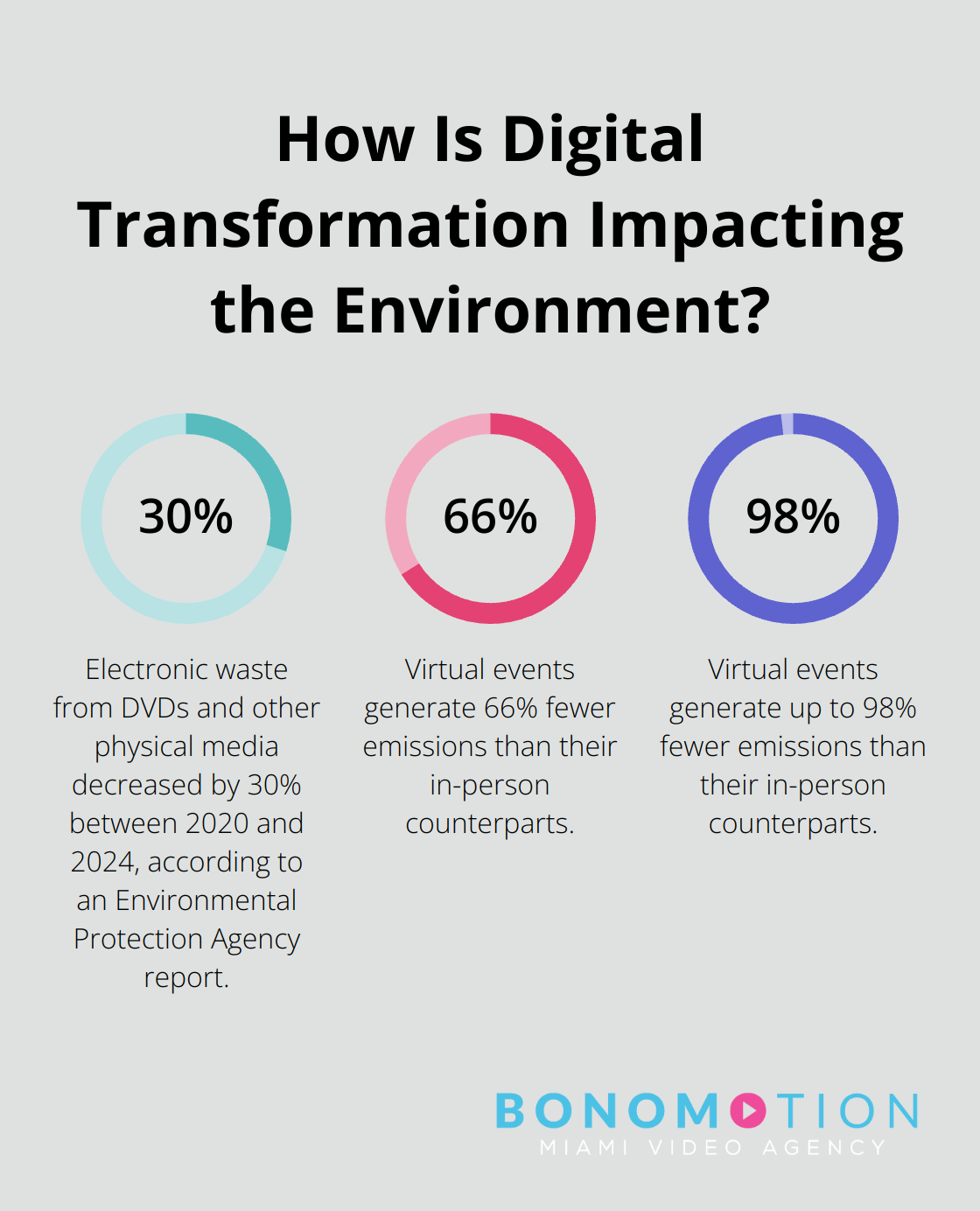
This shift to digital deliverables has a significant impact. Electronic waste from DVDs and other physical media decreased by 30% between 2020 and 2024, according to an Environmental Protection Agency report. Cloud-based delivery not only reduces waste but also improves efficiency and client satisfaction.
Remote Production Minimizes Travel Impact
Remote production techniques have evolved dramatically, allowing high-quality event coverage with minimal on-site presence. Multi-camera setups can now be controlled remotely, with directors and producers working from centralized locations. This approach reduces travel-related carbon emissions and opens up new possibilities for covering multiple events simultaneously.
Virtual attendance options have become more sophisticated. Live streaming services now offer interactive features that closely mimic the in-person experience. Platforms provide virtual networking spaces and breakout rooms, allowing remote attendees to engage meaningfully with the event and each other.
The impact of these remote solutions is substantial. Virtual events generate between 66% to 98% fewer emissions than their in-person counterparts. While hybrid events will likely remain popular, the environmental benefits of remote production are too significant to ignore.
Sustainable Equipment Choices
Videographers now prioritize equipment with longer lifespans and better repairability. This shift reduces electronic waste and the need for frequent replacements. (Companies like Bonomotion Video Agency lead the way by investing in high-quality, durable equipment that stands the test of time.)
Rental services for specialized equipment have also gained popularity. This model allows videographers to access cutting-edge technology without the environmental cost of constant upgrades and disposals.
Eco-Friendly Post-Production Practices
Post-production processes have also become more sustainable. Cloud-based editing platforms reduce the need for energy-intensive local hardware. These platforms often use renewable energy sources for their data centers, further decreasing the carbon footprint of video production.
AI-powered editing tools streamline the post-production process, reducing energy consumption and time spent on repetitive tasks. This efficiency not only benefits the environment but also improves turnaround times for clients.
Final Thoughts
Event video trends in 2025 have revolutionized the industry. From 8K resolution to AI-powered editing, technology enhances video quality and opens new creative avenues. Immersive experiences like 360-degree video and drone cinematography offer unprecedented perspectives, while personalized highlight reels drive long-term engagement.

The shift towards sustainable practices demonstrates the industry’s commitment to responsible production. Energy-efficient equipment, digital deliverables, and remote production techniques reduce environmental impact without compromising quality. These innovations redefine event experiences, challenging videographers to adapt to new opportunities in capturing virtual and hybrid gatherings.
At Bonomotion Video Agency, we integrate these trends into our work, creating compelling visual narratives that elevate brand presence. Our team of expert producers and state-of-the-art facility in Miami allow us to deliver cutting-edge video solutions for various projects. For businesses seeking to harness the power of modern event videography, Bonomotion Video Agency stands ready to exceed expectations and drive meaningful results.