

Many business owners assume a smartphone and good lighting are enough to produce effective video content. The reality is more nuanced. While mobile cameras have improved dramatically, professional videography delivers something a phone never will: strategic storytelling that builds credibility, earns trust, and drives measurable results. The key benefits include superior emotional connection, platform-optimized content, meaningful time savings, and higher perceived trust among audiences. For South Florida businesses competing in fast-moving markets like Brickell, Miami Beach, and Fort Lauderdale, these advantages translate directly into revenue.
Table of Contents
- The ROI of professional videography for businesses
- Superior storytelling: Why professional videography emotionally connects audiences
- Platform-optimized content: Matching your video to the right audience
- Common pitfalls and expert strategies: Avoiding mistakes in corporate videography
- Our take: Why smart businesses mix DIY and professional videography
- Discover South Florida’s top professional videography solutions
- Frequently asked questions
Key Takeaways
| Point | Details |
|---|---|
| Professional videography ROI | Investing in experienced videographers leads to higher engagement, credibility, and fewer hidden costs. |
| Emotional storytelling matters | Pros craft narratives that connect with audiences and reinforce your brand message. |
| Tailored content wins | Optimizing video for each platform ensures your message reaches and resonates with the right viewers. |
| Avoid common mistakes | Professional crews help you sidestep pitfalls like bad audio and unclear messaging. |
| Mix DIY and pro wisely | Use professionals for high-impact needs while saving costs on simpler, everyday video content. |
The ROI of professional videography for businesses
When you weigh the cost of professional videography against DIY alternatives, the upfront numbers can look deceptively simple. A smartphone costs nothing extra. A professional crew costs thousands. But that surface comparison misses the full picture of what each approach actually delivers over time.
Video production vs DIY analysis consistently shows that DIY saves upfront cost and time for simple content, but hidden costs including reshoots, low engagement, and reduced credibility make professional production a better long-term ROI for brand-critical videos. Those hidden costs add up faster than most business owners expect.
“The real cost of DIY video isn’t the equipment. It’s the lost opportunities that come from content that fails to perform.”
Consider a real-world scenario: a Miami-based professional services firm shoots an executive interview on an iPhone. The footage looks acceptable. But the audio has room echo, the framing feels awkward, and the color temperature shifts midway through. The marketing team spends hours in editing, still can’t fully salvage the quality, and ultimately reposts a video that audiences scroll past within three seconds. That “free” video cost the firm 12 hours of internal labor, a missed campaign window, and a credibility hit with prospective clients.
Professional crews eliminate these variables from the start. Experienced producers plan the shoot structure, control the environment, and deliver polished footage that rarely requires costly reshoots. For businesses tracking video ROI in Miami, the efficiency gains alone often justify the investment.
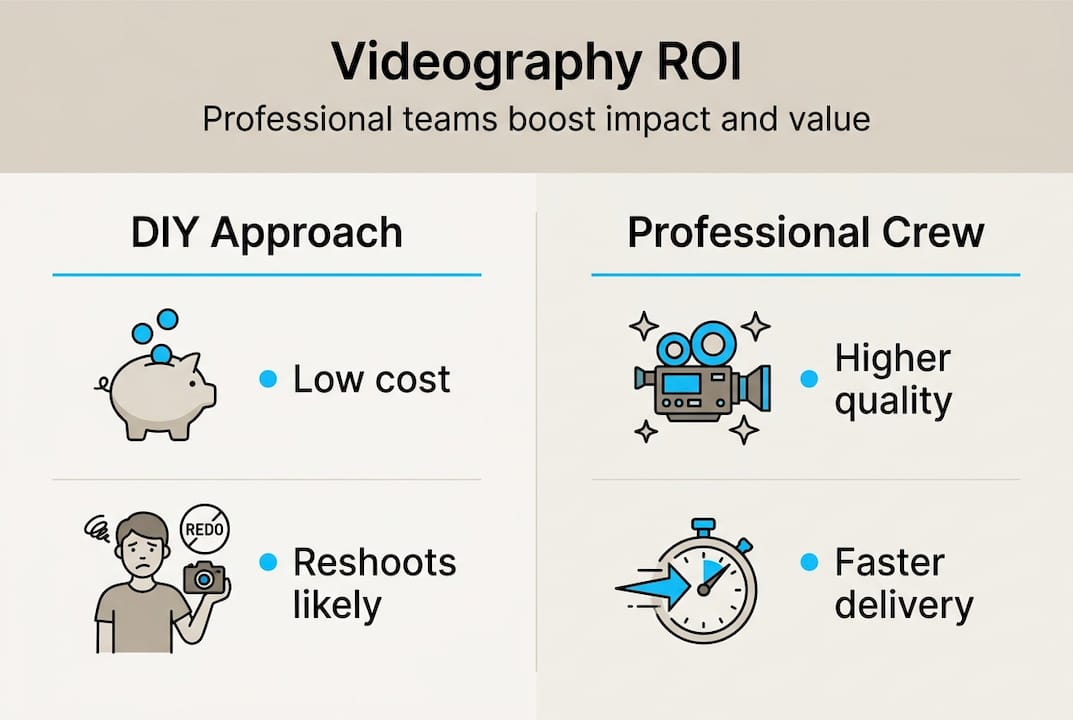
Here is a direct comparison of outcomes by approach:
| Factor | DIY video | Professional video |
|---|---|---|
| Upfront cost | Low | Moderate to high |
| Reshoot likelihood | High | Very low |
| Average viewer retention | Lower | Significantly higher |
| Brand credibility impact | Neutral to negative | Positive |
| Time investment (internal) | High | Low |
| Long-term ROI | Variable | Consistently strong |
When you map different explainer and commercial video types against your business goals, you can assess ROI by content category. Low-stakes social clips may suit a DIY approach. Executive messaging, investor presentations, product launches, and event coverage all demand professional production. The stakes attached to those content types simply don’t allow for quality gaps.
Pro Tip: Categorize your video content into two tiers before budgeting. Tier one covers brand-critical and high-visibility content that always warrants professional production. Tier two covers casual, behind-the-scenes, or rapid-response social content where a smartphone may suffice. This framework prevents overspending on low-impact content while protecting your brand where it counts most.
Calculating ROI also means factoring in speed to market. A professional team with organized workflows delivers final files faster than an internal team learning video production on the fly. Faster delivery means faster campaign launches, which translates directly to competitive advantage in South Florida’s dense business environment.
Superior storytelling: Why professional videography emotionally connects audiences
Numbers matter, but emotion drives decisions. Audiences don’t share videos because they are technically flawless. They share videos because they feel something. Professional videographers understand this at a craft level that goes far beyond camera settings and lighting ratios.
Superior storytelling that emotionally connects audiences is one of the defining advantages of professional production. This is especially relevant for corporate events, brand promotions, and executive communications where the stakes are high and the margin for a flat or forgettable video is zero.
What does professional storytelling actually look like in practice? It starts before the camera turns on. A skilled producer conducts pre-interview conversations to surface the most compelling moments from an executive or client testimonial. They structure narratives with a beginning, a tension point, and a resolution that aligns with your brand message. Every cut, every music choice, every graphic supports the emotional arc.
Here are the core elements professionals use to maximize story impact:
- Strategic lighting: Three-point lighting setups that flatter subjects and reinforce brand tone, creating warmth and professionalism simultaneously
- Interview structure: Pre-planned question sequences that draw out authentic, quotable responses rather than scripted-sounding answers
- Pacing and editing rhythm: Cut patterns that sustain attention and emphasize key messages without letting the viewer disengage
- Sound design: Clean dialogue recording combined with supporting music that amplifies emotional beats without overpowering the message
- Visual composition: Intentional framing that guides viewer attention to faces, products, or environments that matter most to the narrative
“Audiences form trust opinions within seconds of pressing play. Visual quality, audio clarity, and narrative confidence all signal whether a brand is worth their time.”
Compare a DIY corporate event recap with a professionally produced one. The DIY version typically features static camera angles, ambient crowd noise drowning out speaker audio, and a chronological edit that mirrors the event schedule rather than curating the most powerful moments. The professional version opens with a compelling hook, weaves together speaker highlights and audience reactions, and closes with a clear call to action or brand statement. One archives an event. The other tells a story that motivates future attendance and reinforces brand equity.
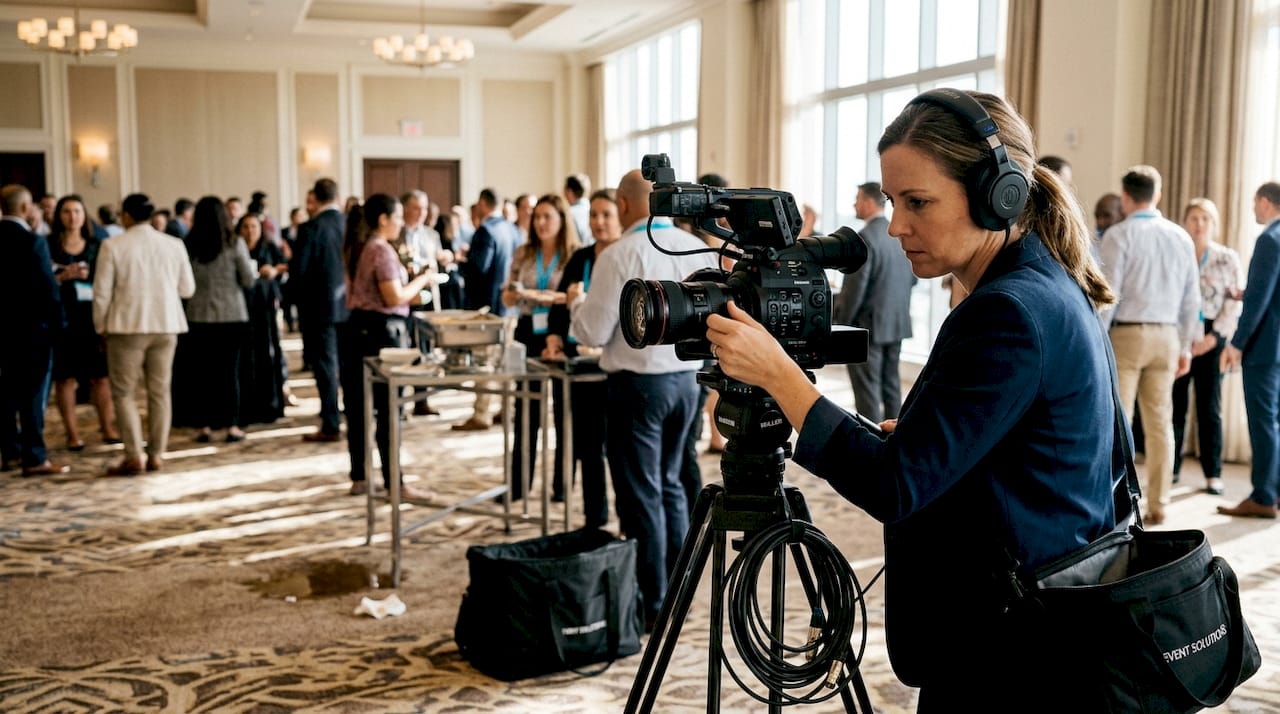
South Florida businesses have a particular opportunity here. Events in Miami and Fort Lauderdale often take place in visually striking venues, from waterfront ballrooms to modern Brickell rooftops. A professional crew captures those environments as active storytelling elements, not just backdrops. That storytelling for business approach transforms location into brand identity.
The company video benefits that matter most to marketing managers come directly from this storytelling discipline. When your audience finishes watching a video and feels confident in your expertise, that is professional videography delivering on its highest promise.
Platform-optimized content: Matching your video to the right audience
A perfectly crafted video posted to the wrong platform in the wrong format reaches nobody. Platform optimization is where many business owners leave significant engagement on the table, even when they invest in quality production.
Platform-optimized content is a core benefit of professional video production because experienced teams think about distribution from the earliest stages of pre-production. Format, length, caption strategy, and thumbnail selection all vary significantly by channel.
A hybrid approach using DIY for low-stakes social content and professional crews for high-impact corporate projects and events is a practical way to balance cost with ROI. But even when using professionals, you need a clear platform strategy from the start.
Here is how professional teams approach platform-specific adaptation:
- Define primary and secondary distribution channels before scripting. A LinkedIn thought-leadership piece requires a different tone, length, and thumbnail than a YouTube brand documentary or an internal training video.
- Script to platform attention windows. LinkedIn users engage most in the first 30 seconds. YouTube audiences tolerate longer intros if the topic is detailed and relevant. Internal training videos often work best in modular segments under 10 minutes each.
- Shoot for format flexibility. Professional crews often capture primary footage in horizontal format while simultaneously framing for vertical crop, giving you native social content without a separate shoot.
- Optimize audio for each platform. LinkedIn and Instagram autoplay with sound off, so professional editors ensure captions and on-screen text carry the message even without audio. YouTube audiences expect higher audio quality and more immersive sound design.
- Calibrate color grading by platform. Colors that pop on a calibrated monitor can appear washed out or oversaturated on mobile screens where most social video is consumed. Professional colorists account for this in post-production.
Pro Tip: When budgeting a single production, ask your video partner to capture platform-specific variations during the same shoot day. One shoot can yield a 90-second LinkedIn cut, a 15-second Instagram reel, a 3-minute YouTube version, and a 20-minute conference recording without significantly increasing production costs. This is one of the most efficient ways to approach creating effective business videos on a controlled budget.
South Florida businesses have a geographic advantage worth leveraging here too. Content that references recognizable local landmarks, culturally relevant settings, or bilingual audience considerations resonates differently with Miami-area viewers than generic corporate footage. Professionals who understand the regional market build that specificity into the platform strategy, giving your content a localized authenticity that generic production houses cannot replicate.
Common pitfalls and expert strategies: Avoiding mistakes in corporate videography
Even with the right intentions and a reasonable budget, corporate video projects fail regularly. Understanding the most common mistakes gives you a significant edge when planning your next production.
The key advantages of professional videography include delivering platform-optimized content and saving business owners time, but those benefits only materialize when the production process is managed correctly from the start.
Common mistakes that derail corporate video projects:
- Poor audio quality: Audiences tolerate mediocre visuals far more readily than bad audio. Echoey conference rooms, ambient HVAC noise, and wireless microphone interference are among the most damaging technical failures in corporate video, and the easiest for professionals to prevent.
- Inadequate lighting: Overhead fluorescent lighting creates unflattering shadows and inconsistent color temperatures. Shooting near windows without controlling natural light introduces rapid exposure shifts that are difficult to correct in post-production.
- Unclear central message: Many DIY corporate videos try to say too much, resulting in a video that says nothing memorable. Without a defined primary message and a clear audience in mind, the content loses its impact regardless of technical quality.
- Skipping the pre-production planning phase: Jumping straight to filming without a shot list, run-of-show, or approved script almost always leads to reshoots and extended post-production timelines.
- Ignoring platform requirements at the editing stage: Delivering a single master file and expecting it to perform across LinkedIn, YouTube, and your website equally is a common and costly assumption.
A hybrid strategy using professionals for high-impact events and brand-critical content makes these pitfalls far less likely because experienced crews have systems to prevent them before they occur.
Expert strategies for success in corporate videography include rigorous scripting and storyboarding before any equipment is rented or crew is booked. They also include clear role assignment on shoot days, dedicated location scouting, and a post-production workflow with defined revision rounds so projects don’t stall at the editing stage.
Pro Tip: Always hire specialized crews for milestone corporate events and executive communications. These are the videos that stakeholders, investors, and prospective clients will evaluate your brand against. Cutting costs here rarely saves money and frequently costs opportunities.
South Florida adds specific logistical variables to manage. Afternoon thunderstorms can disrupt outdoor shoots from May through October. Beachfront and waterfront locations introduce wind noise and shifting natural light that require dedicated audio and lighting solutions. Knowing how to manage these conditions is part of what makes a locally experienced crew worth the investment. Reviewing event video production strategies before your next major production can help your team ask the right questions when selecting a vendor.
Our take: Why smart businesses mix DIY and professional videography
Here is the perspective most video production conversations miss entirely: the choice between DIY and professional video is not binary, and treating it as one is one of the most common strategic errors we see South Florida businesses make.
The hybrid approach using DIY for low-stakes social content and professionals for high-impact work is not just a cost-saving tactic. It is a content strategy framework that aligns production investment with business impact. A startup in Wynwood posting daily Instagram stories does not need a full production crew for every clip. But that same startup absolutely needs professional videography for its investor pitch video, its product launch campaign, and its first major trade show appearance.
We have worked with brands across South Florida who discovered through painful experience that DIY production hidden costs, including reshoots, poor engagement, and brand damage, far outweighed the apparent savings. The pattern is consistent: the videos they tried to produce cheaply became the content they eventually had to replace entirely.
Our recommendation is to audit your content calendar quarterly. Identify which upcoming videos are high-visibility, brand-defining, or targeting decision-maker audiences. Those get professional production, full stop. The remaining content can flex based on your internal capabilities. This discipline keeps your budget focused where it generates the strongest return while giving your team room to develop a social media voice authentically.
Discover South Florida’s top professional videography solutions
Putting these strategies into practice requires a production partner who understands your business objectives, your audience, and the unique dynamics of the South Florida market.
At Bonomotion, we have been producing high-impact corporate, event, and brand videos since 2003. Our corporate video production in Hollywood and across South Florida gives businesses access to experienced producers, specialized crews, and a proven process that delivers polished results on time. Whether you need corporate video solutions for executive communications, a multi-day conference, or a full brand campaign, our team works as a true extension of your organization. Explore our full range of Miami videography services and take the next step toward video content that genuinely performs.
Frequently asked questions
What are the main advantages of hiring a professional videographer over DIY?
Professionals deliver superior storytelling, platform-optimized content, meaningful time savings, and higher perceived credibility and trust with your target audience.
How does professional videography improve ROI for business videos?
It eliminates hidden costs like reshoots and low engagement, while maximizing audience impact and delivering consistently strong long-term ROI for brand-critical projects.
Should businesses mix DIY and professional videography?
Yes. A hybrid content approach using DIY for low-stakes social content and professional crews for high-impact corporate events and campaigns delivers the best balance of cost efficiency and quality.
What mistakes do amateur videographers make most often?
The most damaging errors include poor audio capture, inconsistent lighting, an unclear central message, and a failure to account for platform-specific requirements during planning and editing.