
Corporate marketing videos drive 49% more revenue growth than companies without video content, according to Aberdeen Group research. Yet most businesses struggle with production quality and strategy.
We at Bonomotion Video Agency have produced thousands of corporate videos over two decades. This guide breaks down the exact process we use to create videos that generate measurable results for our clients.
Planning Your Corporate Marketing Video Strategy
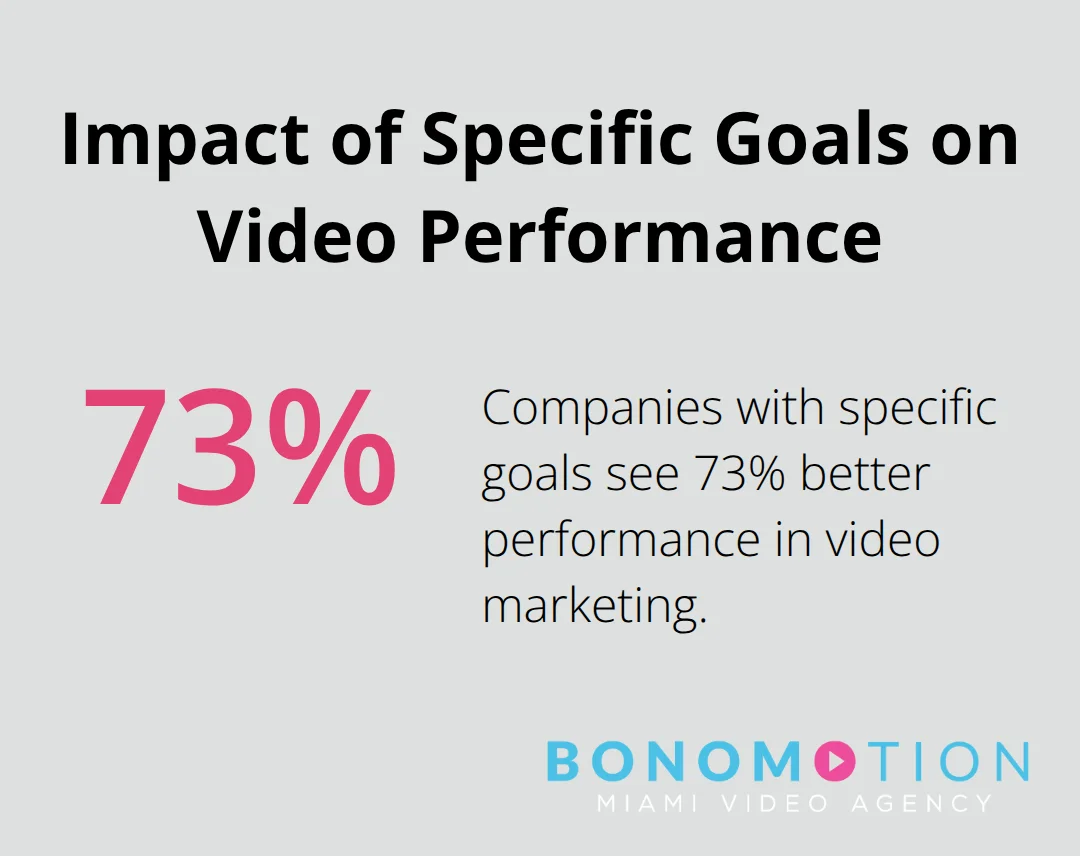
Smart corporate video strategy starts with concrete objectives that tie directly to business metrics. Companies that define specific goals like increasing lead generation by 25% or boosting website conversions by 15% see 73% better performance than those with vague awareness goals, according to Wistia research. Your objectives should connect to measurable outcomes: sales qualified leads, demo requests, or customer retention rates.
Target audience research goes beyond demographics. Successful campaigns identify specific pain points, preferred communication styles, and content consumption habits. B2B decision-makers engage with business video content when it addresses their immediate challenges.
Budget Allocation That Maximizes ROI
Professional corporate videos deliver optimal results within the $5,000 to $25,000 range per finished minute. This budget covers professional equipment, experienced crew, and post-production quality that builds credibility. Allocate 30% for pre-production work, 40% for filming, and 30% for editing and distribution.
Timeline requirements demand 2-3 weeks minimum for quality execution. Rush projects consistently underperform because they skip essential steps like script refinement and proper rehearsal time (which directly impacts final video quality).
Format Selection Based on Performance Data
Testimonial videos generate the highest conversion rates, with consumers influenced by authentic customer stories when businesses respond to reviews. Executive interviews work best for thought leadership, while product demonstrations drive purchase decisions for B2B buyers.
Short-form content under 2 minutes performs best on social platforms, while longer educational content succeeds on websites and sales presentations. Animation costs 40% less than live-action but takes twice as long to produce, making it ideal for complex technical explanations but impractical for tight deadlines.
Technical Requirements That Support Your Goals
Video quality standards directly impact viewer perception and engagement rates. Professional-grade equipment becomes essential when your content represents your brand to potential clients or investors. The technical foundation you establish during pre-production determines whether your final product builds credibility or undermines your message.
Production Best Practices for Corporate Videos
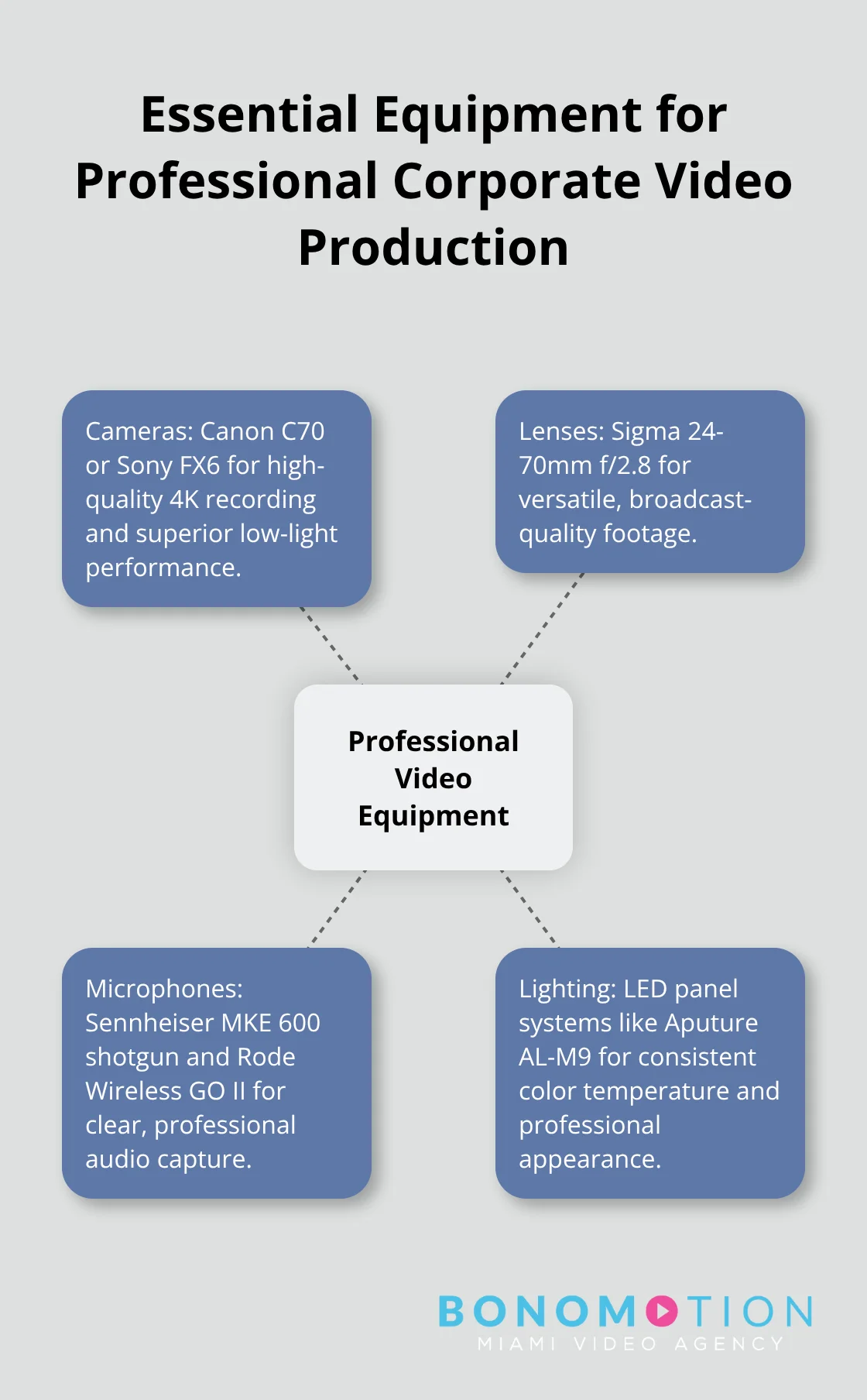
Professional corporate video production requires specific equipment standards that directly impact viewer perception and business credibility. Canon C70 cameras paired with Sigma 24-70mm f/2.8 lenses deliver broadcast-quality footage at accessible price points, while Sony FX6 systems provide superior low-light performance for corporate environments with limited natural light. Audio quality matters more than visual perfection – Sennheiser MKE 600 shotgun microphones and Rode Wireless GO II systems capture clear dialogue that viewers actually retain, compared to poor audio that can cause viewers to abandon content regardless of visual quality.
Essential Camera and Audio Equipment
Professional equipment separates amateur content from business-grade productions that build credibility. The Canon C70 offers internal 4K recording with dual-pixel autofocus, while the Sony FX6 excels in challenging lighting conditions common in corporate offices. These cameras produce footage that maintains quality across multiple distribution platforms.
Audio equipment demands equal attention to visual components. Lavalier microphones work best for seated interviews, while shotgun mics capture natural dialogue in conference room settings. Wireless systems eliminate cable management issues that slow production schedules.
Lighting Setups That Build Executive Credibility
Three-point lighting remains the gold standard for executive interviews and corporate presentations. Position your key light at 45 degrees from your subject, add a fill light to reduce harsh shadows, and use a rim light to separate subjects from backgrounds. LED panel systems like Aputure AL-M9 provide consistent color temperature at 5600K, which eliminates the color correction headaches that plague amateur productions.
Window light works effectively for natural corporate settings, but requires reflectors and diffusion materials to control harsh shadows that age executives and reduce professional appearance. Soft lighting creates trust and approachability – essential qualities for corporate messaging.
Interview Direction Techniques for Authentic Results
Executive interviews require specific direction techniques that extract genuine responses rather than corporate speak. Ask executives to speak directly to the camera rather than the interviewer – this creates stronger viewer connection and eliminates awkward eye-line issues. Prepare three versions of each question with different wording to capture natural responses, and allow 10-15 seconds of silence after each answer to capture thoughtful pauses that editors use for smooth transitions.
Corporate leaders perform best when they understand the video’s specific business purpose rather than generic brand messaging. Clear direction produces more engaging content compared to vague instructions about “being natural” on camera.
The technical foundation you establish during production directly influences how effectively your post-production team can craft compelling narratives that drive business results.
Post-Production and Distribution Strategies
Professional post-production transforms raw corporate footage into persuasive business tools that drive measurable results. Color correction and audio balance form the foundation – footage shot with proper exposure requires minimal correction, while poorly lit content demands extensive work that adds 30-40% to post-production timelines. Adobe Premiere Pro handles most corporate workflows efficiently, but DaVinci Resolve provides superior color capabilities for executive interviews that require polished appearances. Audio sweetening removes background noise and normalizes dialogue levels (viewers abandon videos with inconsistent sound within 8 seconds according to Microsoft attention span research).
Strategic Editing for Maximum Business Impact
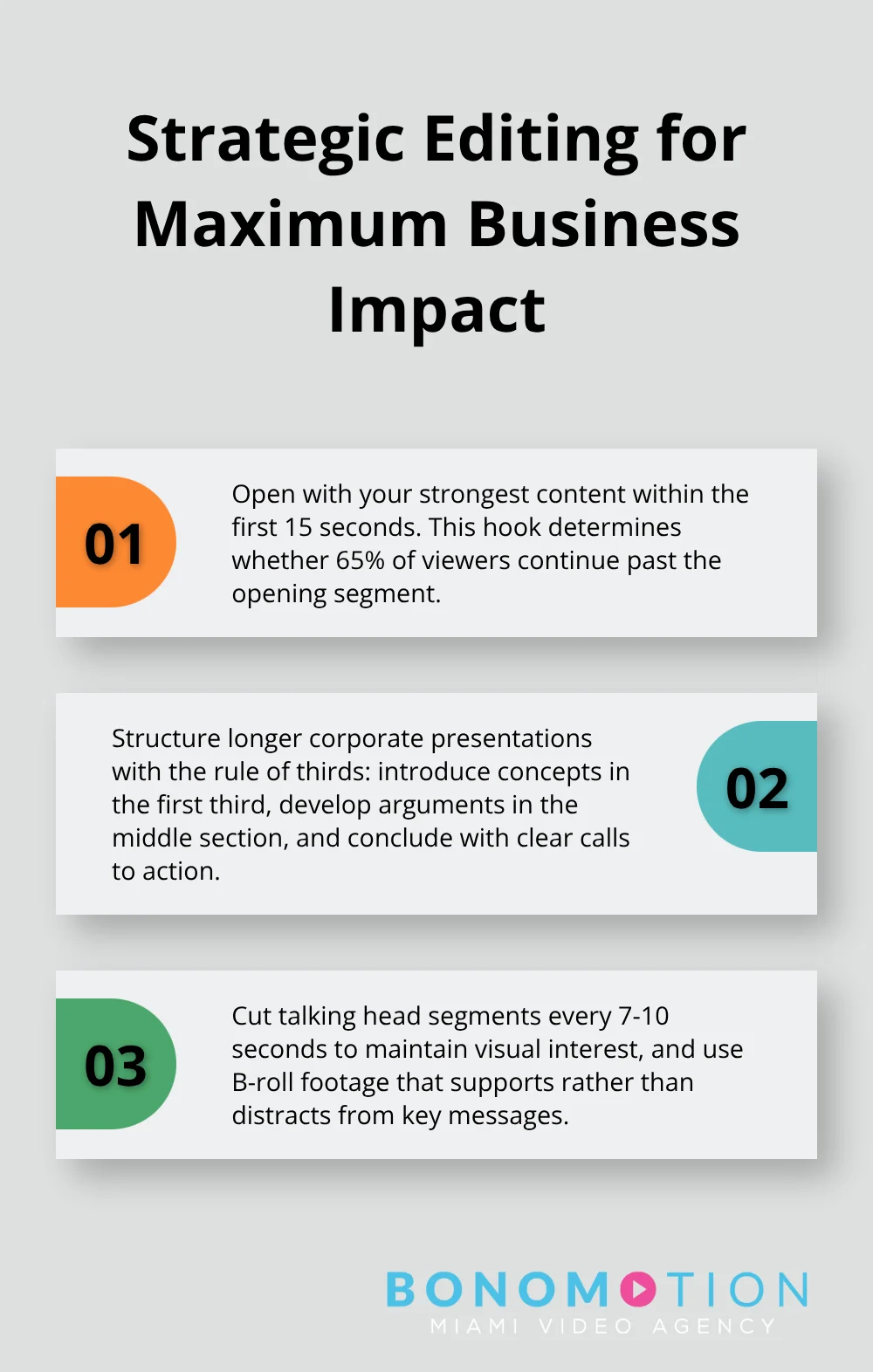
Effective corporate video editing follows proven psychological principles that maintain viewer attention and drive action. Open with your strongest content within the first 15 seconds – this hook determines whether 65% of viewers continue past the opening segment. Structure longer corporate presentations with the rule of thirds: introduce concepts in the first third, develop arguments in the middle section, and conclude with clear calls to action. Cut talking head segments every 7-10 seconds to maintain visual interest, and use B-roll footage that supports rather than distracts from key messages. Graphics and lower thirds should appear for exactly 4-6 seconds – shorter durations create pressure while longer displays feel static.
Platform Optimization That Maximizes Reach
Each distribution platform demands specific technical requirements that directly impact performance metrics. LinkedIn videos perform best at 1080p resolution with 1:1 square aspect ratios for mobile consumption, while YouTube prioritizes 16:9 widescreen formats at 1440p for desktop viewing. Export settings matter significantly – H.264 codec with constant rate factor 18 produces optimal quality-to-file-size ratios for web distribution. Corporate videos uploaded to multiple platforms require separate exports: Instagram Stories need 9:16 vertical formats under 60 seconds, while website embedding performs best with progressive download MP4 files under 50MB.
Performance Analytics That Prove ROI
Video analytics provide concrete data for measuring business impact beyond vanity metrics like views. Track completion rates above 70% to identify content that holds executive attention, while engagement metrics including comments and shares indicate message resonance. Google Analytics integration reveals how video content influences website behavior – pages with video content are 53x more likely to rank on Google’s first page, according to Forrester Research. Conversion tracking connects video views to specific business outcomes like demo requests or sales inquiries. Heat mapping tools show exactly where viewers stop watching (providing editing guidance for future productions that maintain attention throughout entire presentations).
Final Thoughts
Successful corporate marketing videos require strategic planning, professional execution, and data-driven optimization. Companies that define specific business objectives, invest in quality production equipment, and track meaningful metrics consistently outperform those who treat video as an afterthought. The most common mistake businesses make involves rushed production timelines that skip essential pre-production steps.
Quality corporate videos need adequate planning, proper equipment setup, and sufficient post-production time. Companies skip script development or use amateur audio equipment and undermine credibility regardless of visual quality. Professional corporate marketing videos within the $5,000 to $25,000 per minute range deliver optimal ROI through proper equipment, experienced crews, and polished post-production (while low-budget attempts often cost more to fix than initial proper investment).
Your next step involves partnership with experienced professionals who understand both video production and business objectives. We at Bonomotion Video Agency have spent over two decades creating corporate marketing videos that drive measurable results for businesses throughout South Florida and beyond. Start with one high-quality corporate video that addresses your most pressing business challenge, test performance metrics, and scale successful formats across your channels.