

A sizzle reel is a short, high-impact pitch video that sells tone and marketability, and the six examples below cover brand promos, TV development tapes, rip-o-matics, event highlights, investor reels, and AI proof-of-concept cuts. Most run two minutes or less. Each one teaches a different lesson about what makes a buyer keep watching.
TL;DR:
- Lead with the strongest image, line, or moment in the first 15 seconds, then trim the rough edit by 20% before polishing.
- A reel built from licensed archival footage can prove a documentary concept at low cost; original footage matters when buyers need to judge execution.
- Investor reels should state the market opportunity, target audience, and revenue model within the first 30 seconds, before supporting those claims with footage.
- Label visuals created with AI clearly, and use them for early ideation or low budget demonstrations rather than implying they show the finished production.
- Pair the reel with a logline and treatment; use a private screening for major pitches or a link with a password for remote follow ups.
Table of Contents
- 1. Six sizzle reel examples worth studying
- 2. What makes the first 90 seconds work
- 3. Choosing between a rip-o-matic, proof-of-concept, or AI reel
- 4. How to package a sizzle reel for a real pitch
- 5. How an experienced production partner approaches a sizzle reel
- 6. The honest take on sizzle reel advice
- Let us build your sizzle reel
- FAQ
1. Six sizzle reel examples worth studying
Every strong sizzle reel earns its runtime. These six formats show up constantly in pitch decks, investor meetings, and development offices, and each one solves a different problem.
- Brand promo reel: A consumer brand reel that opens on a single striking product shot, then cuts rapidly through lifestyle footage set to a recognizable music bed. The standout moment is usually a close-up that reveals texture, craftsmanship, or scale in under three seconds. The takeaway for brand storytelling: lead with an image that would stop someone mid-scroll, not with a logo or a mission statement — here are some visual storytelling tips to boost your brand’s impact.
- TV development tape: A scripted-series tape built for network and streamer executives, mixing cast interviews, tone-setting B-roll, and a voiceover that frames the premise in one sentence. These tapes favor mood over plot explanation, because buyers want to feel a show’s world before they understand its mechanics.
- Rip-o-matic: A documentary concept built entirely from licensed archival footage and stock clips, cut with narration that sounds like a finished film. A rip-o-matic proves that editorial intelligence, not production spend, is what sells a concept at the earliest stage.
- Event highlight sizzle: A conference or festival recap that compresses three days into 90 seconds, built on crowd energy, quick cutaways, and a rising music curve. Pacing accelerates toward the end, mirroring the live energy of the event itself.
- Investor or financing reel: A reel built for people who care about numbers, not just narrative. It states the market opportunity, the target audience, and the revenue model within the first 30 seconds, then supports those claims with footage.
- AI proof-of-concept reel: A fast, low-cost way to visualize a concept that does not have footage yet, useful for early ideation when budget or time rules out a shoot. Any AI-generated visual should be clearly labeled as such when shown to buyers, so expectations about the final production stay accurate.
An editorial-first rip-o-matic can outperform an expensive, unfocused shoot because buyers respond to a clear concept more than they respond to production polish. That single idea shapes how most working reels get built, regardless of budget.
2. What makes the first 90 seconds work
A sizzle reel either earns attention in its opening seconds or loses the room. The anatomy behind that first impression is consistent across formats.
- The hook (0:00 to 0:15): This window decides whether a buyer keeps watching, so it needs the single strongest image, line, or moment the project has.
- Tone, music, and pacing: These should match what the intended audience already expects from similar projects, not what the creative team personally prefers.
- A micro-arc: Setup, evidence or stakes, then a payoff that doubles as a call to action, even in a reel under two minutes.
- Visual and audio motifs: A recurring color palette, font, or sound cue that establishes a consistent feeling within the first few cuts.
Pro Tip: Cut your rough edit down by 20 percent before you call it finished. Most sizzle reels run long because every scene feels necessary to the person who shot it.
Beyond the reel itself, a pitch packet typically includes a logline, a one-page treatment, and a short note on target audience, since the video alone rarely closes a deal on its own.
3. Choosing between a rip-o-matic, proof-of-concept, or AI reel
Format choice depends on budget, timeline, and who will be watching.
- Rip-o-matic: Editorial-first and low-cost, built from existing licensed footage. This is the right call for early-stage pitching, when the goal is proving a concept, not proving production value.
- Proof-of-concept trailer: Original footage shot specifically to demonstrate execution, tone, and talent. This carries a higher cost than a rip-o-matic but shows buyers exactly how the finished project will look and feel.
- Development tape: Built for a specific buyer, usually a network or streamer, and tailored to that platform’s audience and programming slate.
- AI proof-of-concept reel: Fast to produce and useful for ideation or very low-budget demos, provided any AI-generated visuals are clearly disclosed to the viewer.
The decision usually comes down to four questions: how much budget exists, how much time is available before the pitch, who the buyer is, and whether the concept can be represented with existing footage or needs something shot from scratch.
4. How to package a sizzle reel for a real pitch
A reel rarely travels alone. What surrounds it often decides whether a buyer takes the next meeting.
- Attach a logline and one-pager: A single sentence that frames the concept, plus a one-page treatment with target demographic and a rough budget range.
- Choose the right delivery method: A private screening works best for high-stakes pitches, while a passworded Vimeo or YouTube link suits remote follow-ups; avoid sending a raw file that strips out tracking and access control.
- Annotate key moments: Timecode notes that flag tone shifts, standout beats, or sellable moments help a busy executive scan the reel faster.
- Prepare for live pitches: Keep the reel itself under two minutes, plan your speaking notes around the beats the reel already sets up, and avoid narrating over the footage while it plays.
5. How an experienced production partner approaches a sizzle reel
When we produce a sizzle reel, the process starts with producer-led discovery: understanding the concept, the intended buyer, and the timeline before a single frame gets shot or selected. From there we move into concepting, rough-cut review, and refinement passes until the reel earns its runtime.
We typically recommend bringing in a full production partner when:
- The concept needs a proof-of-concept trailer rather than a rip-o-matic, because original footage will carry more weight with the buyer.
- The timeline is tight and a producer needs to coordinate crew, locations, and edit passes in parallel.
- The project involves live-event capture, where a single missed moment cannot be reshot.
- Brand polish matters because the reel is going in front of investors or network executives who see dozens of pitches a week.
Cost and timeline depend mainly on how much new footage needs to be shot, what licensing existing footage requires, and how much original production the concept calls for.
6. The honest take on sizzle reel advice
The most common mistake we see is treating production value as a substitute for a clear concept. A beautifully shot reel with a muddy premise loses to a rough rip-o-matic that knows exactly what story it is telling, every time. Buyers are not grading cinematography in the first meeting. They are deciding whether they understand the idea and whether they want more of it.
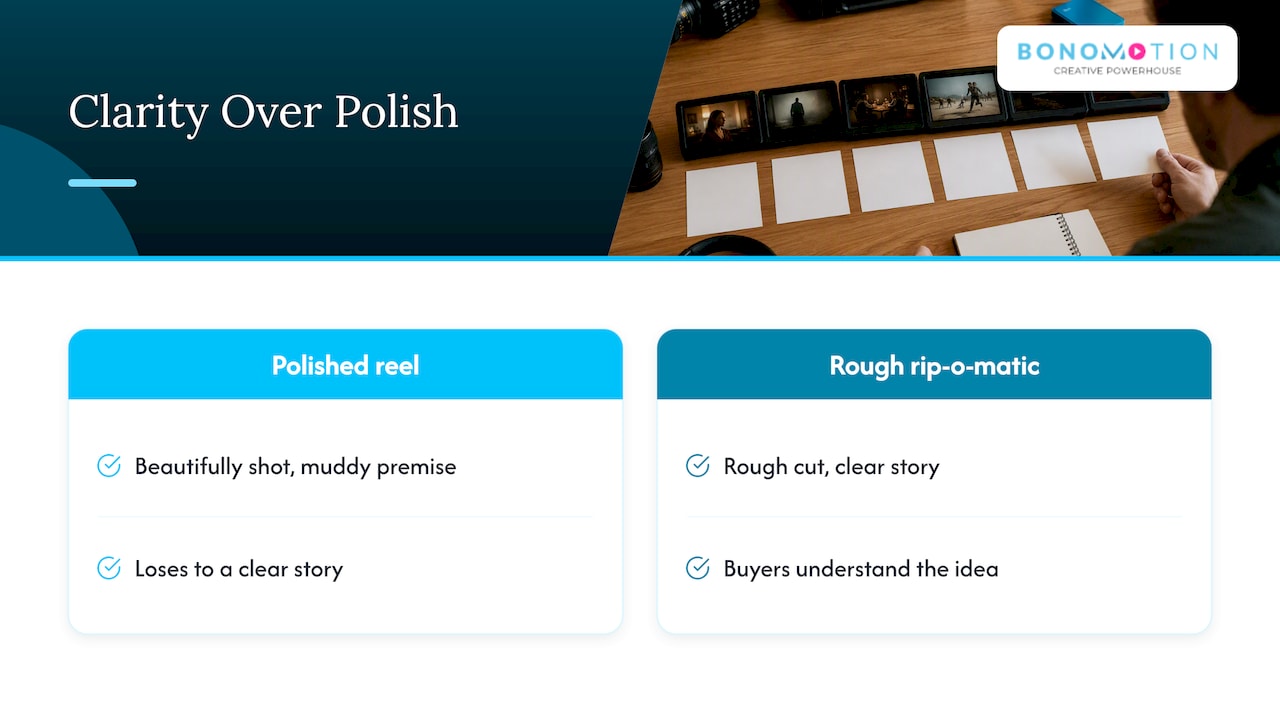
Conventional advice tends to overweight length and gloss, pushing creators toward longer reels packed with every good shot they have. That usually backfires. A tighter reel that ends a few seconds early leaves a buyer wanting the next conversation, which is the actual goal of a sizzle reel. It is not meant to explain everything.
If you take one thing from this gallery of examples, make it this: nail the first 15 seconds before you worry about anything else. Everything downstream, from pacing to the closing call to action, only matters if someone is still watching.
— Bernard Bonomo
Let us build your sizzle reel
Whether you need a polished brand promo, a proof-of-concept trailer for a development pitch, or live coverage of an event that becomes next year’s highlight reel, we handle concept, shoot, and edit as one coordinated process out of a Miami studio, serving South Florida and clients nationwide.
| If you need | We offer |
|---|---|
| A brand or corporate sizzle reel | Corporate Video Production |
| Event highlight footage | Event Videography and Photography |
| Investor or testimonial-driven reels | Interview & Testimonials Video Production |
| A fast, affordable concept visual | our Motionize AI-powered video option |
Reach out through our services page to request a proposal, or explore live streaming if your reel needs to capture a live event as it happens.
FAQ
What makes a good sizzle reel?
A good sizzle reel hooks the viewer in the first 10 to 15 seconds, then builds a short arc of setup, evidence, and payoff that matches the tone the intended buyer expects. Pacing, music, and a clear concept matter more than production budget.
Can you give me an example of a sizzle reel?
A rip-o-matic built from licensed archival footage is a common early example, often used to pitch a documentary concept before any original footage exists. A proof-of-concept trailer with original footage is another common example, typically used once a project is further along.
How long is a typical sizzle reel?
Most sizzle reels run between 90 seconds and two minutes, with the shorter end of that range now favored because of shrinking viewer attention spans and social media norms. Longer cuts, up to around four minutes, still appear when a reel needs to live behind a full pitch packet.
How much should a sizzle reel cost?
Cost depends on whether the reel uses existing licensed footage, which keeps expenses low, or requires original production, which raises costs based on crew, locations, and shoot days. A rip-o-matic is typically the least expensive route, while a proof-of-concept trailer with original footage costs more because it demonstrates execution rather than just concept.