

Customers trust other customers more than they trust marketing messages. That’s why testimonial video production has become one of the most effective ways to convince prospects to buy.
At Bonomotion Video Agency, we’ve seen firsthand how real voices from satisfied customers can transform your sales pipeline. When done right, these videos don’t just build credibility-they drive measurable results.
Why Real Customer Stories Convert Better Than Marketing Claims
Authenticity Breaks Through Skepticism
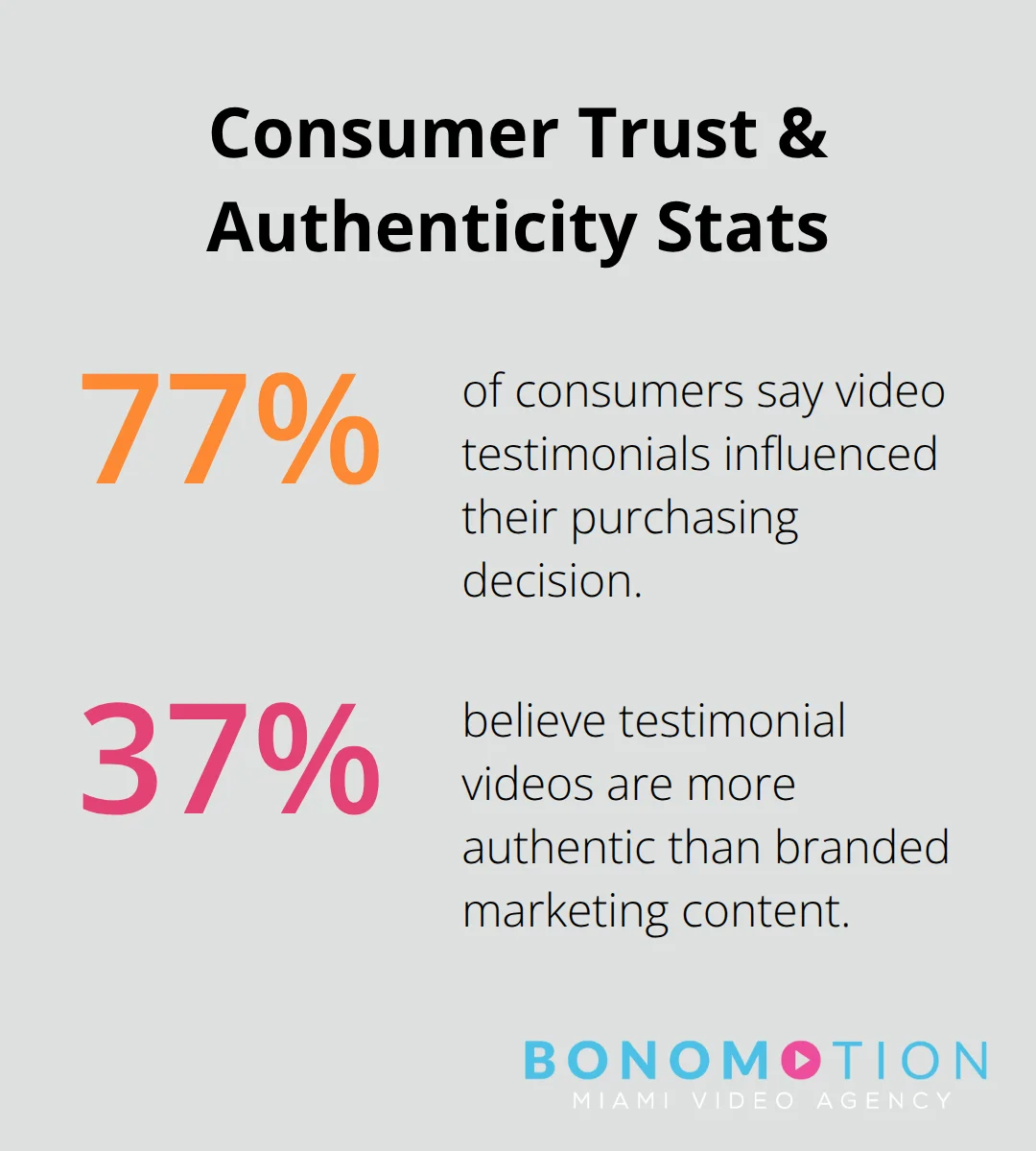
Testimonial videos work because they bypass the skepticism that comes with branded messaging. According to Wyzowl, 77% of consumers say video testimonials influenced their purchasing decision, while 37% believe testimonial videos are more authentic than branded marketing content. This gap matters. When a real customer speaks about their experience, prospects lower their guard.
They see someone like themselves, not a polished actor reading from a script. That authenticity translates directly into sales.
Wyzowl data shows that video testimonials increase conversions on sales pages by 25–34% on average, and up to 80% in some cases. The numbers prove what we know intuitively: people buy from people they trust, and trust comes from hearing genuine stories, not marketing spin. When you feature actual customers discussing real problems and real solutions, you give prospects permission to believe in your product.
Speed and Scalability Multiply Your Impact
The second reason testimonial videos deliver results is speed and scalability. Businesses that struggled to move prospects through their sales funnel often see dramatic shifts once they add testimonial videos to their strategy. Instead of sales teams spending weeks answering the same objections, a single testimonial video answers them once and works 24/7.
Wyzowl found that 64% of viewers are more likely to purchase after watching a video testimonial. Adding video to emails boosts click-through rates. You can place the same testimonial on your homepage, in sales emails, on social media, and in pitch decks. It works everywhere because it solves the core problem: prospects need proof that your solution works, and they need to hear it from someone credible.
Once you produce a testimonial video, the cost per conversion drops dramatically because the video keeps working without additional investment. This efficiency makes testimonial videos one of the highest-ROI marketing assets you can create.
What Makes a Testimonial Video Actually Work
Not all testimonial videos perform equally. The difference lies in how you select customers, structure the interview, and capture their story. A customer with a strong outcome, a relatable backstory, and comfort on camera will deliver far more impact than someone who simply agrees to participate. The best testimonials feel like a conversation between friends, not a sales pitch.
The questions you ask matter enormously. Open-ended prompts that encourage customers to share specific moments and emotions outperform generic scripts. When you ask “What problem were you trying to solve?” instead of “Tell us why you like our product,” you unlock stories that resonate. These stories (when told authentically) convince prospects far more effectively than any marketing claim ever could.
This foundation of authentic customer voices sets the stage for the next critical step: actually producing these videos in a way that captures and preserves that authenticity.
How to Choose the Right Customer and Structure the Interview
Select Customers With Measurable Outcomes
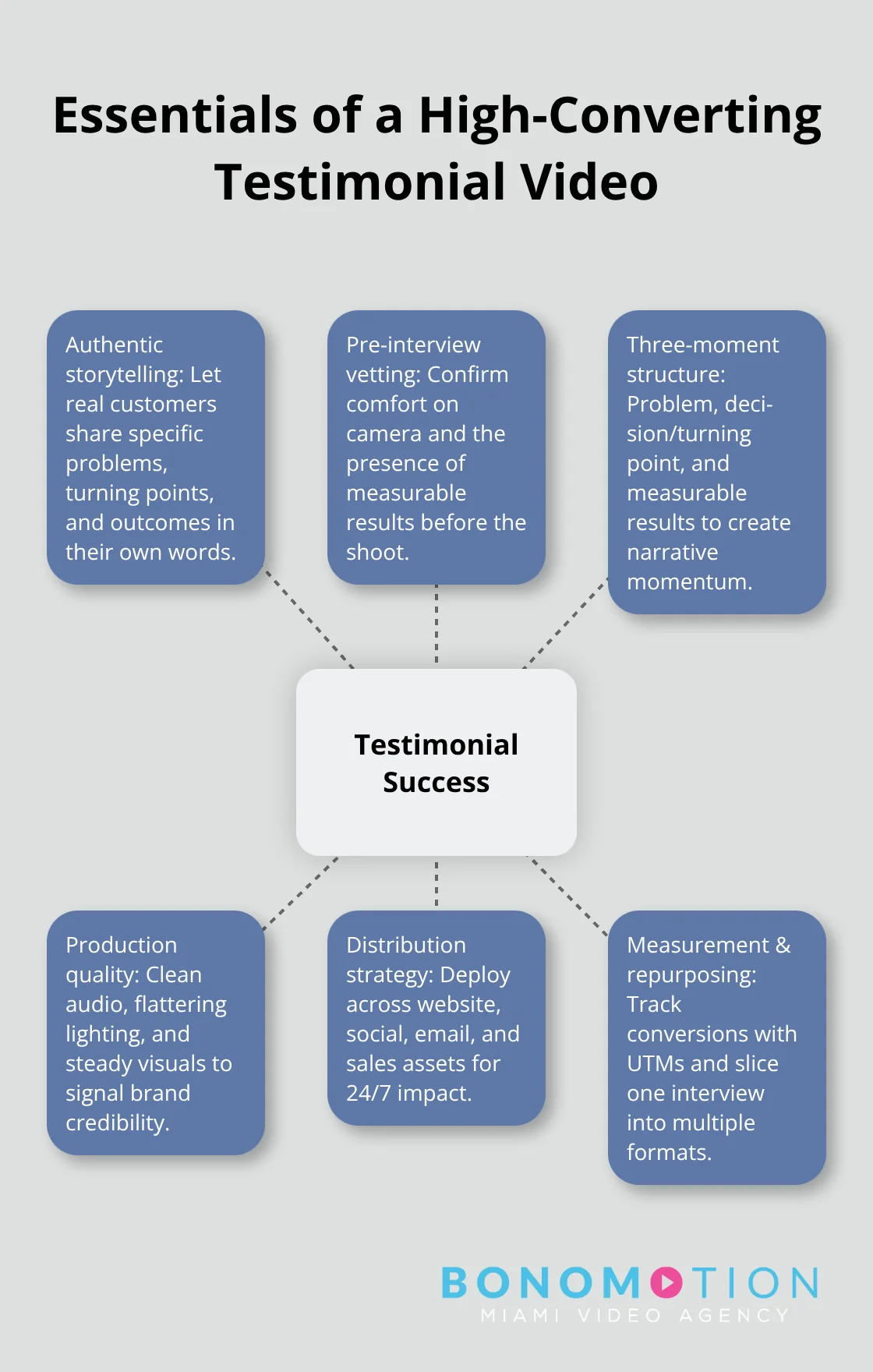
The fastest way to waste production time and money is to select the wrong customer. The best testimonial customer has three qualities: a measurable outcome from using your product, a relatable backstory that prospects recognize, and genuine comfort speaking on camera. Wyzowl research shows that 74% of major companies create at least five testimonial videos per year, yet many fail because they pick customers based on availability rather than impact. Choose someone whose story directly addresses a pain point your prospects face. If your product helps small teams save time, find a customer who struggled with overwhelmed staff before working with you. If your solution increases revenue, feature someone who saw concrete growth numbers. A customer who can say “I went from X to Y” carries far more weight than someone who simply says your product is great.
Conduct Pre-Interview Calls to Assess Fit
Once you identify candidates, conduct a brief pre-interview call to assess comfort level and refine their story. This conversation should feel natural, not like an audition. Ask them to share the moment they realized they needed a solution, why they chose your company over competitors, and what changed after implementation. If they speak in specifics and show genuine enthusiasm during this call, they’re ready for the full shoot. This step filters out customers who won’t translate well on camera and ensures you move forward with people whose stories will resonate.
Structure Interviews Around Three Key Moments
The interview structure determines whether you capture an authentic story or a stiff sales pitch. Avoid sending scripted questions in advance because customers rehearse their answers and lose spontaneity. Instead, provide a roadmap of three conversation stages: the problem they faced, the turning point when they decided to work with you, and the measurable results they achieved. During the actual interview, ask open-ended questions that prompt stories rather than generic praise. Ask “What was the moment you realized this had to change?” instead of “Did our product help?” Ask “If your best friend was considering our solution, what would you tell them?” instead of “Why do you like us?” These emotionally charged prompts surface specific memories and honest reactions that resonate with prospects far more than polished answers.
Capture Authentic Moments During Production
Keep the camera rolling from the moment the customer sits down because the best moments often happen when they forget they’re being recorded. Pauses, laughter, and even small stumbles add credibility to what they say. Professional production standards matter more than most businesses realize. Poor audio, unflattering lighting, or shaky footage undermines your message regardless of how compelling the story is. Work with a production partner who understands that testimonial videos require a white-glove experience. The customer should feel confident and supported throughout the shoot, which directly impacts how they appear on camera and how willing they are to give you genuine, unguarded responses. Quality production also signals to prospects that your brand takes itself seriously.
Invest in Professional Production Standards
The difference between an amateur testimonial and a professional one shows immediately. Clean audio, flattering lighting, and smooth camera work transform a good story into a powerful sales tool. When you invest in professional production (whether through an in-house team or an external partner), you signal credibility to your prospects. The customer experience matters too-when someone feels supported and professionally treated during filming, they relax and deliver better performances. This investment pays dividends because prospects unconsciously associate production quality with brand quality. Once you’ve captured authentic customer stories with professional production standards, the next step is deciding where and how to distribute these videos for maximum impact.
Where Your Testimonial Videos Actually Drive Sales
Producing a compelling testimonial video means nothing if it sits on your hard drive. The distribution strategy determines whether your investment generates measurable returns or becomes another file collecting dust. Most businesses treat testimonial videos as one-off assets instead of multi-channel tools that work across your entire marketing funnel. A single testimonial video can live on your homepage, appear in sales emails, populate your social media feeds, and support pitch decks simultaneously. Adding video to emails boosts engagement and reduces unsubscribe rates. This means the same testimonial that converts website visitors also converts email subscribers when placed strategically.
Match Your Video Length to Platform Expectations
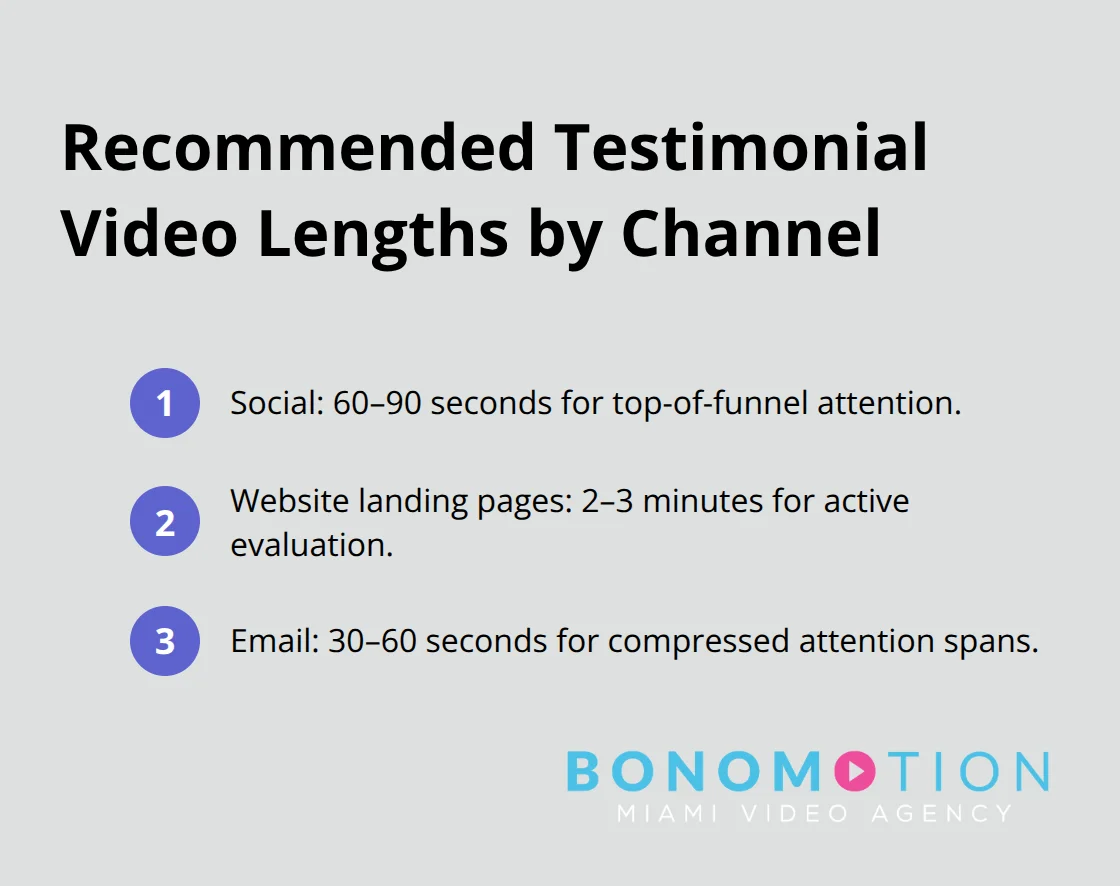
Start by identifying where your prospects spend time. If your audience consists of B2B decision-makers, LinkedIn and email remain your highest-impact channels. If you target younger audiences, TikTok and Instagram demand short-form clips extracted from longer interviews. YouTube serves as both a discovery platform and a trust-building hub where longer testimonials perform exceptionally well. The key is matching video length to platform expectations: 60 to 90 seconds for social media top-of-funnel content, 2 to 3 minutes for website landing pages where prospects actively evaluate your solution, and 30 to 60 seconds for email campaigns where attention spans compress significantly.
Track Conversion Metrics to Isolate Performance
Measuring performance separates testimonial videos that drive real business results from those that merely accumulate views. Set specific metrics before publishing anything. Track conversion rate changes on pages where you add testimonials compared to pages without them. Monitor email click-through rates on campaigns featuring video versus those without. Measure how many leads originate from social posts containing testimonials. Most businesses never isolate which specific videos drive results. Use UTM parameters in your video links to track traffic sources and attribute conversions accurately. When you place a testimonial on your homepage, create a unique link that identifies it as homepage traffic. When the same video appears in an email, use a different link. This approach reveals which platforms and placements deliver the highest ROI.
Repurpose One Interview Into Multiple Formats
One often-overlooked advantage of testimonial videos is their ability to scale across multiple formats and contexts without additional production costs. A single customer interview becomes five different videos: a full-length testimonial for your website, a 60-second social media clip, a 30-second email version, a behind-the-scenes moment for Instagram Stories, and a quote graphic with audio for LinkedIn. Professional editing software or a production partner can extract these variations from your raw footage, multiplying your content output without multiplying your production expenses. This repurposing strategy means your investment in capturing one authentic customer story compounds across channels and campaigns throughout the year.
Final Thoughts
Testimonial videos have moved from nice-to-have marketing assets to essential tools that directly impact your bottom line. The data proves it: 77% of consumers say video testimonials influence their purchasing decisions, and businesses that integrate them into their strategy see measurable increases in conversions and sales. When prospects hear from real customers about real results, skepticism dissolves and trust builds.
The path forward requires three concrete actions. First, identify your best customers-those with measurable outcomes and relatable stories that your prospects recognize. Second, invest in professional production quality that reflects your brand’s credibility. Third, distribute strategically across the channels where your audience actually spends time, then measure what works.
Most businesses fail not because their testimonials lack authenticity but because they treat videos as one-off projects instead of multi-channel assets that compound in value over time. If you’re ready to start capturing authentic customer stories that convert, Bonomotion Video Agency specializes in creating high-quality testimonial video production that preserves authenticity while maintaining professional standards. Our team handles everything from pre-interview vetting to multi-format editing, so your investment in one customer interview scales across your entire marketing funnel.