

Branded content creation is a structured, repeatable process that transforms brand expertise into stories audiences seek out rather than skip. Industry data shows that 80% of brand content loses money while the top 20% generates over 500% returns. That gap is not a creativity problem. It is a process problem. The brands winning at content follow defined branded content creation steps: audience research, goal alignment, content pillar development, production, distribution, and repurposing. Tools like Adobe Express and Filestage support execution, but the process itself is what separates high-return content from expensive noise.
What are the core branded content creation steps?
Structured branded content development covers three synchronized stages: strategy, creative, and distribution. Skipping or rushing any stage is the most common reason content underperforms. The good news is that teams can align on goals and define pillars in under an hour, making speed a real advantage when the process is clear.
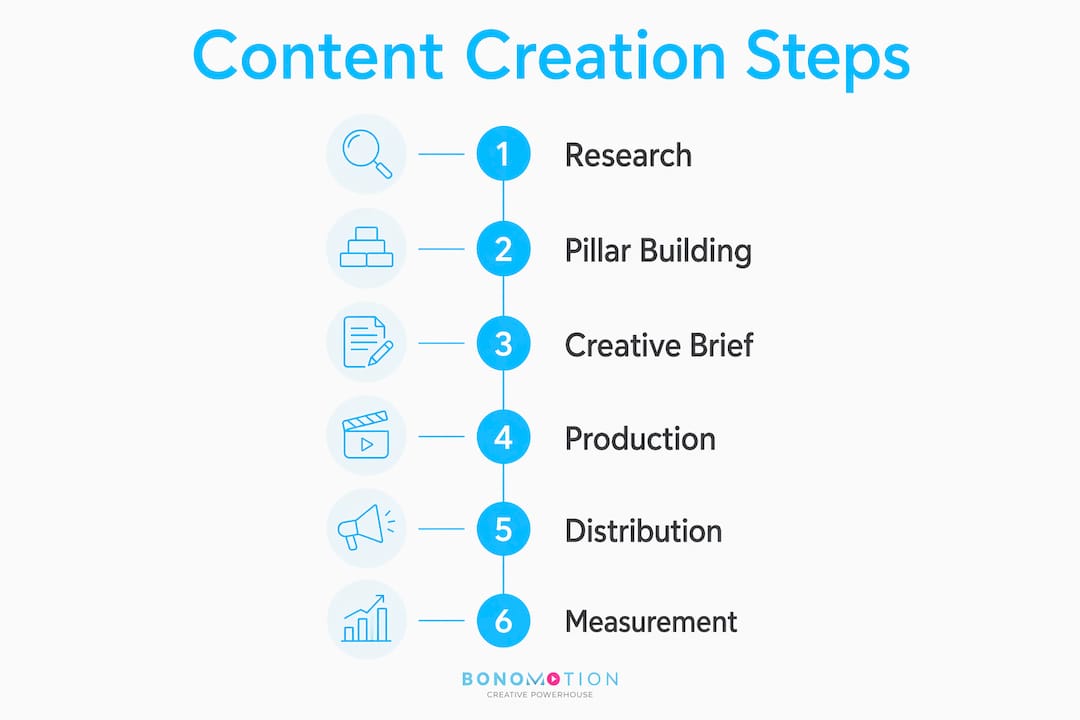
Here is the full sequence for creating effective branded content:
- Set your business goal. Choose one primary objective: brand awareness, lead generation, or customer retention. Every content decision flows from this choice.
- Research your audience. Conduct interviews with 5–10 real customers. Capture their exact language, not your internal vocabulary.
- Define 3–5 content pillars. These are the recurring themes your brand owns. They should reflect both your expertise and your audience’s documented concerns.
- Select your channels. Match channel selection to where your audience already spends time, not where your competitors happen to be active.
- Build a content calendar. Map out a 30-day publishing plan before producing a single asset. Sequence matters more than volume.
- Produce pillar content. Create the core assets first: long-form articles, video series, or podcast episodes that anchor each pillar.
- Distribute and amplify. Publish across owned channels, activate earned media partnerships, and apply paid amplification to your top performers.
- Repurpose across formats. Break each pillar asset into social clips, email snippets, infographics, and quote cards to extend reach without starting from scratch.
A practical framework for executing these steps is the 30-day quick-start sprint, which divides the work into four weekly phases: audit and pillar definition, channel selection and calendar building, publishing pillar content, and repurposing assets. This sprint model prevents the prolonged planning cycles that stall most content programs before they produce results.
Pro Tip: Set editorial parameters, including tone, visual style, and message boundaries, before production begins. Defining these guidelines upfront cuts approval delays and lets your team move without waiting for sign-off on every asset.
How do you research your audience and build content pillars?
Audience research is the step most brand managers underinvest in, and it shows in the content. Generic messaging, weak hooks, and low engagement almost always trace back to assumptions made in a conference room rather than language gathered from real customers.
The most direct method is interviewing 5–10 actual customers. Ask them to describe the problem your brand solves in their own words. Capturing that exact phrasing gives you hooks that resonate immediately because they reflect how your audience already thinks. A financial services brand that hears “I never know if I’m saving enough” has a far more powerful content hook than one that writes about “optimizing retirement portfolios.”
Pair customer interviews with a content audit of your top-performing pages. Look for patterns in what earns the most time-on-page, shares, and inbound links. Those patterns reveal where your brand already has authority and where your audience is most engaged.
Building your content pillars means selecting 3–5 themes that sit at the intersection of your brand’s expertise and your audience’s documented needs. Here is how to evaluate each candidate pillar:
- Does your brand have genuine depth on this topic, not just surface-level familiarity?
- Does your audience use this language when describing their challenges?
- Can this pillar sustain at least 10 distinct content pieces over a quarter?
- Does it connect directly to your business goal, whether awareness, leads, or retention?
| Content Pillar Example | Strategic Role | Content Formats |
|---|---|---|
| Industry trend analysis | Builds authority and earns media coverage | Long-form articles, video commentary |
| Customer success stories | Drives trust and supports lead generation | Case study videos, testimonial clips |
| How-to education | Captures search demand and builds loyalty | Tutorial videos, step-by-step guides |
| Behind-the-brand culture | Humanizes the brand and supports retention | Social video, employee spotlights |
| Product or service context | Connects audience needs to brand solutions | Explainer videos, comparison content |
Pro Tip: Avoid analysis paralysis by capping your research phase at five business days. You need directional clarity, not a doctoral thesis. Pick your pillars, commit, and adjust based on real performance data after 30 days.
What creative production approaches work best for branded content?
Creative execution is where branded content either earns attention or gets ignored. The most common mistake is treating every piece of content like a polished advertisement. Production quality should match the platform: high-polish video works well on your website and in paid placements, but the same level of production on short-form social often triggers ad blindness and kills engagement.

Every piece of content should start with a clear brief. A strong brief covers four elements: the audience segment, the core message, the format and platform, and the brand elements that must appear. Without a brief, production teams make assumptions, and those assumptions create revision cycles that slow everything down.
Effective branded content leads with the audience’s problem, not the brand’s product. A logistics company that produces a video series on supply chain resilience for mid-market manufacturers is doing branded content correctly. The brand earns credibility by solving a real problem. The product mention comes at the end, as a soft call to action rather than the centerpiece.
Here are the content types that consistently perform well in branded video programs:
- Documentary-style brand films that profile customers or industry challenges
- Educational series that break down complex topics in 3–5 minute episodes
- Behind-the-scenes production content that shows process and builds trust
- Event recap videos that extend the life of live moments across digital channels
- Executive thought leadership clips that position leadership as credible voices
For production tools, Adobe Express handles brand-consistent visual asset creation efficiently. For video production aligned with brand voice, matching the production team to the platform’s aesthetic expectations is as important as the script itself.
Pro Tip: Write your soft call to action before you write your script. Knowing exactly where you want the audience to go next shapes every creative decision that precedes it.
How do you distribute branded content for maximum engagement?
Distribution is not an afterthought. Coordinated publishing, earned media partnerships, and paid amplification must be planned during the strategy phase, not bolted on after production wraps. Brands that treat distribution as a post-production task consistently underperform on reach and ROI.
Start with your owned channels: your website, email list, and social profiles. These are your highest-trust environments and the right place to publish pillar content first. From there, activate earned media by sharing content with partners, industry publications, and collaborators who reach adjacent audiences.
Paid amplification should be reserved for content that already shows organic traction. Spending budget to amplify a piece that has not yet proven itself is a common and expensive mistake. Let organic performance identify your winners, then put paid spend behind them.
Repurposing content into multiple formats is the highest-ROI activity in any distribution plan. A single 10-minute brand documentary can generate a social clip series, a blog post, an email sequence, and a podcast episode. That is five assets from one production investment.
| Distribution Tactic | Primary Benefit | Best For |
|---|---|---|
| Owned channel publishing | Builds audience trust and SEO authority | Pillar content and long-form assets |
| Earned media partnerships | Extends reach to new audiences | Thought leadership and research content |
| Paid social amplification | Accelerates reach for proven performers | Top-performing organic content |
| Email distribution | Drives direct engagement with warm audiences | Educational series and case studies |
| Content repurposing | Maximizes asset ROI across formats | All pillar content post-publication |
For practical approaches to repurposing video assets across formats, the return on a single well-produced piece can multiply significantly with the right distribution plan.
Pro Tip: Track brand perception and belief shifts alongside traffic metrics. Measuring how content changes audience beliefs about your brand gives you a far more accurate picture of content ROI than page views alone.
What challenges come up in branded content creation?
Every branded content program hits predictable friction points. Knowing them in advance lets you build around them rather than react to them.
“Fast ideation and goal alignment prevent analysis paralysis and accelerate branded content creation projects.” — ELMNTL
Analysis paralysis is the most common early-stage problem. Teams spend weeks debating pillars, personas, and platforms instead of publishing. The 30-day sprint model solves this by forcing decisions within a structured timeline. You commit to a direction, publish, and let data guide adjustments.
Approval bottlenecks slow content velocity more than any creative challenge. The fix is editorial parameters set before production begins. When your team knows the approved tone, visual style, and message boundaries, they can produce and publish without waiting for executive sign-off on every asset.
Platform mismatch happens when teams apply the same production style across every channel. A polished corporate video that performs well at a conference will feel out of place on TikTok or Instagram Reels. Adjust the aesthetic to the platform, not the other way around.
Here are the most effective practices for maintaining momentum:
- Assign one editorial owner who is accountable for content coherence across all pillars
- Review performance data weekly, not monthly, so you can adjust before a full quarter is lost
- Keep a content backlog of at least 10 approved ideas so production never stalls waiting for direction
- Use tools like Filestage for structured review cycles that reduce back-and-forth on approvals
Key takeaways
Effective branded content creation requires a structured process, not just creative talent, and the brands that follow defined steps consistently outperform those that rely on intuition.
| Point | Details |
|---|---|
| Process drives ROI | The top 20% of brand content generates over 500% returns because it follows a structured creation process. |
| Customer language wins | Interview 5–10 real customers to capture the exact phrasing that makes content hooks resonate. |
| Pillars prevent drift | Define 3–5 content pillars before production to keep messaging focused and brand positioning credible. |
| Distribution is strategic | Plan owned, earned, and paid distribution during the strategy phase, not after production ends. |
| Repurpose to multiply ROI | One pillar asset can generate five or more formats, multiplying reach without additional production cost. |
Why most branded content programs stall before they scale
From my experience working on branded content programs across industries, the single biggest gap is not creative quality. It is the absence of editorial leadership. Teams produce content, but no one owns the coherence of the program over time. Pillars drift. Tone shifts. The brand starts sounding like three different companies depending on which team member wrote the piece that week.
The 30-day sprint model changed how I think about launching content programs. Getting something published in the first week, even if it is not perfect, creates momentum that no amount of planning can replicate. The data from that first piece tells you more than a month of strategy sessions.
I have also seen brands dramatically underestimate the value of customer language. One B2B client spent months crafting messaging around “operational efficiency.” Their customers called it “not having to redo everything twice.” That phrase became the hook for a video series that outperformed every piece of content the brand had published in the previous two years.
The other shift worth making is in how you measure success. Traffic and views are easy to track, but they do not tell you whether your content is changing how people think about your brand. Measuring belief shifts, whether your audience now sees you as a credible authority in your category, is harder but far more meaningful. The brands that track this metric build content programs that compound in value over time rather than plateau after the first few months.
— Bernard
Take your branded content to the next level with Bonomotion
Branded content strategy only delivers results when the production quality matches the platform and the message. At Bonomotion, we have spent over 20 years helping brands translate their content strategy into video that earns attention and builds credibility across every channel.
Whether you need executive thought leadership films, brand documentary series, or event recap content that extends beyond the live moment, our producers work directly with your team to align every production decision with your goals and audience. We operate as a true extension of your organization, from pre-production planning through final delivery. Explore our corporate video production services to see how we can support your branded content program with production that performs.
FAQ
What is branded content creation?
Branded content creation is the process of producing audience-focused media that builds brand credibility and awareness without leading with a direct sales message. It includes video, articles, podcasts, and social content that earns attention by delivering genuine value.
How many content pillars should a brand have?
Most brands perform best with 3–5 content pillars. Fewer than three limits topic variety; more than five dilutes focus and makes it harder to build authority in any single area.
How long does it take to launch a branded content program?
A team can align on business goals and define initial content pillars in under an hour. A full 30-day sprint, covering strategy, production, and distribution, is a practical timeline for publishing the first round of pillar content.
How do you measure branded content success?
Measure both engagement metrics, such as time on page and video completion rates, and brand perception shifts, including survey data on how audiences view your brand’s credibility and authority in your category.
What is the difference between branded content and advertising?
Branded content leads with value and story, earning audience attention organically. Advertising leads with a product message and pays for placement. Branded content builds long-term brand equity; advertising drives short-term conversion.