

Your corporate events videography strategy can make or break how your audience perceives your brand. A well-executed video captures the energy, key moments, and messages that define your event-and extends that impact far beyond the room.
At Bonomotion Video Agency, we’ve seen firsthand how professional event videography transforms corporate gatherings into powerful marketing assets. The right approach turns attendees into advocates and creates content that works for you long after the event ends.
Why Professional Event Video Matters to Your Bottom Line
Video Drives Real Revenue, Not Just Engagement
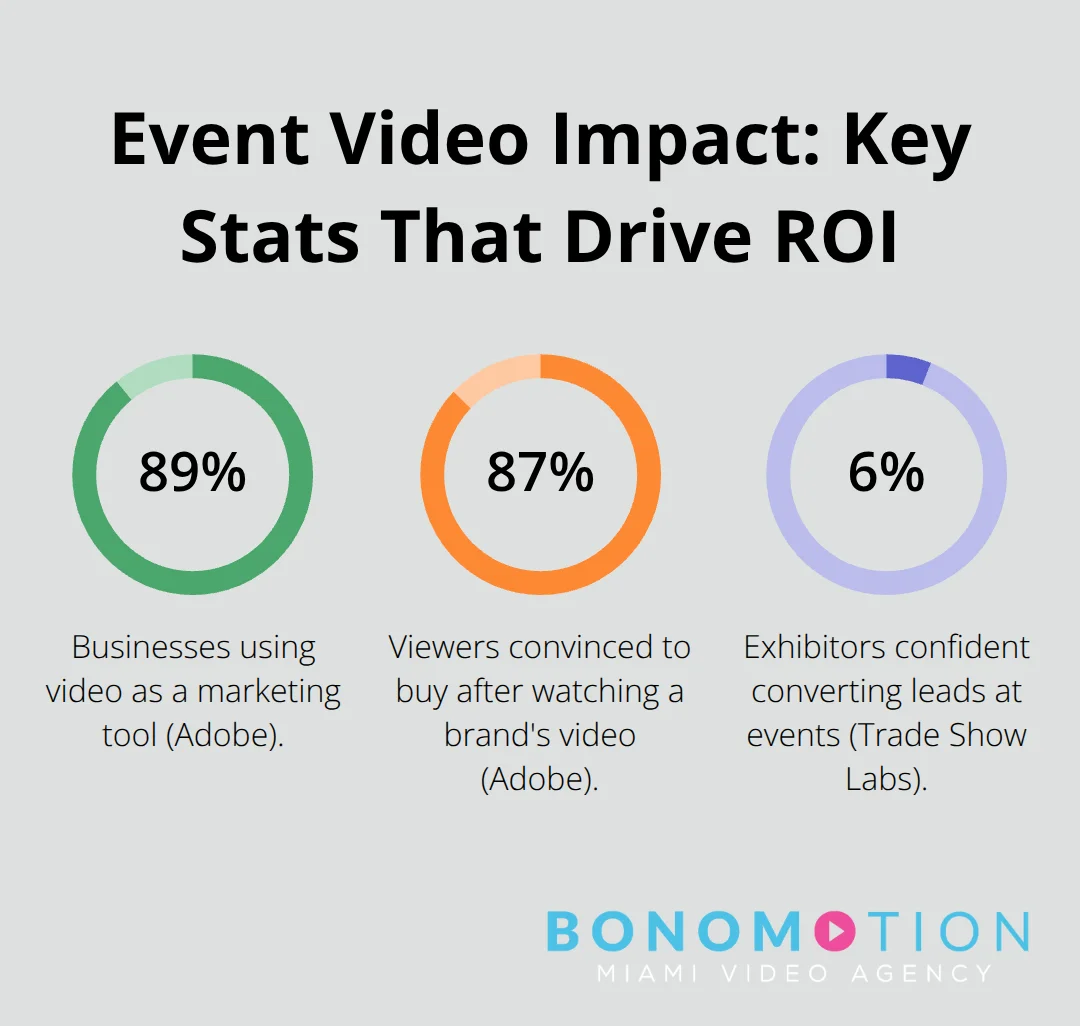
Event videography isn’t about capturing moments for nostalgia-it’s about building measurable business outcomes. According to Adobe, 89% of businesses now use video as a marketing tool, and 87% of viewers say watching a brand’s video convinced them to buy. That’s not a soft metric. That’s revenue on the line.
When you invest in professional event videography, you create assets that directly influence purchasing decisions long after attendees leave the venue. The footage from your conference, product launch, or trade show becomes proof that your brand delivers real value. Potential customers see authentic moments, genuine reactions, and tangible demonstrations that no polished advertisement can replicate. This authenticity builds credibility faster than almost any other marketing channel.
The Full-Funnel Strategy That Multiplies Your Content Value
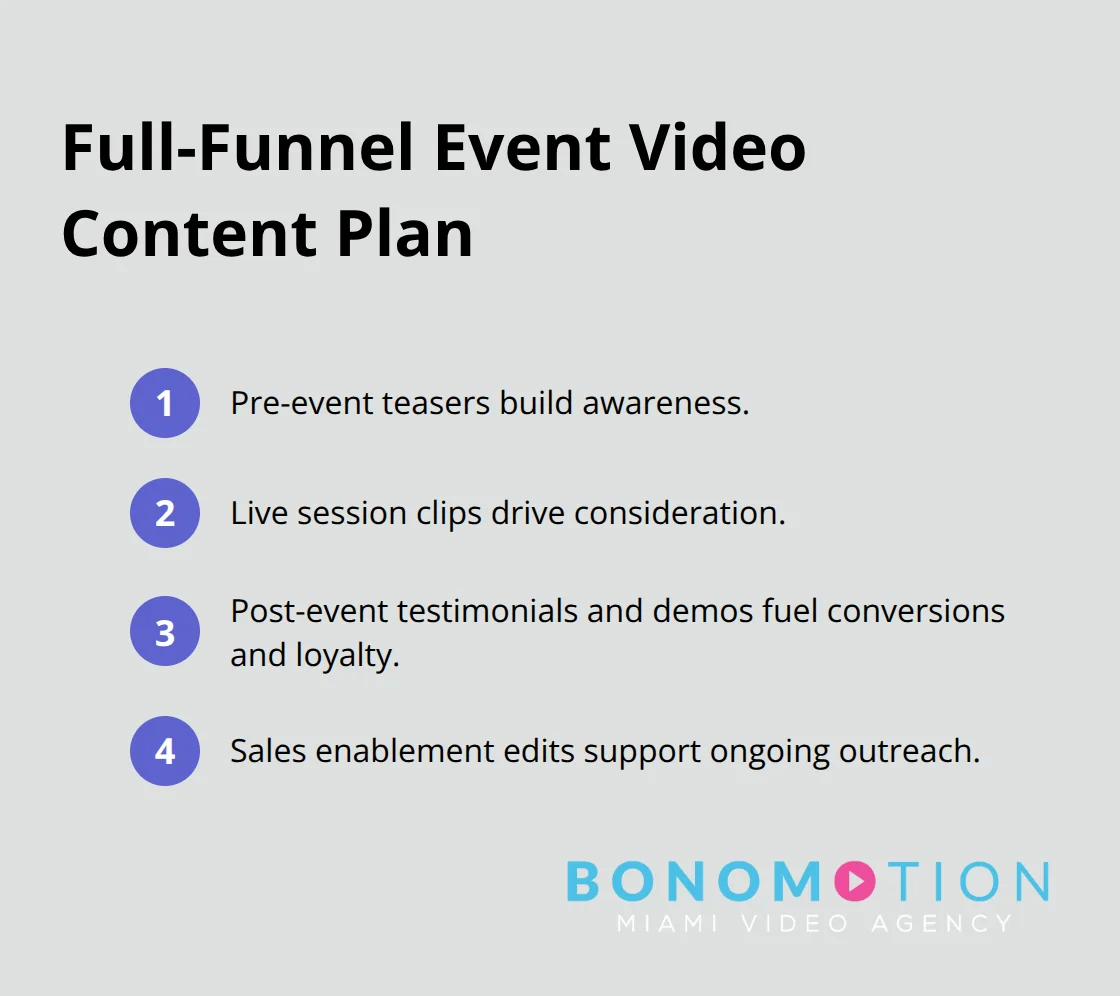
The real power emerges when you treat event video as a full-funnel strategy. Adobe’s research shows that pre-event teasers build awareness, live sessions drive consideration, and post-event testimonials and product demos fuel conversions and loyalty. A single day of professional videography generates content for months of marketing campaigns. That keynote speech transforms into an educational tutorial. Audience reactions become social proof.
Product demonstrations become case studies. Client testimonials captured on-site become trust-building assets for your sales team.
Connecting Video to Lead Conversion and Sales Execution
Trade Show Labs data reveals only 6% of exhibitors feel confident converting leads at events, but those equipped with video content and rapid follow-up systems dramatically outperform competitors. Your videographer should coordinate with your lead capture strategy, capture attendee reactions, and film interviews that support post-event outreach within 48 hours-when leads are warmest and most responsive. This integration between video production and sales execution determines whether your event investment generates ROI or becomes an expensive gathering with no measurable impact. The videographer who understands your sales funnel and lead qualification process captures footage that actually moves prospects forward, rather than just documenting what happened on stage.
What Makes Professional Event Video Actually Capture Value
Professional event videography rests on three non-negotiable technical foundations that separate footage worth sharing from footage that sits unused on a hard drive.
Multi-Camera Coverage Captures Simultaneous Action
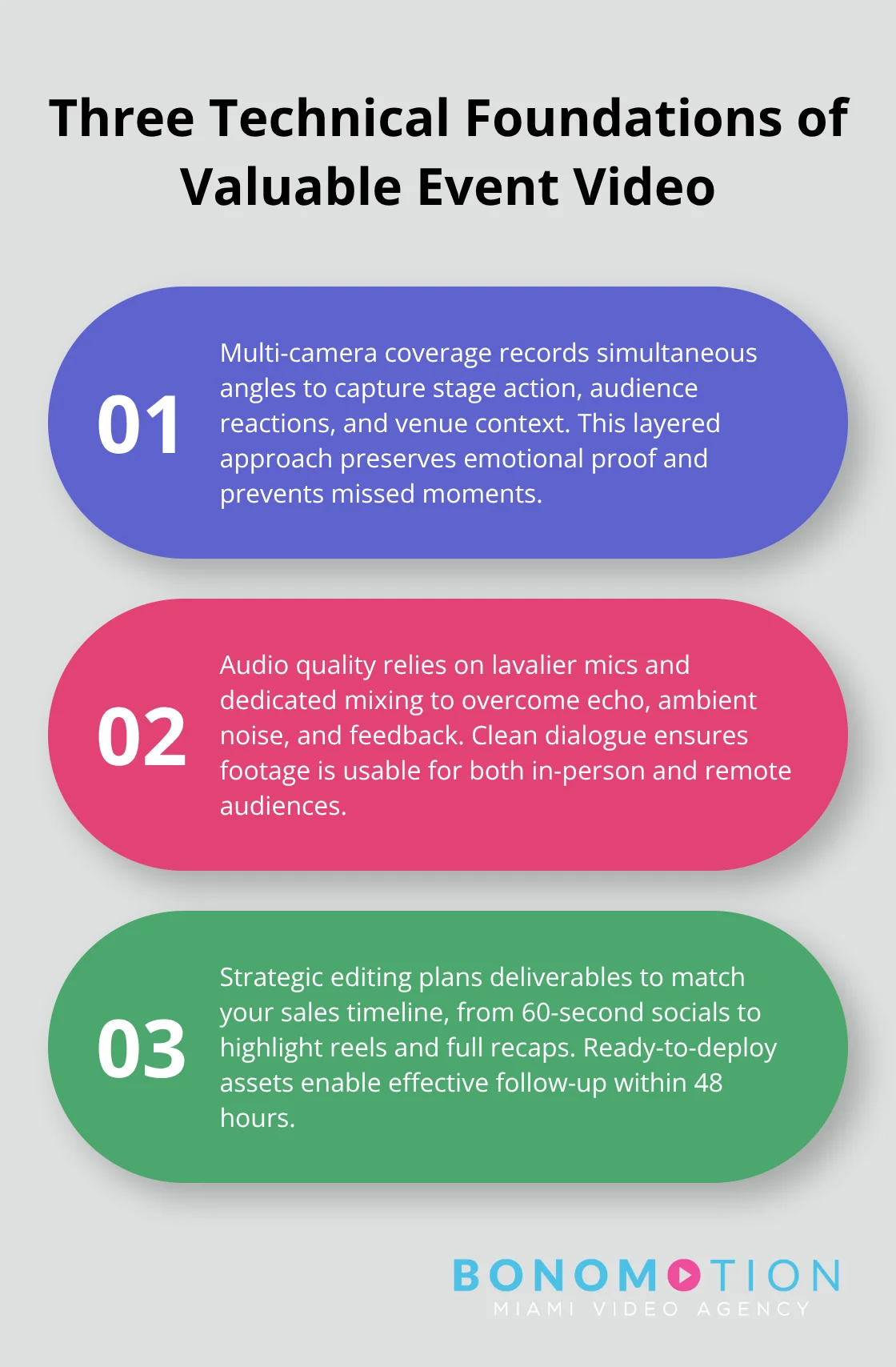
The first foundation is multi-camera coverage that records simultaneous angles. When your keynote speaker commands the stage, a single camera misses the audience reaction that proves impact. Adobe’s full-funnel research shows that post-event testimonials and product demos fuel conversions, which means your videographer must film the speaker, capture attendee responses, and document product demonstrations happening at the same time. This requires at least two to three cameras positioned strategically: one on the main stage action, one on audience reactions or side angles, and ideally a wide establishing shot that shows venue scale and energy. Without this layered approach, you lose the emotional proof that makes video content convert prospects into customers.
Audio Quality Determines Usability
The second foundation is audio that maintains clarity across unpredictable event spaces. Event venues introduce acoustic challenges-echo, ambient noise, competing speakers in breakout sessions, and microphone feedback. Wireless lavalier microphones on speakers paired with dedicated audio mixing equipment separate professional results from amateur recordings. Hybrid events amplify this challenge because your audio must serve both in-person attendees and remote participants with equal clarity.
A videographer who relies on camera-mounted microphones alone will deliver footage where dialogue becomes indecipherable in post-production, forcing expensive re-shoots or settling for unusable content.
Strategic Editing Supports Your Sales Timeline
The third foundation is strategic editing that respects pacing and narrative structure. Raw footage from a six-hour conference becomes a marketing liability without intentional post-production choices. Your videographer should plan edit timelines upfront: which moments become the 60-second social clip, which become the five-minute highlight reel, which become the 20-minute full recap. This structure matters because Trade Show Labs data shows only 6% of exhibitors feel confident converting leads at events, and post-event follow-up within 48 hours yields significantly higher conversion rates. Your event video must support that 48-hour window with assets ready to deploy immediately.
Editing also means color correction that accounts for LED wall lighting (which requires specific white balance and exposure settings to avoid flicker), audio mixing that removes feedback and normalizes volume across multiple speakers, and transitions that feel intentional rather than random. A videographer who delivers raw footage expecting you to edit it yourself has already failed your event objectives.
Choosing a Partner Who Understands Your Goals
These three technical pillars directly determine whether your event investment generates usable, revenue-driving content or becomes expensive documentation nobody actually uses. Your videographer must understand not just how to operate cameras and microphones, but how your event connects to your broader marketing funnel and sales process. The next section walks you through evaluating whether a potential videography partner possesses both the technical expertise and strategic thinking your event demands.
Who Should You Trust With Your Event Video
Evaluate Real-World Experience, Not Just Portfolio Aesthetics
When you review a potential videography partner’s previous work, ask specifically about event scale, venue challenges they faced, and how they solved audio problems in spaces similar to yours. A videographer who has shot a 500-person conference in a hotel ballroom with competing breakout sessions understands hybrid audio mixing in ways someone who primarily shoots studio interviews does not. Request references from past clients and ask directly whether the videographer delivered edited content within 48 hours of the event ending, not two weeks later. A beautiful portfolio means nothing if the videographer cannot meet your sales cycle demands.
Assess Technical Capability Beyond Camera Quality
Technical capability extends far beyond expensive equipment. Wireless microphone systems with redundancy (backup channels if one fails), color-managed workflows that prevent LED wall flicker, and multi-camera synchronization software separate professionals from people with expensive gear. Ask your potential partner whether they’ve worked with LED walls before and how they calibrate white balance to avoid skin tone distortion. Ask whether they use PTZ cameras for wide shots or rely on handheld movement that risks missing moments. Ask what they do if Wi-Fi fails during a livestream or if a speaker’s wireless mic battery dies mid-speech. Their answers reveal whether they plan for failure or hope nothing goes wrong.
Confirm Deliverables and Ownership in Writing
Turnaround time and deliverables should be spelled out in writing before production starts, not negotiated after the event ends. Specify which video formats you need (vertical for social, 16:9 for presentations, square for LinkedIn), how many edited versions you require, and whether raw footage gets handed over for internal editing. Some videographers treat raw footage as their property and refuse to share it, locking you into their edit decisions. That’s unacceptable. You own the content from your event. Your videographer should deliver organized, color-corrected raw footage alongside finished edits so your team can repurpose content for months afterward without renegotiating fees.
Final Thoughts
Professional corporate events videography transforms a single day into months of marketing momentum. The 89% of businesses using video as a marketing tool aren’t doing it for aesthetics-they’re doing it because video converts prospects into customers. Your event represents a concentrated moment of authentic brand storytelling that no studio production can replicate, and when you invest in professional videography, you create strategic content that feeds your sales funnel and builds credibility with stakeholders.
The videographer you choose determines whether your event becomes a revenue-generating asset or an expensive memory. Look for partners who understand your sales timeline, not just camera specifications, and verify they’ve solved audio challenges in venues similar to yours. Confirm in writing that you own all raw footage and can repurpose content across channels without renegotiating fees, because technical excellence matters only when paired with strategic thinking.
We at Bonomotion Video Agency understand that corporate events videography requires both technical precision and business acumen. Our team coordinates multi-camera coverage, manages complex audio environments, and delivers finished edits aligned with your sales cycle. Start planning your event coverage now by defining which moments matter most to your business and selecting a videography partner who treats your event as a strategic investment rather than a documentation job.