

Artificial Intelligence (AI) is reshaping the business landscape at an unprecedented pace. At Bonomotion Video Agency, we’ve witnessed firsthand the impact of AI on business operations, marketing strategies, and customer interactions.
This transformative technology offers immense opportunities for companies to streamline processes, boost efficiency, and gain competitive advantages. However, it also brings challenges that businesses must navigate carefully to harness AI’s full potential ethically and responsibly.
How AI is transforming Business Operations
AI transforms business operations, offering unprecedented opportunities for efficiency and innovation. Companies that integrate AI into their processes gain a significant competitive edge.
Automating Routine Tasks
AI excels at handling repetitive tasks, which allows human workers to focus on complex, creative endeavors. AI-powered software processes invoices, manages inventory, and schedules appointments with minimal human intervention. A study by McKinsey reveals that AI adoption increases productivity for knowledge workers by 40-50%, enabling them to tackle higher-value tasks.
Data-Driven Decision Making
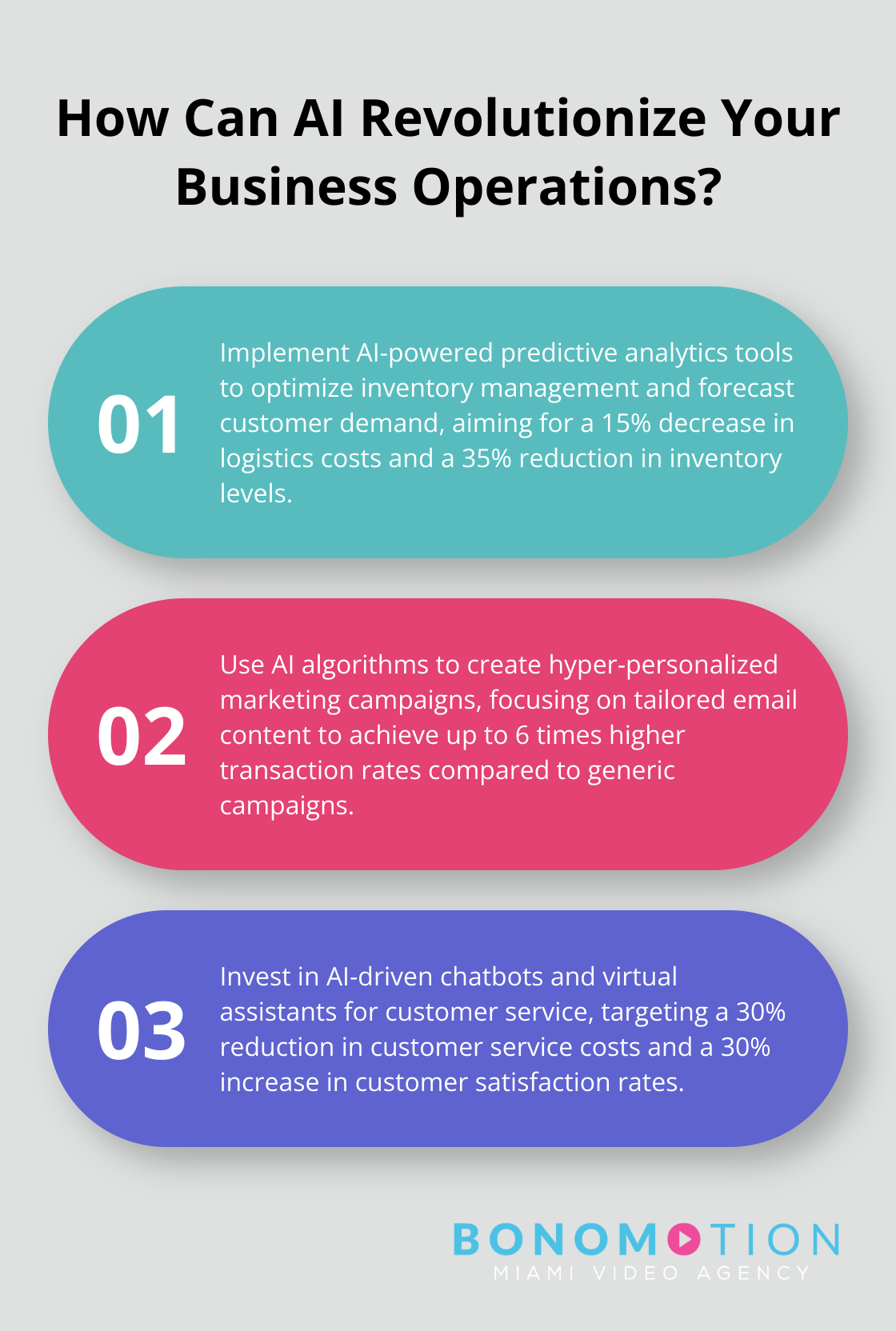
AI-driven technologies are being integrated into business analytics to enhance decision-making across various industries. Predictive analytics tools powered by AI forecast market trends, customer behavior, and potential risks with remarkable accuracy. Retail giants (like Walmart) use AI to optimize inventory management and predict customer demand, which leads to reduced costs and increased sales.
Enhanced Customer Interactions
AI-driven chatbots and virtual assistants transform customer service. These tools handle a high volume of inquiries 24/7, provide instant responses, and free up human agents to deal with more complex issues. Bank of America’s AI-powered virtual assistant, Erica, has handled over 1 billion client interactions since its launch (significantly improving response times and customer satisfaction).
Streamlined Supply Chain Management
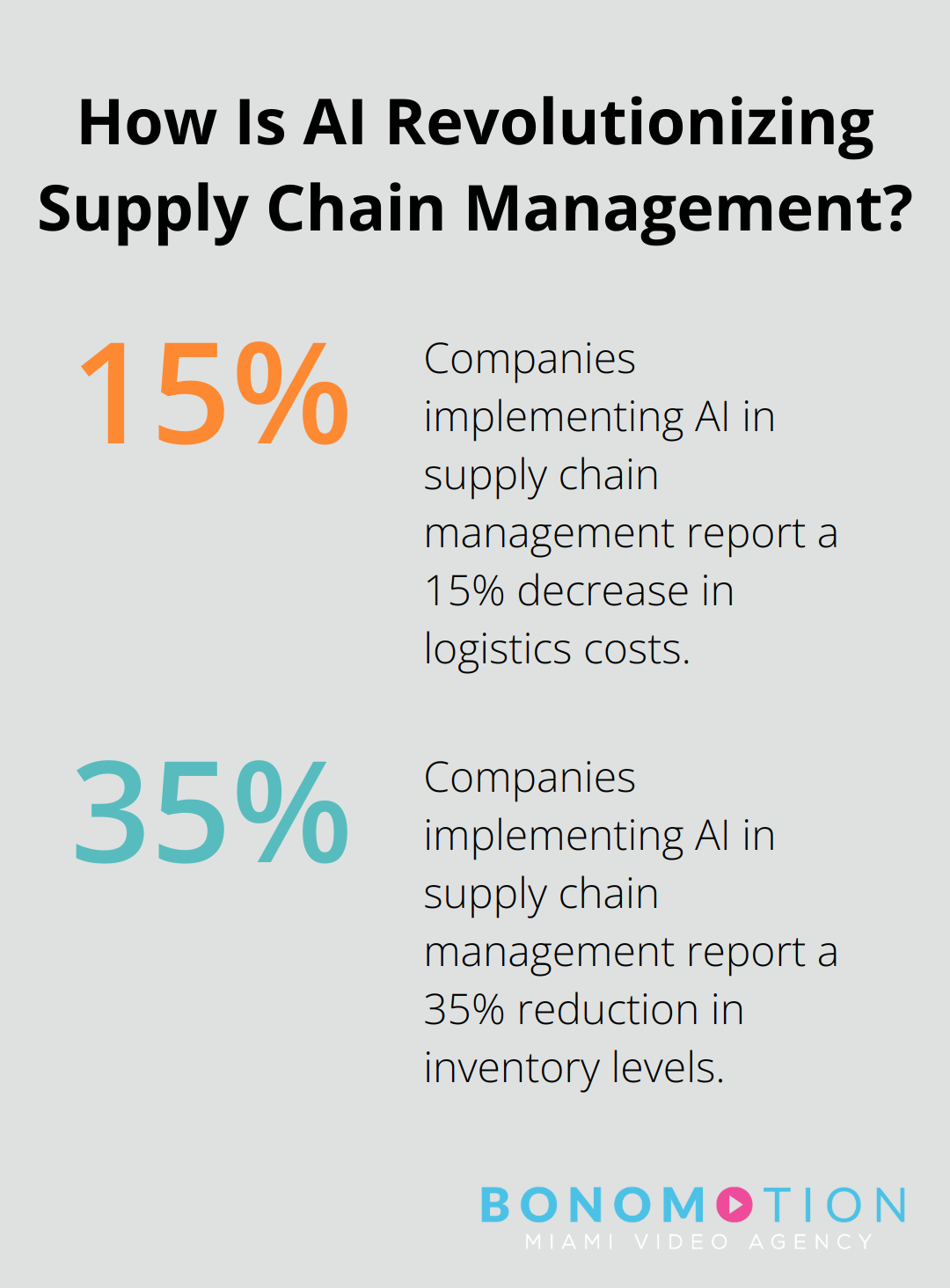
AI optimizes supply chain operations through real-time tracking, demand forecasting, and route optimization. This results in reduced costs, improved efficiency, and enhanced customer satisfaction. Companies that implement AI in their supply chain management report a 15% decrease in logistics costs and a 35% reduction in inventory levels.
Personalized Employee Experience
AI transforms human resources by personalizing support and optimizing team performance. From tailored onboarding processes to AI-driven learning and development programs, companies use this technology to enhance employee engagement and retention. AI in HR can modernize the employee journey by simplifying workflows and improving overall experiences.
As AI continues to evolve, we expect even more innovative applications that will further transform the business landscape. The next frontier in AI’s impact on business lies in its ability to revolutionize marketing and sales strategies, creating unprecedented opportunities for customer engagement and revenue growth.
AI Reshapes Marketing and Sales
AI transforms marketing and sales, offering unprecedented opportunities for growth and customer engagement. This technology revolutionizes how businesses connect with their audience and predict market trends.
Hyper-Personalized Marketing Campaigns
AI algorithms analyze vast amounts of customer data to create highly targeted marketing campaigns. These campaigns speak directly to individual preferences, behaviors, and needs. A study by Epsilon shows that personalized emails deliver 6x higher transaction rates. AI-powered tools use natural language processing to craft marketing messages that resonate with specific audience segments, fostering unparalleled efficiency, personalization, and strategic campaign decision-making.
Sales Forecasting with Predictive Analytics
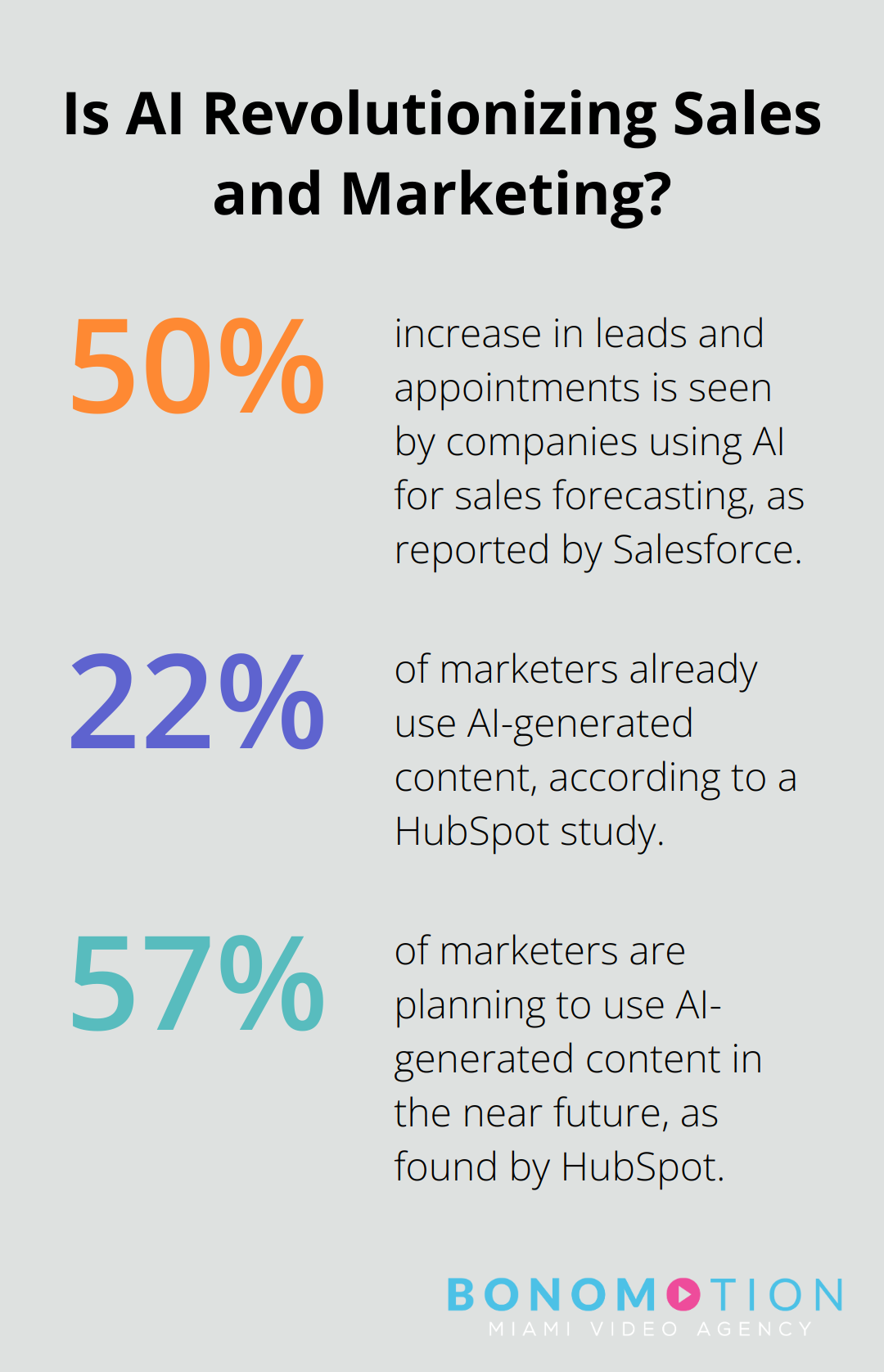
AI-driven predictive analytics revolutionize sales forecasting. These tools process historical data, market trends, and external factors to predict future sales with remarkable accuracy. Salesforce reports that companies using AI for sales forecasting see a 50% increase in leads and appointments. This level of precision allows businesses to optimize inventory, allocate resources efficiently, and make data-driven decisions.
AI-Generated Content Creation
Content creation undergoes a significant transformation thanks to AI. Tools like GPT-3 generate human-like text, while DALL-E creates unique images from text descriptions. These AI-powered content creation tools save time and resources, allowing marketing teams to focus on strategy and creativity. HubSpot found that 22% of marketers already use AI-generated content, with 57% planning to do so in the near future.
Chatbots and Virtual Assistants
AI-powered chatbots and virtual assistants enhance customer service and sales processes. These tools handle customer inquiries 24/7, provide instant responses, and guide customers through the sales funnel. Companies that implement chatbots report a 30% reduction in customer service costs and a 30% increase in customer satisfaction rates (according to IBM).
Dynamic Pricing Strategies
AI enables businesses to implement dynamic pricing strategies based on demand, competition, and customer behavior. This approach maximizes revenue and maintains competitiveness. AI algorithms can process data faster and more accurately than traditional methods, adjusting prices based on real-time market conditions.
As AI continues to evolve, its impact on marketing and sales will only grow. However, with great power comes great responsibility. The next chapter explores the challenges and ethical considerations that businesses must address as they integrate AI into their operations.
Navigating AI’s Ethical Maze in Business
AI integration in business operations presents significant challenges alongside its opportunities. Companies must address these issues to harness AI’s potential effectively.
Data Privacy Protection
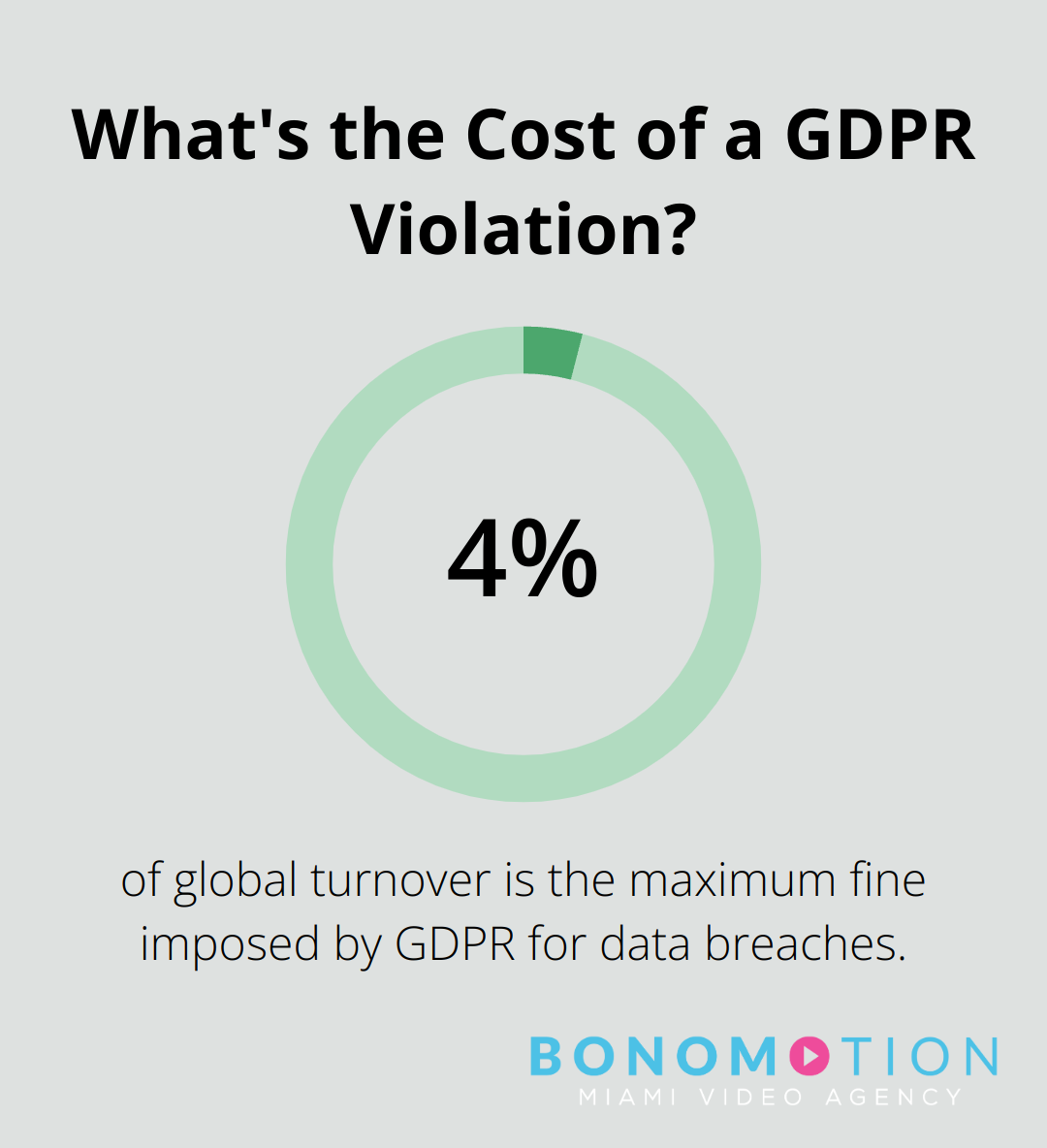
AI systems process vast amounts of data, making the protection of sensitive information critical. The European Union’s General Data Protection Regulation (GDPR) imposes fines up to €20 million or 4% of global turnover for data breaches. To mitigate risks, businesses must implement robust data encryption, conduct regular security audits, and train employees on data handling best practices.
Apple leads in privacy-preserving AI techniques. Their on-device processing approach minimizes data transmission, reducing vulnerability to breaches. This strategy protects user privacy and builds trust (a crucial factor in customer retention).
Workforce Transformation Management
AI’s impact on jobs presents both challenges and opportunities. It automates routine tasks while creating new roles that require different skill sets. The World Economic Forum predicts that about 170 million new jobs will be created this decade.
To navigate this shift, businesses must invest in reskilling programs. Amazon’s $700 million commitment to retrain 100,000 employees for in-demand jobs exemplifies a proactive approach. Companies can partner with educational institutions or develop in-house training programs to equip their workforce with AI-relevant skills (such as data analysis and machine learning).
Algorithmic Bias Mitigation
AI systems can perpetuate and amplify existing biases, leading to unfair outcomes. A study by the National Institute of Standards and Technology found that facial recognition algorithms misidentified people of color up to 100 times more often than white individuals.
Companies must diversify their AI development teams and implement rigorous testing protocols to address this issue. IBM’s AI Fairness 360 toolkit offers open-source resources for detecting and mitigating bias in machine learning models. Regular audits of AI systems for fairness and transparency maintain ethical standards and avoid potential legal repercussions.
Ethical AI Implementation
The ethical implementation of AI in business is not just a moral imperative but a strategic necessity. Companies that prioritize responsible AI practices gain consumer trust, avoid regulatory pitfalls, and position themselves as industry leaders in the evolving digital landscape.
To ensure ethical AI use, businesses should:
- Establish clear guidelines for AI development and deployment
- Create diverse teams to oversee AI projects
- Implement transparent AI decision-making processes
- Conduct regular ethical audits of AI systems
Regulatory Compliance
As AI becomes more prevalent, governments worldwide are developing regulations to govern its use. Businesses must stay informed about these evolving regulations and ensure compliance to avoid legal issues and maintain public trust.
The EU’s AI Act is the first-ever legal framework on AI, which addresses the risks of AI and positions Europe to play a leading role globally. Companies operating globally must adapt their AI strategies to comply with various regional regulations.
Final Thoughts
The impact of AI on business transforms operations, marketing, and customer interactions. AI enhances efficiency, enables data-driven decisions, and creates personalized experiences. Companies must address ethical concerns and regulatory compliance to harness AI’s full potential responsibly.
At Bonomotion Video Agency, we leverage AI to enhance our video production services while maintaining our commitment to personalized client satisfaction. Our state-of-the-art facility in Miami incorporates AI-driven technologies to streamline workflows and deliver high-quality content that elevates brand presence. We strive to stay at the forefront of AI advancements in our industry.
The future of AI in business promises continued innovation and challenges. Companies that thoughtfully integrate AI technologies will thrive in this evolving landscape. Bonomotion remains committed to leveraging AI to help our clients tell compelling stories through the power of video in this AI-enhanced world.