

Picking the right video production company can make or break your project. The wrong choice wastes time and money, while the right partner amplifies your brand message and drives real results.
At Bonomotion Video Agency, we’ve seen businesses struggle because they didn’t know what to look for. This guide walks you through the essential factors that separate great production partners from mediocre ones.
Experience and Portfolio Quality
Review Past Projects and Case Studies
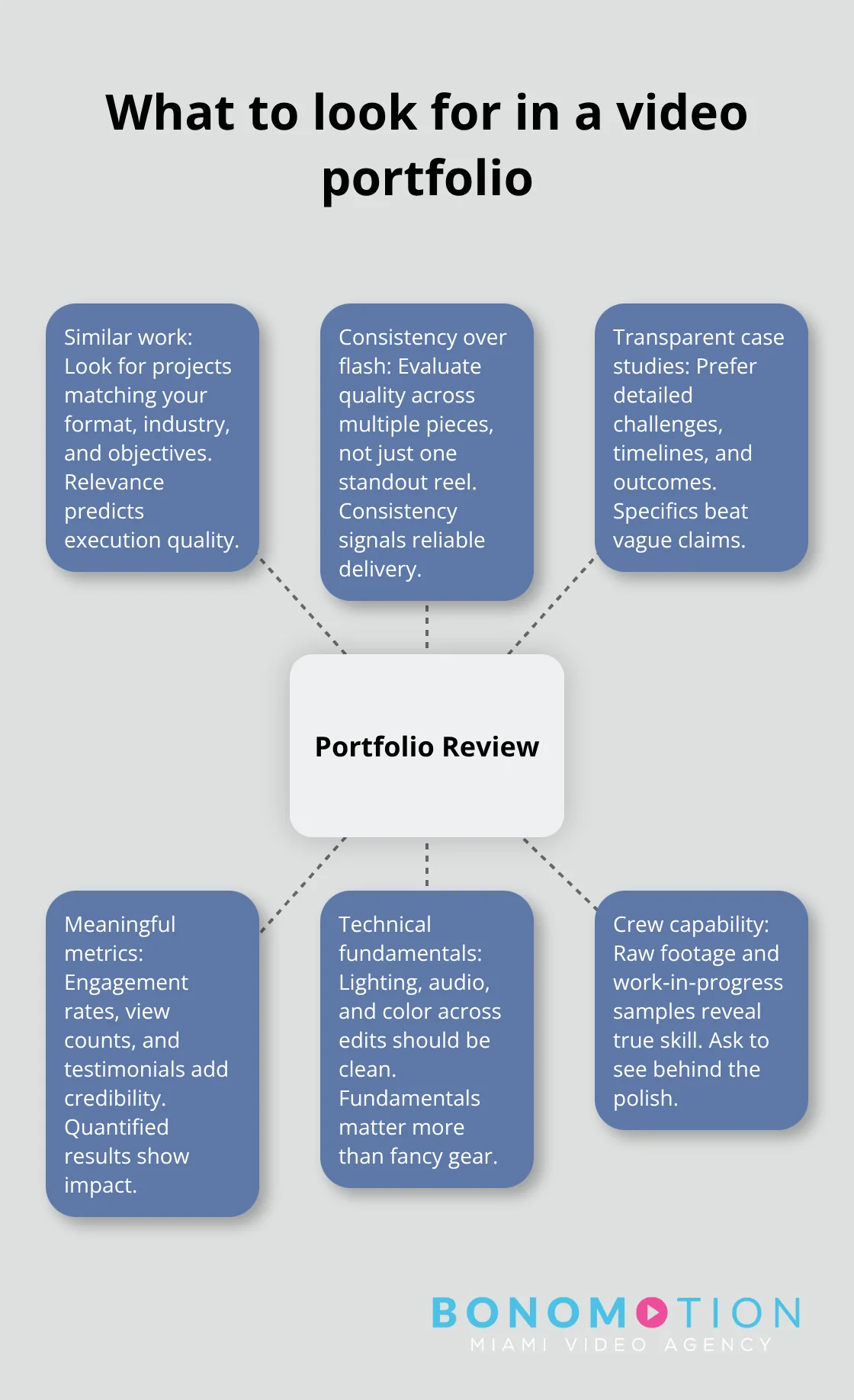
A production company’s portfolio tells you everything about their capabilities and style. Start by examining their past projects in detail, not just skimming thumbnails. Look for work similar to what you need, whether that’s corporate event coverage, interviews, promotional videos, or something else entirely. If a company claims expertise in live streaming but their portfolio shows only edited highlight reels, that’s a red flag.
The best indicator of future performance is demonstrated experience with your specific project type. Pay attention to production quality across multiple projects, not just their flashiest work. A consistent level of excellence matters more than one outstanding piece surrounded by mediocre work.
When reviewing case studies, seek out concrete details about project challenges, timelines, and measurable results. Companies that share specific metrics like engagement rates, view counts, or client testimonials are more transparent than those offering vague success stories.
Assess Technical Expertise and Equipment
Equipment alone doesn’t guarantee quality output. A company with older cameras but exceptional operators and lighting technicians will outperform a team with expensive gear and poor fundamentals. That said, verify they have appropriate technology for your needs.
If you require 4K video, confirm they shoot in 4K, not upscale from lower resolutions. Ask about their post-production capabilities too, since editing, color grading, and sound design determine final quality. For corporate events, ask whether they use multiple cameras, stabilization equipment, and drones if your event spans a large venue.
Interview the actual crew members who’ll work on your project, not just the sales contact. A talented cinematographer or editor makes a tangible difference in deliverables. Request to see raw footage or work-in-progress samples when possible, as these reveal true technical competence better than polished final cuts.
Evaluate Team Credentials and Specializations
Verify that team members have relevant credentials and experience. A videographer with fifteen years in documentary work brings different strengths than someone specializing in commercial advertising. Ask about crew stability and whether the same team members will work throughout your project. High turnover indicates potential quality inconsistencies.
Specializations matter significantly. Corporate event videography requires different skills than studio interviews or promotional content production. A company that handles all three adequately might excel at none.
Request references from past clients and actually contact them. Ask specific questions about communication, problem-solving, and whether deliverables matched expectations and timelines. These conversations reveal how a production company operates under real-world conditions and whether they truly understand your industry’s demands.
Services and Capabilities Match
Map Out Your Specific Needs First
Knowing what you need sounds simple, but most businesses underestimate how specific their requirements actually are. A company that produces corporate interviews might struggle with live event coverage, while a specialist in promotional content may lack experience with construction timelapse projects. Before contacting any production company, map out exactly what you need.
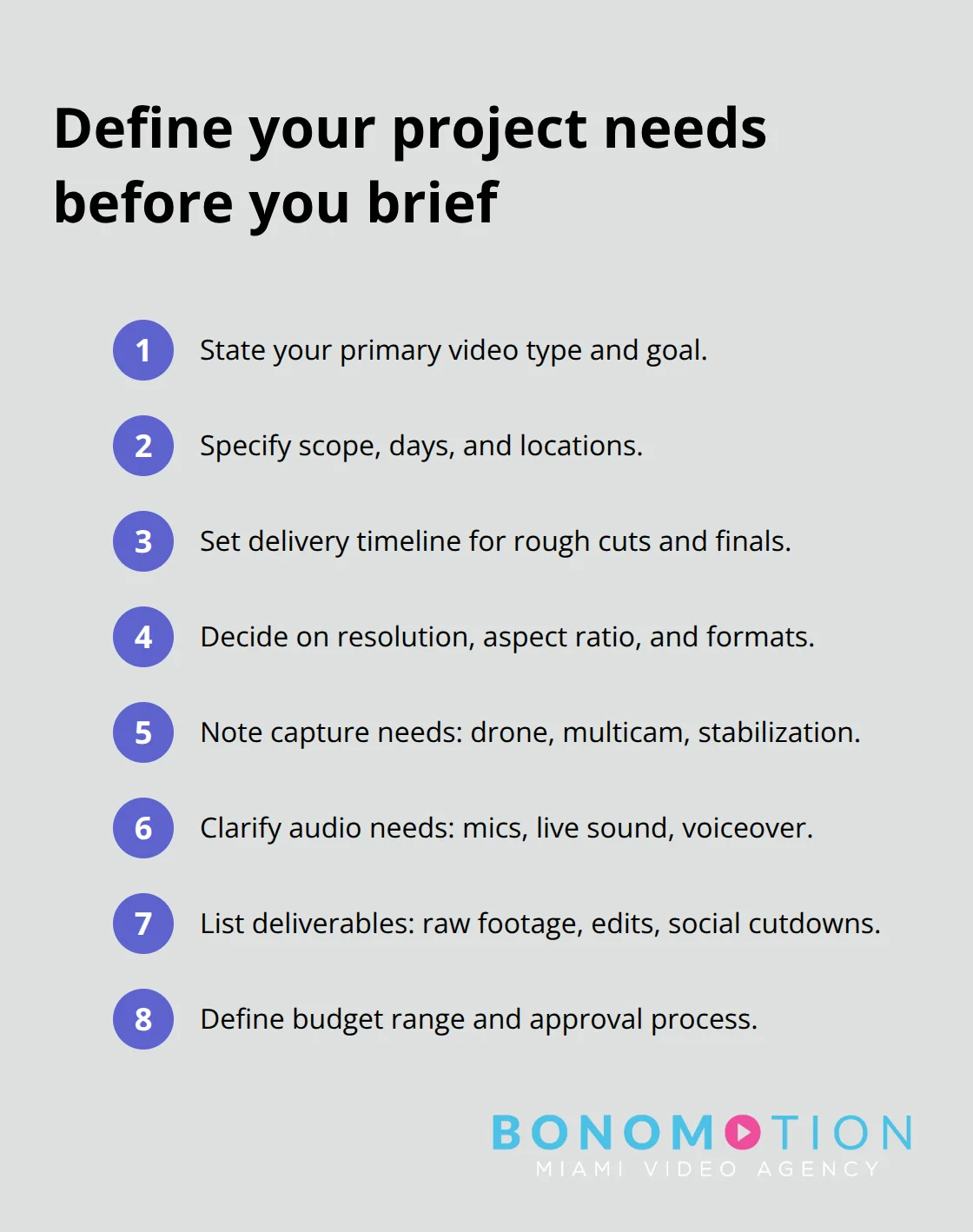
Are you filming a single executive interview or a multi-day conference with keynote speakers, breakout sessions, and networking coverage? Do you need raw footage delivered within 48 hours or can you wait two weeks for polished final edits? Will you require drone footage, multiple camera angles, or just a straightforward single-camera setup? The more specific you are, the better you can evaluate whether a production company actually fits your project.
Examine How Companies Describe Their Services
Once you’ve defined your needs, examine how the production company describes their services. Companies that list everything from wedding videography to industrial manufacturing videos without clear specialization tend to be generalists. Generalists rarely excel at any one thing. Instead, look for production companies that openly acknowledge what they specialize in and what they don’t. A production company’s honesty about their limitations matters more than their claims of versatility.
Request Proof of Relevant Experience
Ask directly whether they’ve completed projects matching your scope and timeline. If they hesitate or provide vague answers, that’s your signal to keep looking. Request to see specific examples of work similar to yours, not just their best projects overall. Confirm they can deliver your project type within your timeline and budget constraints.
Recognize Red Flags in Project Acceptance
Many production companies accept projects they’re not equipped to handle, then scramble to meet expectations, resulting in mediocre output and frustrated clients. The right partner recognizes when your project falls outside their wheelhouse and either declines or brings in specialists to fill the gaps. That honesty reflects a company that prioritizes quality over quick revenue. When a production company demonstrates this kind of integrity, you’ve found someone worth working with-which brings us to the equally important question of pricing, communication, and whether your partnership will actually work in practice.
Pricing, Communication, and Partnership Fit
Demand Transparent Pricing Structures
Pricing transparency separates trustworthy production companies from those hiding costs. The production industry has a reputation for surprise fees tacked on during post-production or for rush deliveries. A reputable company provides a detailed breakdown of costs upfront, itemizing crew rates, equipment rental, location fees, editing hours, and revision rounds. Ask whether revisions are included in the base price or billed separately, and get clarity on what constitutes a revision versus a new request. Companies that bundle services into fixed packages tend to be more transparent than those quoting hourly rates without clear scope boundaries. Verify whether your quote includes color grading, sound design, and motion graphics, since these post-production elements often inflate final costs significantly.
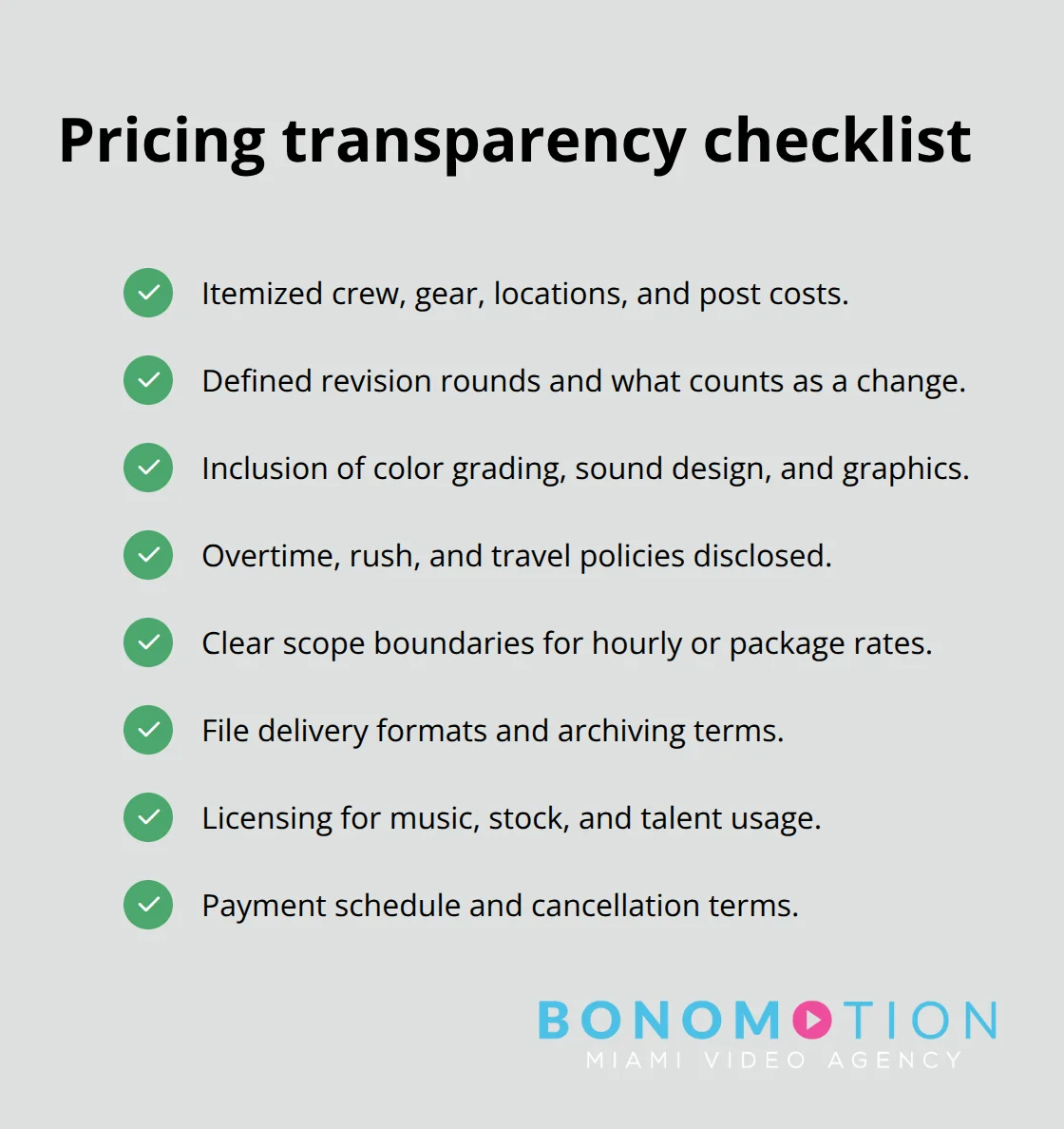
A production company that explains why certain services cost what they do demonstrates confidence in their pricing model.
Assess Responsiveness and Communication Quality
Communication style and responsiveness matter more than you’d expect. A company that responds to emails within 24 hours and clearly explains project timelines prevents miscommunication that derails productions. During initial conversations, assess whether they ask thoughtful questions about your goals or simply push their standard packages. Companies asking detailed questions about your target audience, brand voice, and desired outcomes signal they’ll collaborate rather than impose a template approach.
Evaluate How They Handle Disagreements
Evaluate their willingness to discuss concerns openly. If you mention budget constraints and they immediately suggest cutting corners on crew or equipment quality, that’s a warning sign they prioritize revenue over results. Cultural alignment matters because you’ll spend weeks or months working together. A production company that shares your values around quality, transparency, and problem-solving becomes a genuine partner rather than a vendor. Test this by observing how they handle disagreements or unexpected challenges during initial project discussions. Do they become defensive or do they work toward solutions that satisfy everyone involved?
Final Thoughts
Choosing a video production company requires you to balance multiple factors, and no single element tells the complete story. The strongest candidates demonstrate consistent portfolio quality, transparent pricing, and genuine interest in understanding your specific needs. They ask detailed questions before quoting, provide itemized cost breakdowns, and respond promptly to your inquiries-these behaviors signal a partner focused on delivering results rather than rushing through projects.
Red flags emerge when production companies claim expertise across every conceivable video type without acknowledging specializations, or when they hesitate to provide references matching your project scope. When they accept projects outside their wheelhouse or suggest cutting crew quality to meet budget constraints, they prioritize revenue over your success. Companies that become defensive about pricing or communication concerns won’t improve once your project begins.
The right production partner demonstrates integrity by declining work they can’t execute well and explaining why certain services cost what they do. They communicate clearly about timelines, revision policies, and deliverables, and they ask about your target audience and brand voice rather than pushing template solutions. When you evaluate how to choose a video production company, look for partners who combine technical excellence with genuine commitment to your goals-visit Bonomotion Video Agency to explore how we approach video production differently.