

Video marketing drives 80% more conversions than other content formats, yet most businesses struggle with execution. The gap between knowing video works and creating effective campaigns often comes down to skills.
We at Bonomotion Video Agency see this challenge daily. The right video marketing courses can bridge that gap, transforming your team’s capabilities and your brand’s results.
Essential Video Marketing Skills to Master
Video Strategy and Planning Fundamentals
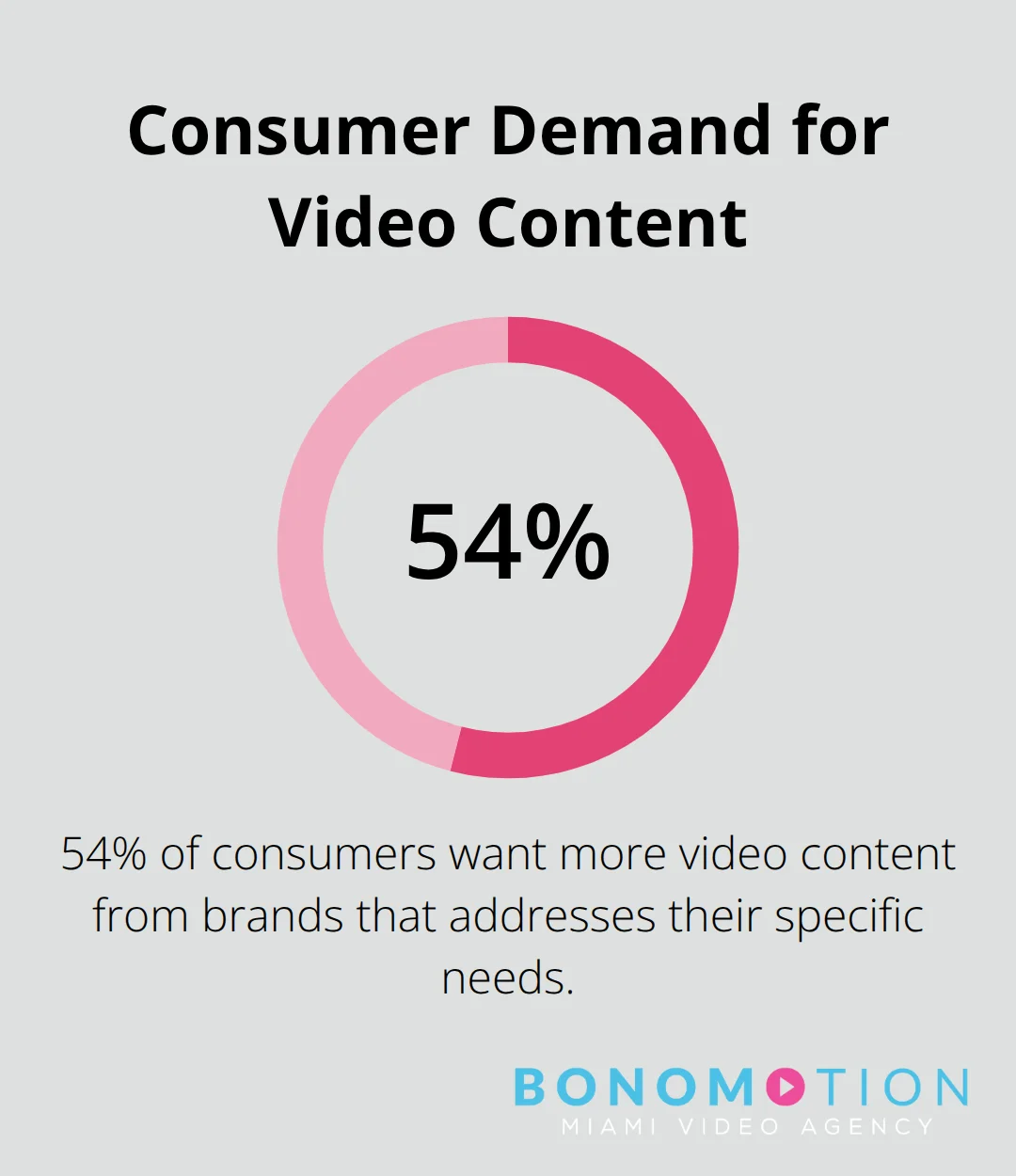
Strategic thinking separates successful video marketers from content creators. Video strategy requires understanding your audience’s behavior patterns, platform algorithms, and content performance metrics. HubSpot research shows 54% of consumers want more video content from brands, but only when it addresses their specific needs.
Start with audience research using tools like Google Analytics and social media insights to identify viewing patterns. Map your content calendar around these insights, focus on peak engagement times and preferred video lengths. Instagram videos perform best at 26 seconds, while YouTube content should target 2-7 minutes for optimal retention rates.
Storytelling That Converts Viewers
Effective video storytelling follows the problem-solution-result framework that drives higher conversion rates. Master the hook-and-hold technique: capture attention within the first 3 seconds, then maintain engagement through emotional connection and clear value propositions.
Netflix uses this approach in their trailers, creates immediate intrigue followed by compelling narrative threads. Practice writing scripts that speak directly to viewer pain points, then present your brand as the solution. Test different story structures using A/B testing on platforms like Facebook and LinkedIn to identify what resonates with your specific audience.
Technical Production and Editing Capabilities
Technical proficiency accelerates content creation and reduces production costs significantly. Focus on lighting fundamentals first – proper lighting improves video quality more than expensive cameras do. Learn three-point lighting setups and natural light optimization techniques (these skills transfer across all production scenarios).
Audio quality matters more than video resolution, with poor audio causing viewers to stop watching quickly. Master basic editing in tools like DaVinci Resolve or Adobe Premiere Pro, focus on cuts, transitions, and color correction. Mobile video creation skills are essential since vertical videos generate higher engagement rates on social platforms.
These foundational skills prepare you to evaluate and select the right educational resources for your team’s development needs.
Top Online Video Marketing Courses
HubSpot’s Video Marketing Certification Program stands out as the most comprehensive free option available today. This program covers audience research, content planning, and performance measurement with real-world case studies from companies like Slack and Shopify. The certification takes approximately 4 hours to complete and provides immediate access to HubSpot’s video creation templates and analytics tools. What sets this program apart is its focus on measurable ROI – students learn to track conversion rates, engagement metrics, and lead generation directly tied to video campaigns.
Professional Production Training That Works
Coursera’s Video Production Specialization from Michigan State University teaches technical skills through hands-on projects rather than theory. Students create actual video campaigns for real businesses and receive feedback from industry professionals. The program covers advanced editing techniques in Adobe Creative Suite, lighting setups that cost under $500, and audio optimization methods that improve viewer retention by up to 65%. Completion rates for programs with coaching and interactive elements can achieve over 70%, which indicates strong student engagement and practical value.
LinkedIn Learning for Business Applications
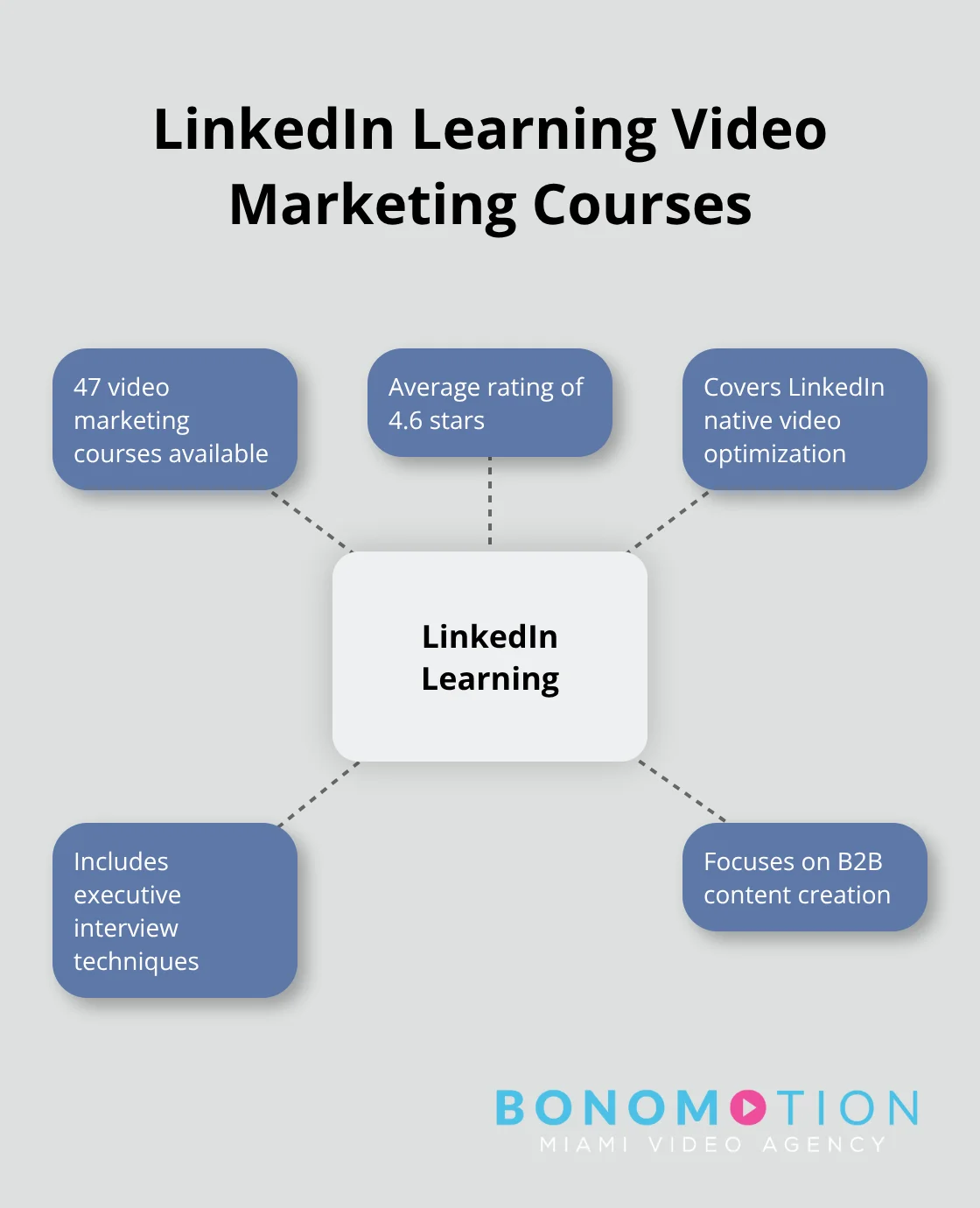
LinkedIn Learning’s video marketing courses excel at B2B content creation and professional networking applications. The platform offers 47 video marketing courses with an average rating of 4.6 stars and covers everything from LinkedIn native video optimization to executive interview techniques. Their Video Marketing Strategy course teaches students to create content that generates qualified leads, with graduates reporting average engagement increases of 156% on LinkedIn posts. The monthly subscription model at $29.99 provides access to all courses plus downloadable exercise files and project templates that streamline content creation workflows.
Advanced Specialization Programs
Academy93’s Video Marketing Mastery course focuses on performance analytics combined with creative production techniques. This program targets experienced marketers who need to blend artistic vision with data-driven results. Students work with real campaign budgets (ranging from $1,000 to $10,000) and learn to optimize video performance across multiple platforms simultaneously. For those considering starting a video editing business, this course provides essential entrepreneurial insights alongside technical skills.
These course options provide different paths to video marketing expertise, but success depends on selecting the right program for your specific needs and current skill level. Understanding corporate video rates becomes crucial when transitioning from learning to professional implementation.
How to Choose the Right Video Marketing Course
The wrong video marketing course wastes time and budget while leaving skill gaps unfilled. Start with a skills audit using free assessment tools like HubSpot’s Marketing Skills Assessment or Google Analytics Academy’s competency tests. These platforms identify specific knowledge gaps in areas like audience targeting, content optimization, and performance measurement. Most marketers overestimate their technical abilities while underestimating strategic planning skills. Content Marketing Institute research shows 63% of businesses struggle with video strategy despite having production capabilities.
Match Learning Format to Your Schedule
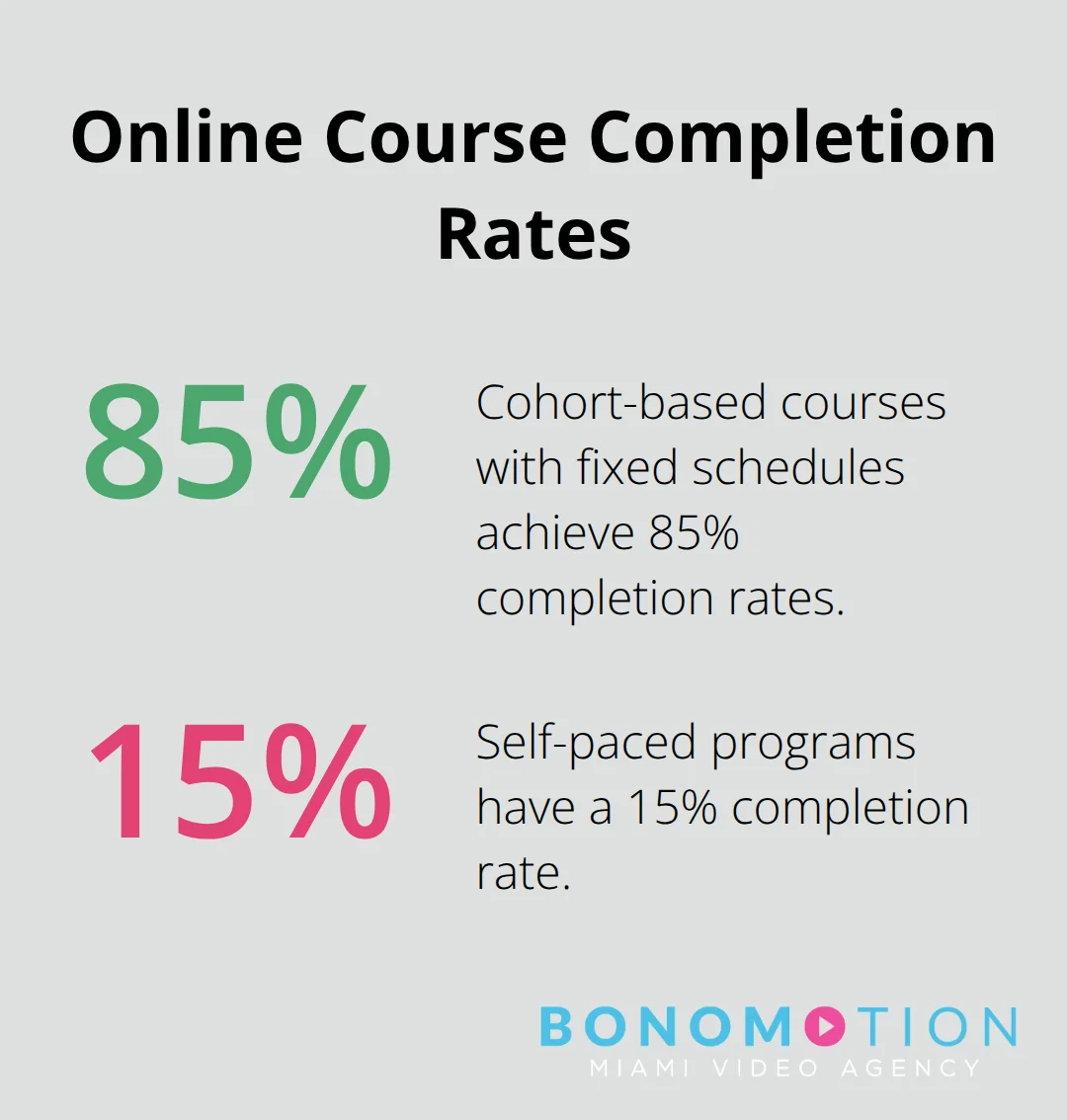
Course format determines completion rates more than content quality. Cohort-based courses with fixed schedules achieve 85% completion rates compared to 15% for self-paced programs (based on data from Lambda School and other online education providers). Live instruction works best for accountability and immediate feedback, while self-paced options suit busy professionals who need flexibility. Interactive courses with peer collaboration generate 40% higher engagement than lecture-only formats. Consider time investment realistically – most comprehensive video marketing certifications require 20-40 hours of focused study, not the advertised 4-6 hours of video content.
Evaluate Instructor Credentials and Student Success
Instructor credentials matter less than student results and industry recognition. Look for courses taught by professionals currently running successful video campaigns with verifiable metrics and client testimonials. Check LinkedIn profiles to confirm recent agency experience or in-house marketing roles at recognized brands. Student reviews on platforms like Course Report and SwitchUp provide unfiltered feedback about course effectiveness, job placement rates, and skill application success. Avoid courses with generic testimonials or instructors whose primary experience involves teaching rather than executing video marketing campaigns.
Assess Course Content Depth and Practical Application
The best programs feature case studies from students who landed jobs or increased campaign performance within 90 days of completion. Look for courses that include hands-on projects with real client work rather than theoretical assignments. Programs should cover both creative and analytical aspects – from storytelling techniques to ROI measurement tools. Check if the course provides templates, checklists, and resources you can use immediately in your campaigns (these materials often prove more valuable than the video lessons themselves). When evaluating practical components, consider how courses prepare you to select the right video production partner for future campaigns.
Final Thoughts
Video marketing courses provide the foundation, but implementation determines success. The most effective programs combine strategic planning with hands-on production experience and give you skills that translate directly into campaign results. HubSpot’s certification offers immediate value for beginners, while specialized programs like Coursera’s production track develop technical expertise that reduces outsourcing costs.
Your next step involves systematic application of these skills. Start with one platform and master its requirements before you expand to others. Track performance metrics from day one with tools you learned in your chosen program (most importantly, practice consistently since video marketing expertise develops through repetition and refinement, not just course completion).
Long-term success requires you to stay current with platform changes and algorithm updates. The video marketing landscape shifts rapidly and makes continuous learning essential. Partner with experienced professionals when campaigns exceed your current capabilities. We at Bonomotion Video Agency combine production expertise with strategic marketing knowledge and help businesses bridge the gap between education and execution.