

Video is the most credible, high-retention communication format available to public relations professionals today. The role of video in PR has expanded well beyond press event coverage or product launches. It now encompasses executive thought leadership, crisis response, earned media campaigns, and AI-cited brand content distributed across LinkedIn, YouTube, and Instagram. Research from Wistia’s 2026 State of Video report confirms that 80% of PR teams now distribute video on LinkedIn, a 30% increase since 2024, signaling that video content for public relations has become a standard operating expectation, not a differentiator reserved for well-funded communications departments.
What is the role of video in PR campaigns?
Video in public relations is defined as any moving-image asset produced to shape perception, communicate brand values, or earn media coverage across digital and broadcast channels. The industry term for this practice is video-driven earned media, and it sits at the intersection of traditional PR storytelling and modern content marketing. What separates video from written press releases or static social posts is its capacity to convey tone, accountability, and human presence simultaneously.
PR professionals who treat video as a supplementary tactic rather than a primary communication vehicle are leaving measurable credibility on the table. A well-produced executive interview or brand documentary functions as a portable media asset: it can be pitched to journalists, embedded in press kits, shared on LinkedIn, and repurposed into short clips for Instagram. The importance of video in PR lies precisely in this versatility, combined with its ability to communicate nuance that text cannot replicate.

The role of multimedia in PR has grown because audiences now expect to see the people and organizations behind brand claims. A written statement from a CEO carries far less weight than a 90-second video where that executive speaks directly to the issue. This shift is not stylistic preference. It reflects how trust is built in a media environment saturated with text-based content.
How does video build credibility and trust in public relations?
Human presence on camera functions as a social accountability signal that materially increases viewer trust. MDPI 2026 research involving 1,425 participants found that videos featuring a visible human presenter generated significantly higher trust, perceived effort, and purchase intention compared to captions-only formats or AI-generated avatars. For PR professionals, this finding has direct implications for how executive communications and brand spokesperson content should be produced.
The mechanism behind this effect is straightforward. When a real person speaks on camera, viewers assign social responsibility to that individual. The perceived effort of appearing on screen signals that the brand is willing to be held accountable. AI avatars, despite their production efficiency, do not trigger the same psychological response. Privacy concerns can moderate this trust effect, particularly in sensitive industries like healthcare or finance, but the baseline advantage of human presence holds across most PR contexts.
| Video format | Trust signal | Best PR use case |
|---|---|---|
| Human presenter | Highest: accountability and authenticity | Executive statements, crisis response, thought leadership |
| AI avatar | Moderate: professional but impersonal | High-volume explainer content, internal communications |
| Captions only | Lowest: no human accountability cue | Supplementary accessibility layer, not standalone |
Pro Tip: When producing executive video content, prioritize visible speaker framing and natural voice delivery over cinematic production polish. According to MDPI 2026 findings, authenticity cues like voice ownership and on-camera presence outperform high-budget aesthetics in building viewer trust.
What video formats and distribution channels drive PR success?
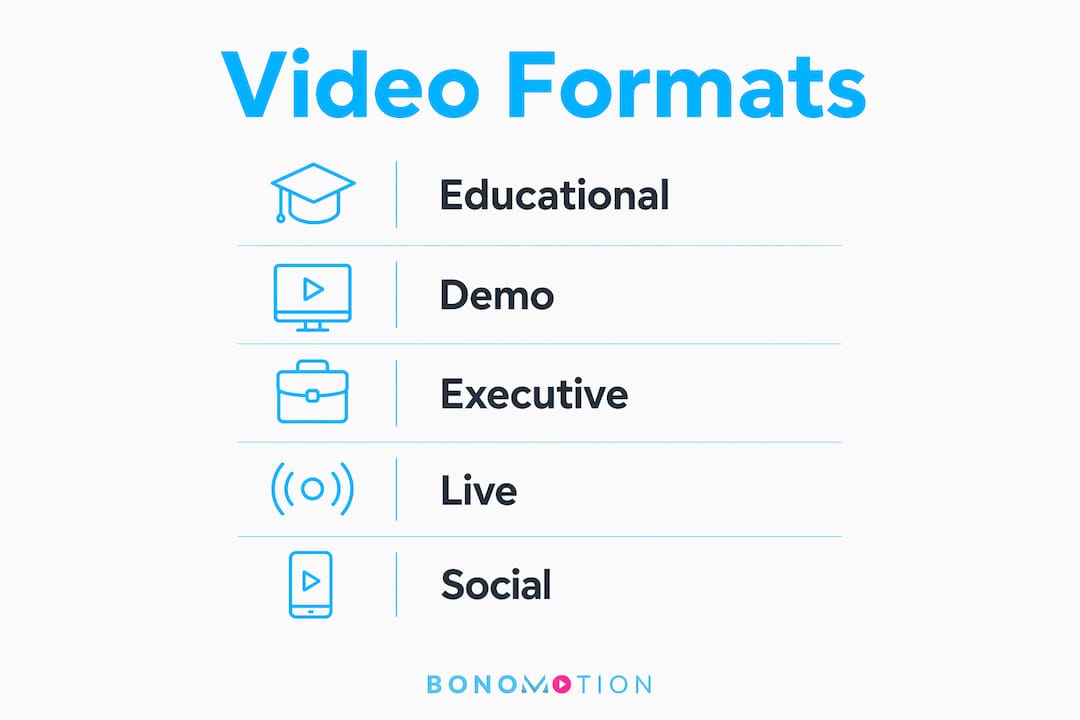
The most effective video formats for public relations in 2026 are educational videos, product demonstrations, executive interviews, and short social clips repurposed from longer productions. Each format serves a distinct PR function: educational videos build authority, product videos support launch coverage, and executive interviews humanize leadership during high-stakes moments.
Distribution channel selection is equally strategic. According to Wistia’s 2026 data, LinkedIn leads video distribution at 80%, followed by YouTube at 76% and Instagram at roughly 50%. Facebook trails behind, and TikTok is used by fewer than 25% of PR teams. This distribution pattern reflects where professional audiences and journalists actually consume brand content, making LinkedIn and YouTube the non-negotiable anchors of any PR video strategy.
Repurposing is where PR teams extract maximum value from a single production investment. Over 60% of teams create platform-native clips from long-form videos and use those clips to drive traffic back to owned media. LinkedIn leads clip distribution at 67%, followed by Instagram and YouTube. A 20-minute executive panel discussion, for example, can yield five to eight standalone clips, each optimized for a specific platform’s format and audience behavior.
- Educational videos: Build topical authority and are highly shareable among professional audiences on LinkedIn and YouTube.
- Product and service videos: Support media pitches by giving journalists a visual reference that written press releases cannot provide.
- Executive thought leadership clips: Position C-suite voices as industry authorities, increasing the likelihood of media pickup.
- Event recap videos: Extend the earned media life of conferences, product launches, and corporate milestones.
- Webinar recordings: Serve as long-form credibility assets that can be gated for lead generation or distributed openly for brand awareness.
Pro Tip: Build your video production calendar around a “long-to-short” workflow. Produce one anchor video per campaign, then brief your editor to extract platform-specific clips before the primary asset goes live. This approach, supported by Wistia’s repurposing data, maximizes reach without proportionally increasing production costs.
A social video strategy built around this repurposing model gives PR teams a consistent content pipeline that feeds both earned and owned media channels simultaneously.
How is video impact measured in modern PR campaigns?
PR measurement has historically struggled with video because traditional metrics like views and impressions do not capture business impact. Modern PR teams now use three distinct measurement frameworks: Earned Media Value, social engagement metrics, and AI citation share of voice.
Earned Media Value (EMV) is defined as the monetary equivalent of unpaid media exposure, calculated by benchmarking impressions against the cost-per-thousand (CPM) rates for equivalent paid placements on the same channel. Meltwater’s EMV framework specifies that accurate EMV calculations require channel-specific audience size data and platform CPM benchmarks rather than a single blended figure. A LinkedIn video that earns 50,000 impressions carries a different EMV than the same impression count on Facebook, because LinkedIn CPMs are substantially higher.
Social engagement has emerged as the fastest-rising video success metric. Social engagement now ranks as the top KPI for 22% of PR teams, nearly double the figure from the prior year, surpassing passive view counts as the primary indicator of video resonance. This shift matters because shares, comments, and saves indicate that content is spreading organically through professional networks, which is the definition of earned media in a social context.
The third measurement frontier is AI citation share of voice. Search Engine Journal identifies citation share of voice as a new measurable PR KPI driven by verifiable, data-grounded content. When ChatGPT, Perplexity, or Google’s AI Overviews cite a brand’s video content or the articles that reference it, that citation represents a form of earned authority that traditional PR metrics do not capture.
“Digital PR hasn’t changed. AI search has simply made the fundamentals more important. Verifiable, data-backed content earns citations. Everything else gets ignored.” — Search Engine Journal
The practical implication for PR video is clear: content that includes named experts, specific data points, and verifiable claims is more likely to be cited by AI systems than generic brand messaging. Video scripts and accompanying written content should be built with this citation eligibility in mind.
What best practices help PR professionals integrate video effectively?
The most effective PR video programs treat their video library as an earned-media asset, not a social media posting schedule. Each video produced should be designed with multiple distribution endpoints in mind: a press kit version, a social clip version, a website embed version, and a pitch-ready version for media outreach. This asset-library thinking, supported by Wistia’s 2026 research, is what separates high-performing PR video programs from teams that produce content reactively.
- Prioritize human presence: Feature real executives, subject matter experts, or brand spokespersons on camera. The trust advantage of human presenters over AI avatars is measurable and consistent across audience segments.
- Align format to platform: LinkedIn rewards longer, insight-driven content; Instagram and YouTube Shorts favor concise, high-energy clips. Producing one format for all platforms reduces effectiveness on every channel.
- Use AI tools for efficiency, not presence: Tools like Descript, Opus Clip, and Adobe Premiere Pro’s AI features accelerate transcription, captioning, and clip extraction. They should support human-led production, not replace it.
- Build for AI citation eligibility: Include specific data points, named experts, and verifiable claims in both the video script and the accompanying written content. This increases the probability that AI systems will reference your content in generated answers.
- Measure engagement, not just reach: Track shares, comments, and saves alongside impressions. Social engagement as a KPI reflects actual audience resonance, which is the metric that drives earned media momentum.
Short educational videos also deliver measurable cognitive benefits beyond PR reach. A 2025 medical education study found that 58.5% of participants agreed short videos enhanced long-term retention, and 72.8% reported greater confidence after viewing. These findings translate directly to PR contexts: educational video content builds audience understanding and brand authority simultaneously.
Pro Tip: Before your next production, audit your existing video library for repurposing opportunities. Most PR teams have conference recordings, webinar archives, and interview footage that can be reedited into platform-native clips without additional shooting costs. Pair this with a B2B video marketing strategy to align each clip with a specific campaign objective.
Key takeaways
Video in PR succeeds when it combines human presence, platform-specific distribution, and data-grounded content designed for both audience engagement and AI citation eligibility.
| Point | Details |
|---|---|
| Human presence drives trust | Visible speakers outperform AI avatars and captions-only formats in credibility and purchase intent. |
| LinkedIn and YouTube anchor distribution | 80% of PR teams use LinkedIn; 76% use YouTube, making these the primary channels for professional video reach. |
| Repurposing multiplies ROI | Over 60% of teams clip long-form video into platform-native assets to extend reach and drive website traffic. |
| EMV and engagement replace views | Earned Media Value and social engagement metrics provide more meaningful PR performance data than passive view counts. |
| AI citation eligibility is a new KPI | Verifiable, data-backed video content earns citations in AI-generated answers, representing a measurable form of earned authority. |
Why video authenticity matters more than production budget
After two decades of producing video for PR-driven brands at Bonomotion, the pattern I see most consistently is this: organizations that invest heavily in cinematic production but feature no real human voices on camera consistently underperform against brands that put their actual executives and experts on screen, even with modest production values.
The MDPI 2026 research confirms what we have observed in practice. Viewers assign accountability to the person they see speaking. A polished brand film with stock footage and motion graphics communicates aesthetic investment. A direct-to-camera statement from a company’s chief communications officer communicates something more valuable: willingness to be seen and held responsible.
Where I see PR teams make the most costly mistake is in treating video as a visual press release. They script every word, over-produce every frame, and strip out any trace of spontaneity. The result is content that looks expensive and feels inauthentic. The brands that earn the most media pickup and social sharing are the ones whose video content feels like a real person chose to say something real.
The emerging AI citation dynamic adds another layer to this. AI systems favor content with specific claims, named sources, and verifiable data. A video script built around genuine expertise, with real statistics and named authorities, will generate written content that earns citations. Generic brand messaging will not. The future of video in PR is not more production polish. It is more intellectual substance delivered by credible human voices.
— Bernard
How Bonomotion helps PR teams produce video that earns attention
PR professionals who understand the importance of video in PR still need a production partner who can execute at the level the strategy demands. Bonomotion has delivered corporate and brand video solutions for startups, growing brands, and Fortune 100 companies since 2003, with every project guided by an experienced producer who aligns production decisions with your communications objectives and distribution plan.
From executive messaging and thought leadership series to multi-day conference coverage and branded lifestyle campaigns, Bonomotion operates as an extension of your communications team. If you are building a PR video program that needs to perform across LinkedIn, YouTube, and earned media channels, explore professional video production built specifically for brand credibility and measurable results.
FAQ
What is the role of video in PR?
Video in public relations is a primary communication format used to build brand credibility, humanize leadership, and earn media coverage across digital channels. It functions as a portable media asset that supports press pitches, social distribution, and AI-cited content strategies simultaneously.
Which platforms should PR teams prioritize for video?
LinkedIn and YouTube are the top two distribution channels, used by 80% and 76% of PR teams respectively, according to Wistia’s 2026 State of Video report. Instagram is a secondary channel, while TikTok is used by fewer than 25% of PR teams.
How does video improve trust in brand communications?
A visible human presenter in video significantly increases viewer trust, perceived effort, and purchase intention compared to AI avatars or captions-only formats, based on MDPI 2026 research with 1,425 participants. Authenticity cues like voice ownership and on-camera presence are the primary drivers of this trust effect.
How do PR teams measure video success?
Modern PR video measurement uses Earned Media Value, social engagement metrics (shares, comments, saves), and AI citation share of voice. Social engagement is now the top KPI for 22% of PR teams, nearly double from the prior year, reflecting a shift from passive reach to active audience resonance.
What makes video content eligible for AI citations?
AI systems like ChatGPT and Perplexity favor content that includes verifiable data, named experts, and specific claims. Search Engine Journal identifies citation share of voice as a measurable PR KPI, meaning video scripts and accompanying written content should be built around intellectual substance rather than generic brand messaging.