

Contents
Cinematic video is defined as an intentional emotional design system that uses framing, lighting, camera movement, sound, and pacing to guide how viewers feel, not just what they see. Unlike standard video, which documents or informs, cinematic video engineers immersion. The distinction matters because emotional guidance is what separates a forgettable clip from a story that sticks. For content creators, marketers, and business owners in 2026, understanding why cinematic video works is the difference between content that scrolls past and content that converts.
Why cinematic video starts with these core elements
Cinematic video is built from six deliberate craft decisions, each one shaping how a viewer experiences the story. None of them require a $50,000 camera package. What they require is intent.
- Framing and composition. The rule of thirds, leading lines, and negative space direct viewer attention before a single word is spoken. A well-composed frame communicates hierarchy and meaning instantly.
- Lighting with purpose. Golden hour lighting is among the fastest ways for any filmmaker to achieve a cinematic look without complex equipment. Soft, directional light from sunrise or sunset creates mood that artificial setups take hours to replicate.
- Motivated camera movement. A slow push-in signals intimacy. A handheld follow shot signals urgency. Every camera move should express a narrative intention, not fill dead air.
- Sound design. Ambient sound, room tone, and a carefully selected music bed create the emotional container that visuals live inside. Viewers notice when sound is missing; they feel it when it is right.
- Frame rate. 24 fps is the hallmark of cinematic motion, carrying a subtle visual cue that audiences associate with the classic film experience. Shooting at 60 fps for a brand story reads as sports broadcast, not cinema.
- Editing rhythm. Cuts timed to music beats, breath, or emotional peaks build narrative momentum. The edit is where cinematic feeling is either confirmed or destroyed.
Pro Tip: Cinematic feel emerges from fundamentals like motivated light and clean composition combined with simplicity in editing. Adding more effects rarely improves the cinematic quality; removing unnecessary cuts almost always does.
How cinematic videos enhance storytelling and audience engagement
Cinematic video works on audiences through a well-documented psychological mechanism called narrative transportation theory. When a video opens with a structured hook, builds through rhythmic pacing, and closes with an emotional resolution, viewers enter a state of sustained immersion. Narrative transportation shows that this structure engineers attention and emotional triggers across well-composed narrative arcs, making the viewer less likely to disengage.

The emotional triggers cinematic video deploys include nostalgia, suspense, and humor, each calibrated to the brand’s audience and message. Research confirms that human narration elicits stronger nostalgia and higher rewatch rates compared to AI-generated narration in knowledge-rich contexts. That finding has direct implications for any brand using video testimonials or founder stories: the human voice, placed within a cinematic structure, creates an emotional resonance that no AI-generated summary can replicate.
Four measurable outcomes follow from cinematic storytelling done well:
- Higher on-site retention. Viewers who feel emotionally engaged stay longer, reducing bounce rates and signaling content quality to search algorithms.
- Stronger rewatch intention. Emotional arousal tied to nostalgia and narrative resolution drives viewers to watch again, compounding exposure without additional media spend.
- Improved conversion context. Cinematic video builds brand trust and emotional clarity before a viewer reads a caption or clicks a button, warming the conversion path.
- Resistance to AI displacement. Video offers an immersive experience that resists AI shortcuts. Video ad spend is projected to reach $236 billion in 2026, a figure that reflects how brands are doubling down on formats that AI search cannot summarize away.
“Cinematic video is an irreplaceable brand asset because the viewing experience cannot be replicated by AI-generated text or summaries.”
Short-form cinematic content carries its own engagement logic. Videos that engineer emotional valence shifts within 30 to 90 seconds maximize retention and engagement, making even a 60-second brand clip a high-value storytelling vehicle when structured correctly.
Cinematic video vs. standard video: what actually changes for brands
The difference between cinematic and standard video is not production budget. It is creative intent applied at every stage of production.
| Element | Standard video | Cinematic video |
|---|---|---|
| Primary goal | Communicate information | Evoke emotion and immersion |
| Filming style | Static or functional camera work | Motivated movement, deliberate framing |
| Lighting approach | Adequate and even | Mood-driven, directional, purposeful |
| Editing rhythm | Sequential and informational | Paced to emotional beats and narrative arcs |
| Viewer reaction | Informed | Emotionally engaged and invested |
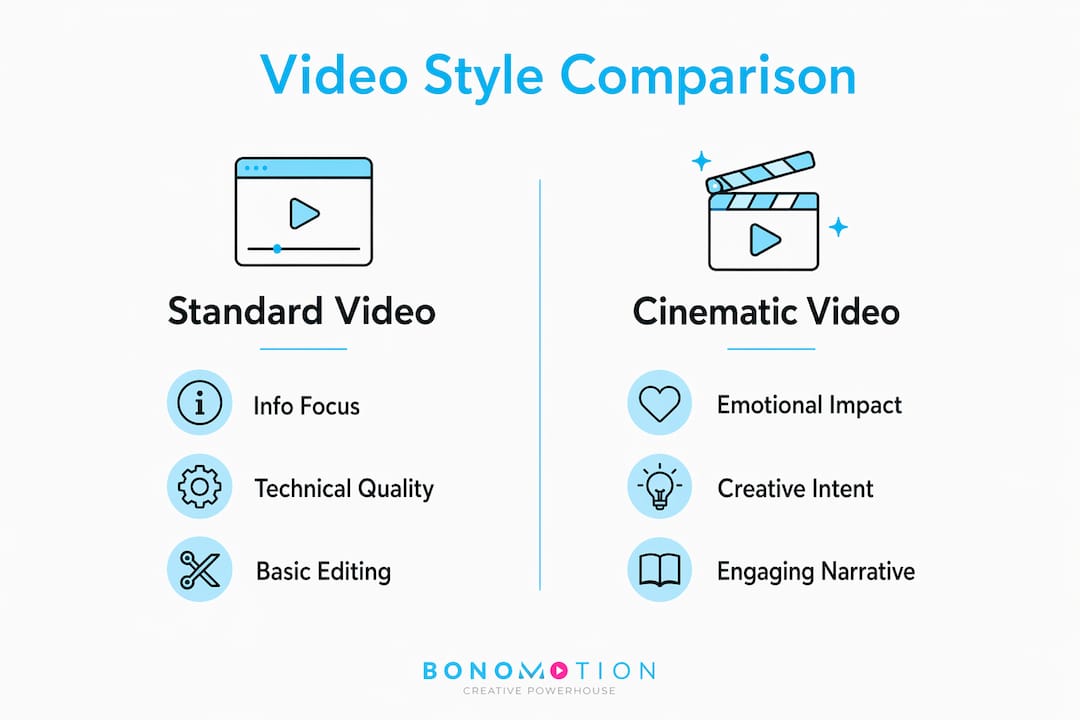
Cinematic video differs from standard video in primary goals, style, editing, and viewer response. The practical implication for brands is significant: a standard product demo tells viewers what a product does, while a cinematic product demo makes viewers feel why they need it. That shift in emotional register is what drives the difference in conversion rates between average and high-performing video content.
The misperception that cinematic equals expensive gear persists in marketing conversations, but it is simply wrong. A founder story shot on an iPhone during golden hour, edited with intentional rhythm and a well-chosen music bed, will outperform a sterile studio interview shot on a RED camera with flat lighting and no narrative arc. The professional video benefits that brands actually measure, including engagement depth, retention, and conversion lift, come from emotional design, not equipment specs.
Testimonials, product demos, and founder stories are the three content formats where cinematic style delivers the clearest ROI. Each format benefits from the same principle: emotional clarity established before the viewer consciously processes the message.
Practical ways to create cinematic video on any budget
Achieving a cinematic result does not require a full production crew. It requires disciplined decision-making at each stage of the process.
- Shoot during golden and blue hour. Natural soft light at sunrise and sunset eliminates the need for complex lighting rigs and immediately elevates the visual mood of any scene.
- Frame with intention before pressing record. Spend 60 seconds composing the shot before rolling. Ask what the frame communicates emotionally, not just what it shows.
- Keep imperfect but emotionally alive takes. Preserving imperfect shots with emotional authenticity often produces more cinematic sequences than technically flawless but lifeless footage. A genuine laugh or an unscripted pause can carry more narrative weight than a perfect read.
- Apply color grading to support mood. A warm grade reinforces nostalgia and intimacy. A cooler, desaturated grade signals tension or authority. Color grading is not cosmetic; it is emotional direction.
- Use iPhone Cinematic mode correctly. Apple’s Cinematic mode captures depth metadata that must be preserved during import. Importing via USB or AirDrop into Final Cut Pro or iMovie with matching color space settings maintains the intended cinematic look through post-production.
- Edit to emotional rhythm, not just sequence. Build your edit around the feeling you want the viewer to carry out of the video. Cut to music, to breath, to the emotional peak of a scene.
- Select music that matches the emotional arc. Music sets the emotional container before the first frame registers consciously. Choose tracks that mirror the narrative shape of your video, not just the genre of your brand.
Pro Tip: When working with smartphone cinematic footage, structure your edit around three emotional beats: an opening that creates curiosity, a middle that builds connection, and a close that delivers resolution. This arc works at any length from 30 seconds to 10 minutes.
Key takeaways
Cinematic video delivers measurable brand impact because it functions as an emotional design system, not a technical upgrade.
| Point | Details |
|---|---|
| Emotional intent over equipment | Cinematic quality comes from framing, lighting, and pacing decisions, not camera price. |
| Narrative transportation drives retention | Structured emotional arcs keep viewers immersed and increase rewatch rates. |
| Cinematic outperforms standard in conversion | Emotional clarity built before a viewer clicks warms the conversion path more effectively. |
| Video resists AI displacement | The immersive viewing experience cannot be replicated by AI-generated text or summaries. |
| Budget-friendly execution is achievable | Golden hour shooting, intentional framing, and disciplined editing produce cinematic results on any budget. |
Why emotional design is the real competitive advantage in video
After more than two decades working in video production, I have watched brands spend significant budgets on technically polished content that generates almost no emotional response. The footage is sharp, the color is clean, and the message is clear. But nothing in it makes a viewer feel anything. That is the gap cinematic video closes.
The brands that see the strongest results from video are not the ones with the largest production budgets. They are the ones that treat video as an emotional communication strategy from the first planning conversation. They ask what the viewer should feel at the end of the video before they ask what the video should say. That sequence of priorities changes every creative decision that follows.
At Bonomotion, we have seen this play out across corporate productions, branded lifestyle campaigns, and executive messaging projects. When a team arrives with a clear emotional objective, the production process becomes faster and the final product performs better. The importance of video services for any business is not just about having video content. It is about having video content that is designed to make your audience feel something specific and act on it.
My advice to any content creator or marketer reading this: stop optimizing for production value first. Optimize for emotional clarity. Define the one feeling you want your viewer to carry out of the video, then build every frame, cut, and music choice around delivering that feeling. The gear will follow the intent, not the other way around.
— Bernard
Ready to bring cinematic storytelling to your brand?
Bonomotion has been producing high-impact video content for startups, growing brands, and Fortune 100 companies since 2003. Every project is guided by an experienced producer who works with your team to define the emotional objectives, narrative arc, and visual approach before a single frame is shot.
From corporate video production in Hollywood and Miami to branded lifestyle campaigns delivered nationwide, Bonomotion brings cinematic intent to every format, including executive messaging, product launches, testimonials, and multi-day conference coverage. If your current video content is technically adequate but emotionally flat, it is time to change the approach. Explore Bonomotion’s commercial video production services and see what emotionally designed video can do for your brand.
FAQ
What is cinematic filming, exactly?
Cinematic filming is the practice of using framing, lighting, camera movement, and sound with deliberate emotional intent to guide how viewers feel throughout a video. It is defined by creative purpose, not equipment cost.
What makes a video cinematic vs. just professional?
A professional video is technically polished; a cinematic video is emotionally engineered. The cinematic approach adds motivated camera movement, mood-driven lighting, and rhythmic editing to create immersion rather than just clarity.
Why choose cinematic style for brand marketing?
Cinematic style builds emotional clarity before a viewer consciously processes your message, which strengthens brand trust and improves conversion context across testimonials, product demos, and founder stories.
Can you create cinematic video without expensive gear?
Yes. Shooting during golden hour, framing with intention, preserving emotionally alive takes, and editing to narrative rhythm produce cinematic results on any budget, including iPhone-shot content using Cinematic mode.
How do cinematic videos enhance storytelling for short-form content?
Short-form cinematic videos that engineer emotional valence shifts within 30 to 90 seconds maximize viewer retention and engagement, making even a 60-second clip a high-value storytelling asset when structured around a clear emotional arc.